
The Forever Chemical Problem Nobody's Really Talking About
If you've heard the term "forever chemicals," you might think it's some kind of joke. Spoiler alert: it's not. These are real compounds called PFAS that have invaded our water supply in ways that honestly feel pretty dystopian. They're in groundwater, surface water, and — here's the creepy part — they're already in drinking water supplies affecting millions of people worldwide.
The nightmare scenario? They stick around basically forever. They don't break down. They don't go away. They just... persist. Kind of like that one coworker nobody likes.
Where Do These Chemicals Even Come From?
PFAS chemicals are used in tons of industrial stuff you'd never think twice about — firefighting foam at airports, non-stick cookware coatings, water-resistant textiles, even some food packaging. They're incredibly useful in manufacturing, which is exactly why we've sprinkled them literally everywhere.
The problem is that once they get into the environment, they're basically stuck there. Forever. Which brings us back to the nightmare part.
The Tech That Actually Works (Finally)
Here's where things get interesting. A group of researchers at Flinders University in Australia just published a breakthrough that could genuinely change how we tackle this problem. They developed a material that acts like an incredibly selective trap for PFAS molecules — specifically the short-chain versions, which are the trickiest to catch.
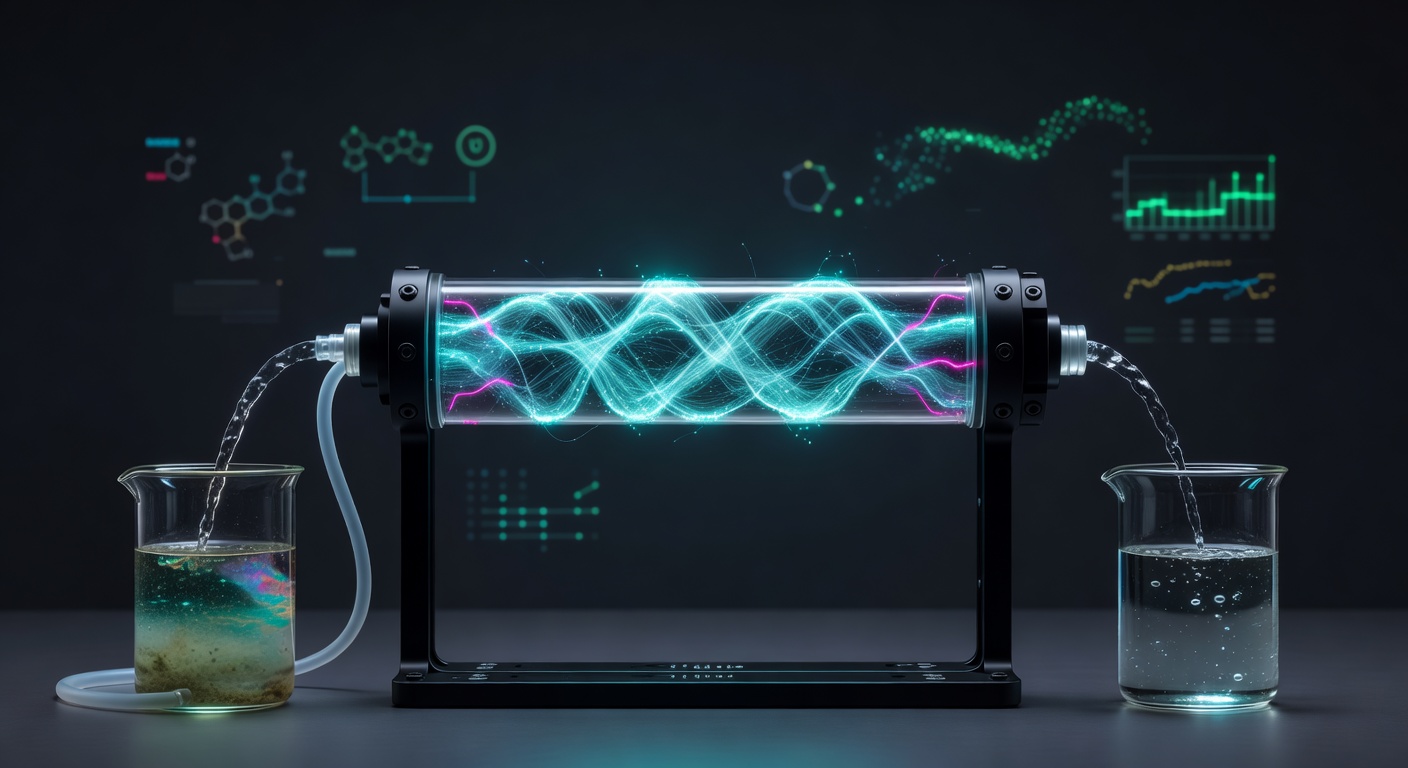
Think of it like this: imagine designing a microscopic cage that's perfectly shaped to grab these specific pollution molecules and hold onto them. That's basically what they did, except it's made of something called a "nano-sized molecular cage" embedded in mesoporous silica.
How the Nano Cage Actually Works
The genius part of this approach is understanding why it works at the molecular level. The researchers didn't just stumble onto something effective — they first figured out exactly how PFAS molecules behave when they're near these nano cages. Then they used that knowledge to engineer the material from the ground up.
As Caroline Andersson, one of the PhD researchers on the project, explained, they got deep into understanding the binding behavior before designing anything. That kind of methodical approach is what separates "meh, it kinda works" from "wow, this actually solves the problem."
The Numbers Are Pretty Wild
When they tested this filter in a lab setting, it removed up to 98% of PFAS from water samples. Not 80%. Not 90%. Ninety-eight percent.
But here's what actually impressed me: the material stays effective even after being reused multiple times. They tested it through at least five cycles of reuse, and it kept performing like new. That's crucial because any water treatment solution needs to be practical and cost-effective, not just something that works once and gets thrown away.
Why This Matters (Beyond the Lab)
Right now, existing water treatment systems can catch some of the longer-chain PFAS molecules, but the short-chain ones? They slip right through because they move around in water more easily. It's like trying to catch smoke with a net — frustrating and mostly unsuccessful.
This nano cage approach is genuinely different. It uses a binding mechanism that's not just better; it's fundamentally different from traditional filter materials. The PFAS molecules actually aggregate inside the cage cavity in a way that creates an unusually strong grip.
What Happens Next?
The researchers think this could integrate into the final polishing stage of drinking water treatment — that last step before water comes out of your tap. Imagine having a filter specifically designed to remove the stuff that everything else missed. That's the promise here.
Is this a complete solution that solves PFAS pollution overnight? Nope. The chemicals are already everywhere, and this is about cleaning up our water supplies going forward. But it's a meaningful step toward actually dealing with one of the most stubborn pollution problems we've created.
The fact that scientists understand the molecular mechanics of why this works also means they can probably improve it further. That's the kind of foundation that leads to real innovation over time.
The Bottom Line
For years, PFAS contamination felt like an unsolvable problem — one of those environmental disasters where we're basically just stuck managing the consequences. This research reminds me that sometimes the breakthrough is waiting for someone brilliant enough to really understand the problem at a deep level, then engineer a solution around that understanding.
Pretty cool, honestly. Even if the chemicals themselves are decidedly not.