
markdown formatted blog content
⚠️ The Ice Sheet on the Edge
Okay, I need you to picture this with me.
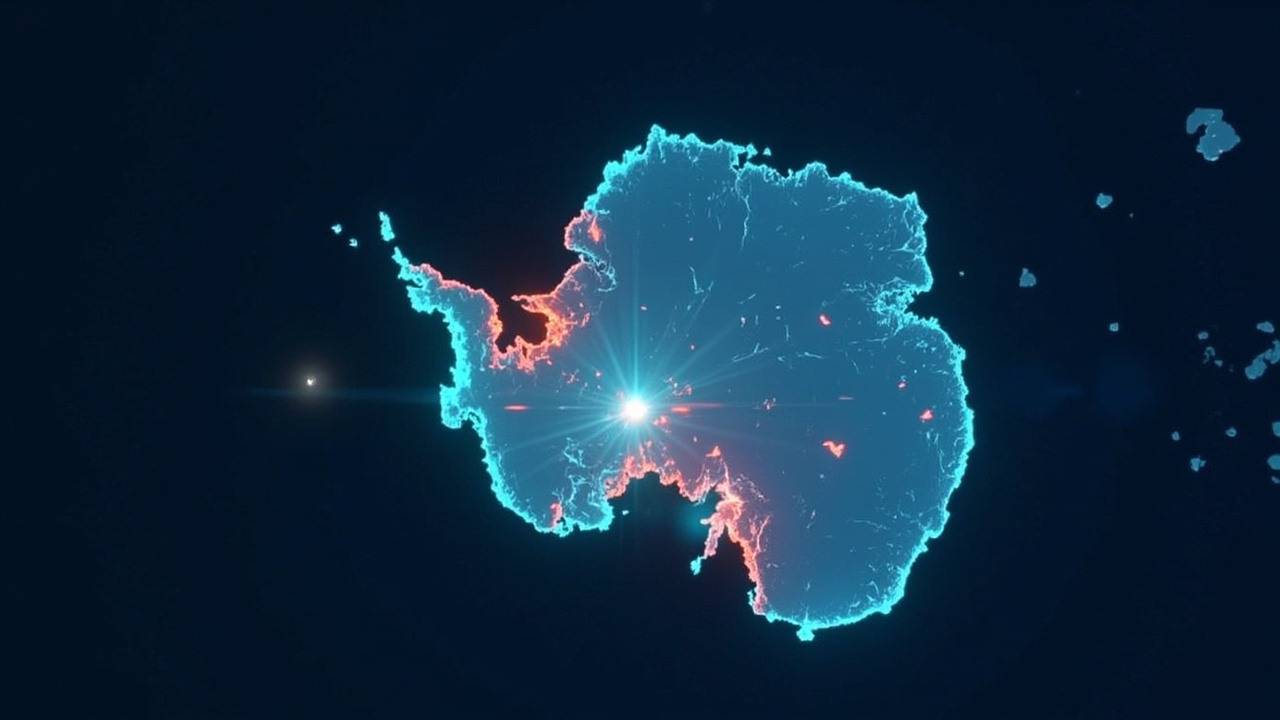
You've got Antarctica sitting there, covered in the most massive blob of ice on Earth. For millions of years, it's been basically chilling out (pun intended) — growing and shrinking slowly as the climate shifts, nothing too dramatic.
Then BAM. About one million years ago, something changes. Suddenly, Antarctica's ice sheet becomes super sensitive. Tiny changes in temperature that it would've shrugged off before? Now it reacts like it's got a hair-trigger. Ice ages become longer, colder, and way more intense than anything we'd seen before.
Scientists have known about this moment — they call it the Mid-Pleistocene Transition — for decades. But here's the thing nobody could figure out: why did Antarctica's ice sheet suddenly become such a drama queen?
Well, a team of researchers just cracked that code, and honestly? The answer is both fascinating and a little bit terrifying.
The Detective Work
Here's the challenge: how do you study what happened to ice sheets a million years ago?
You can't exactly go back in time and measure things. Your options are basically:
- Dig up whatever clues nature left behind (ice cores, sediment, etc.)
- Build a computer model that simulates the ancient climate
This research team, based at the IBS Center for Climate Physics in South Korea, went with option two. But not just any computer model. They created an incredibly detailed simulation of Earth's climate over the past 3 million years — essentially a climate time machine running on one of South Korea's most powerful supercomputers.
Then they fed all that climate data into an ice sheet model developed at Penn State University. We're talking about software that tracks ice movement, thickness, temperature, and elevation across the entire Antarctic region (and the Northern Hemisphere too, for context).
The result? A physically consistent picture of how ice sheets evolved over time. No guesswork. Just physics doing its thing.
Finding the Magic Number
Here's where it gets interesting.
The simulations showed that Antarctica didn't gradually become more sensitive over time. Nope. It was more like someone flipped a switch.
After the Mid-Pleistocene Transition, the researchers identified a critical threshold in atmospheric carbon dioxide: roughly 240 parts per million. Once CO2 dropped below that level, Antarctic ice volume started responding dramatically differently to temperature changes.
"After this transition, the Antarctic ice sheet reacts much more strongly to changes in climate forcing. This indicates that the system does not evolve gradually but instead becomes more responsive after crossing a particular threshold in the climate system."
That's Dr. Kyung-Sook Yun, lead author of the study, explaining what they found. And I love how she puts it — this isn't gradual change. It's a threshold moment. A tipping point. Everything's fine until suddenly it isn't.
Why Did the Ice Explode?
So what actually happened when that threshold got crossed?
The simulations reveal that multiple processes gang-pressed at the same time, like a perfect storm for ice growth:
Cold oceans = less melting. During those ice ages after the transition, ocean temperatures dropped enough to reduce melting underneath the parts of the ice sheet that extend below sea level. Less melting means more ice stays around.
Dropping sea levels = rising bedrock. Global sea levels fell about 50-100 meters below today's levels. That reduced pressure on the bedrock below Antarctic ice shelves. With less weight pressing down, the land underneath actually started to slowly rise upward — a process called isostatic rebound.
That rebound supported thicker ice. That gentle upward movement of the bedrock created better support for additional ice buildup along the coasts in East Antarctica and the Antarctic Peninsula region.
Put it all together, and you get bigger, more persistent ice sheets that defined Earth's ice age cycles for the next million years and counting.
The Part That Keeps Me Up at Night
Here's where I have to be honest with you: reading this research gave me a bit of existential whiplash.
We spend a lot of time thinking about how climate change will melt ice sheets in the future. And rightfully so. But this study reminds us of something important: we're not necessarily dealing with linear systems.
Professor Axel Timmermann, director of the IBS Center and co-author of the study, put it this way: "Our findings suggest that the Antarctic ice sheet was more sensitive to external forcings than previously assumed. This also raises important questions about its future response to global warming."
Translation: ice sheets don't always change slowly and predictably. They can cross thresholds. They can switch into entirely different modes of behavior.
Now, I'm not trying to scare you here — but I do think it's worth sitting with that reality for a moment. We're currently pouring carbon dioxide into the atmosphere at unprecedented rates. CO2 levels are nowhere near that 240 ppm threshold that switched Antarctic behavior... but in the other direction.
When the planet cooled enough to cross that threshold, things got dramatically more icy. What's going to happen as we warm things up?
So What Do We Do With This?
Here's the thing about science: understanding how systems work helps us predict them better. Before this research, we didn't really know exactly why Antarctica became so sensitive after that million-year transition. Now we have a clearer picture of the mechanisms involved.
That means climate scientists can potentially identify other thresholds — other points where things might suddenly shift — before we accidentally cross them.
Professor Timmermann suggests these findings are crucial for "improving future projections of Antarctic ice loss and global sea level rise." That's not just academic interest. We're talking about coastal cities, island nations, hundreds of millions of people potentially affected by rising seas.
Science can't solve everything. But I'll take "understanding our planet better" over the alternative any day.
What's your take on this? Do threshold effects in climate systems worry you, or do you think we're overestimate the complexity? I'd genuinely love to hear your thoughts — drop a comment below.
And if you found this fascinating, share it with someone who needs a good climate science fact to impress their friends at the next dinner party. 😉
SOURCE:
https://www.sciencedaily.com/releases/2026/05/260528082455.htm