
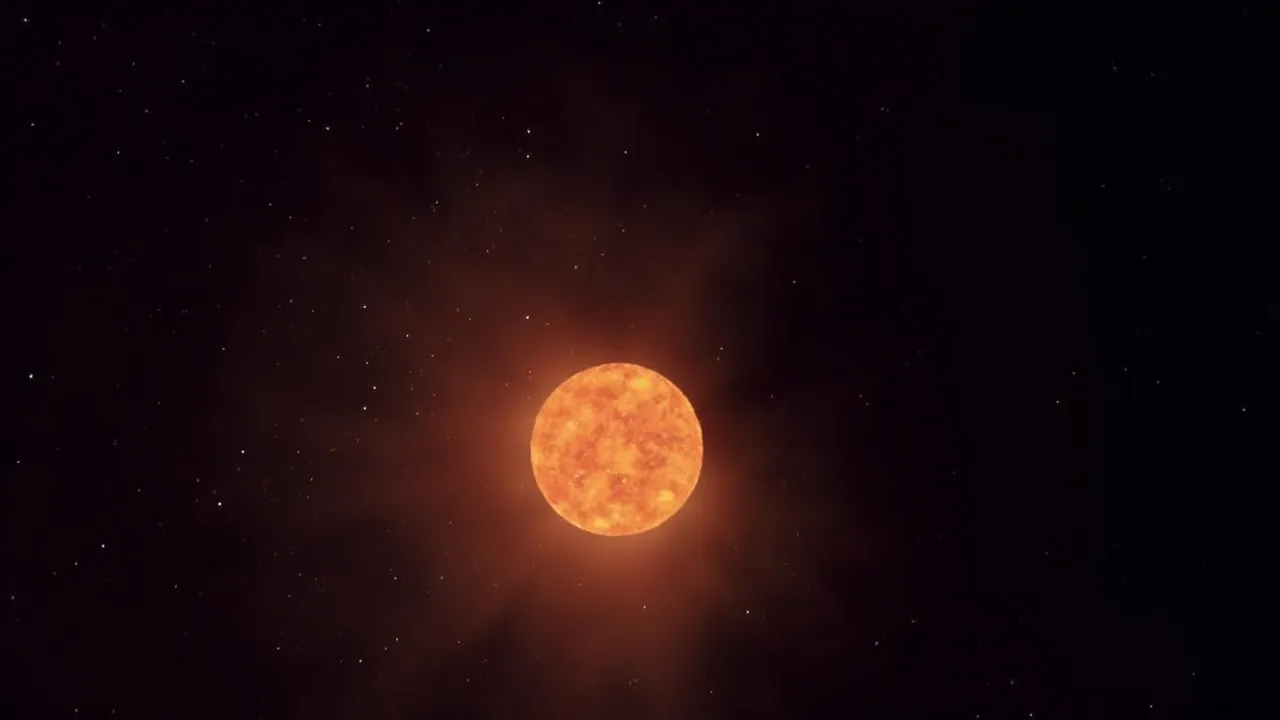
So, What's the Deal with Mercury?
When you think about exciting planets in our solar system, Mercury probably doesn't top your list. I mean, it's small, it's close to the Sun (meaning it's absolutely scorching during the day and freezing at night), and we don't hear about it nearly as much as Mars or Jupiter's moons. But hold on — new research suggests we've been totally underestimating this little planet's dramatic past.
Scientists recently discovered that Mercury's surface contains significantly less silicon dioxide than we previously thought. Now, you might be wondering: why should I care about silicon dioxide? Fair question! Let me break it down.
Silicon dioxide is basically the stuff that makes up sand, glass, and a lot of volcanic rocks on Earth. It's everywhere on our planet. But on Mercury? Apparently not as much as we'd expect. The new measurements show about 37% silicon dioxide by mass — which sounds like a lot until you learn this is up to 25% less than what scientists originally estimated.
The "Fiery" Part
Here's where things get interesting. The research team — from the Max Planck Institute and several German universities — suggests that this lower silicon dioxide content tells us something important about how Mercury's volcanoes worked.
Think about it this way: when a planet's interior is molten (like a giant lava lamp deep underground), the first rocks that solidify from that molten material actually contain less silicon dioxide. As time goes on and more material crystallizes, the silicon dioxide gets more concentrated in what's left to melt.
So when scientists see lower silicon dioxide levels than expected, it suggests that Mercury's volcanic material came from deeper regions of the planet's mantle — places that experienced more intense melting at super-high temperatures.
"We're talking about volcanic rocks that formed from more deeply melted mantle material than previously assumed," explained Christian Renggli, who led the research.
In other words? Mercury had a seriously hot interior. Its volcanic history was even more intense than we imagined. This tiny planet close to the Sun went through some incredible geological processes billions of years ago.
How Do You Study a Planet You've Never Visited?
Here's what really fascinates me about this research: scientists have never collected a single rock sample from Mercury. No lander has ever touched down there. Everything we know comes from telescopes and spacecraft observing from afar.
So how do researchers figure out what chemicals are present on a distant world? They use infrared radiation — essentially heat energy that bounces off the planet's surface and can be detected by instruments. But here's the tricky part: translating those infrared signals into actual chemical compositions is complicated.
That's where the creative part comes in.
Tiny Glass Beads and a Brilliant Idea
The research team figured out a clever way to calibrate their measurements. They created tiny glass beads in the lab — each one only about half a millimeter across — with carefully controlled amounts of silicon dioxide. Then they measured exactly how these beads behaved in infrared light.
Think of it like using known weights to calibrate a scale. Once you know exactly what a 100-gram weight looks like on your measuring device, you can accurately weigh anything else.
"The glass beads serve a similar function to calibration weights on a scale," said researcher Iris Weber. "Their weight is known precisely. They therefore allow us to correctly interpret the scale's balance."
Brilliant, right?
Testing Their Method on Something We Have Touched
Before applying this technique to Mercury, the scientists did something really smart: they tested it on the Moon. Why the Moon? Because we actually have Moon rocks that astronauts and spacecraft have brought back to Earth. So we know for certain what the Moon is made of.
The team used their infrared calibration method to create the first complete map of silicon dioxide distribution across the lunar surface. When they compared this to the actual Moon rocks, the results matched up beautifully. This gave them confidence that their technique would work on Mercury too.
What Does This Mean for Understanding Mercury?
Now that we have a better handle on Mercury's actual chemical makeup, scientists can start piecing together its geological history more accurately.
One possibility is that Mercury's volcanic material really did come from those deeper, hotter mantle regions I mentioned earlier. Another idea is that the planet's crust originally had more silicon dioxide but somehow lost oxygen over billions of years.
Either way, we're learning that Mercury's first billion years were incredibly active and volcanic — far more so than its current frozen state would suggest. Today, Mercury appears to be largely geologically dead, with its crust completely solidified. But once upon a time, it was anything but quiet.
Why This Matters
You might be thinking: okay, cool science, but why should I care about a planet I'll never visit?
Here's the thing: understanding how different planets evolved helps us understand our own world in context. Earth is still geologically active — volcanoes, plate tectonics, earthquakes. Mercury stopped that activity billions of years ago. By studying why some planets "freeze" while others stay active, we learn about the fundamental processes that shape rocky worlds.
Plus, Mercury's proximity to the Sun makes it a natural laboratory for understanding how intense heat and solar radiation affect planetary evolution. The lessons learned here could eventually help us understand planets orbiting other stars.
And honestly? I just love that scientists are out there making discoveries like this — using tiny glass beads and creative thinking to unlock secrets of worlds millions of miles away. It reminds me that there's still so much to learn about our own solar system, even the planets right next door.
The next time you look up at the night sky and spot that bright point of light near the horizon, remember: Mercury isn't just a boring rock baking in the Sun. It's a world with a surprisingly fiery past, and we're finally starting to understand its story.
Source: ScienceDaily