
So here's a cosmic mystery that's been bothering astronomers for a while: some of the biggest galaxies in the universe are seriously lacking in the stars department.
Based on everything we understand about how galaxies should grow, the most massive ones should be absolutely packed with stars. But when scientists look up at these enormous galaxies, they're finding way fewer stars than the models predict. It's like walking into a restaurant that should have a packed dining room and finding half the seats empty.
What's stealing all those potential stars?
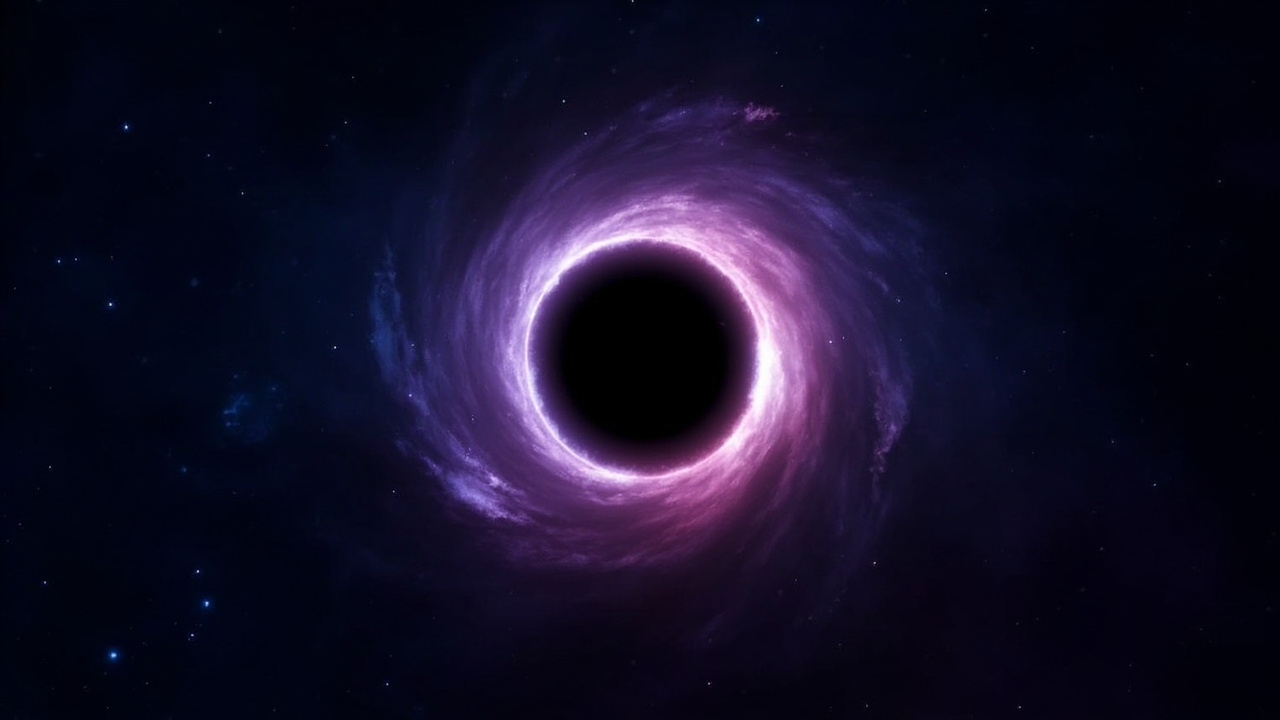
Well, it turns out the culprit might be living right at the heart of these galaxies: supermassive black holes.
Black Holes: Not Just Cosmic Vacuum Cleaners
I know what you're thinking—black holes are famous for pulling things in with their insane gravity. But here's the thing: black holes are also incredibly messy eaters.
When gas and dust spiral down toward a black hole (which can be billions of times more massive than our Sun, by the way), they don't just fall in quietly. Instead, they form what's called an accretion disk—a swirling ring of superheated material circling the drain, if you can imagine a drain that's millions of degrees hot and stretching across distances larger than our entire solar system.
And as all this matter spirals inward, something incredible happens: the black hole can launch incredibly powerful winds outward. Think of it like the universe's most dramatic burp, except instead of gas from last night's pizza, we're talking about streams of material blasting away at incredible speeds.
The Problem With These Winds
Here's why this matters for stars. New stars form from gas and dust—so if a black hole's winds are strong enough to blow that raw material right out of the galaxy, then that galaxy's ability to make new stars gets seriously hampered.
It's like trying to bake a cake, but someone keeps blowing all your flour out the window before you can mix it.
And new observations from a space telescope called XRISM (which stands for X-Ray Imaging and Spectroscopy Mission, because scientists apparently don't believe in short names) are giving astronomers their best look yet at how these winds actually work.
A Sharper View of Cosmic Violence
XRISM was launched in 2023, and its X-ray vision is roughly 10 times sharper than previous telescopes that could peer at these extreme environments. This matters because X-rays are exactly what these violent black hole neighborhoods emit.
A researcher named Xin "Cindy" Xiang, who's working on her PhD at the University of Michigan, has been using XRISM to study a galaxy called NGC 4151, which is about 50 million light-years away from us. That's actually pretty close in cosmic terms, and it has an active galactic nucleus—an extremely bright region at its center where a supermassive black hole is actively gobbling up material.
"It's like having the greatest resolution to observe the brightest targets," Xiang explained. "We're getting the richest information on outflows that we've ever observed."
The "Cindicity" Index (Yes, Really)
Now here's where things get really interesting. Xiang developed a new method to figure out when a black hole's most powerful winds are actually active. She studied hundreds of days of observations and focused on what happened when NGC 4151's X-ray output flared up.
She created something called the "color intensity index"—which the team shortened to "cindicity" partly because Xiang's nickname is Cindy. (Scientists have a sense of humor, apparently!)
What she found was genuinely surprising: the strongest, fastest winds didn't appear during the X-ray flares themselves. Instead, they showed up about 10,000 seconds later—roughly three hours after the initial burst of activity.
That's the first time anyone's been able to directly connect the timing between a black hole's X-ray tantrums and the powerful winds that follow.
Why This Matters
This discovery could help explain why so many massive galaxies seem to have fewer stars than they should. If black holes are periodically launching these powerful outflows, they're essentially stripping galaxies of the gas they'd need to form new generations of stars.
It's a beautiful example of how the most destructive objects in the universe can shape the fate of entire galaxies. These black holes aren't just passive consumers—they're actively influencing cosmic evolution in ways we're only beginning to understand.
And with telescopes like XRISM finally giving us a clear view of these processes, who knows what else we'll discover about the wild things happening at the centers of galaxies?
Space never stops being amazing, does it?
Source: ScienceDaily