
When Old Science Becomes New Security
Here's something cool: sometimes the best solutions to modern problems come from dusting off old ideas. Polish physicists just proved this by taking a forgotten optical principle from 1836 and turning it into a potential game-changer for cybersecurity. And honestly? It's a great reminder that innovation isn't always about inventing something brand new.
The Problem With Current Quantum Encryption
Before we get into the clever bit, let me explain why this matters. As our digital world gets more connected—and hackers get smarter—we need security methods that are genuinely unbreakable. Quantum key distribution (QKD) is like the holy grail of encryption. Instead of using traditional math-based codes, it uses actual photons (particles of light) to create encryption keys. If someone tries to intercept the key, the quantum states collapse and you immediately know you've been hacked. Pretty neat.
But here's the catch: traditional QKD systems are complicated and expensive. They work, sure, but they require tons of careful setup and constant tweaking to function properly.
Enter the Talbot Effect
Now, about that old trick from the 1800s. A guy named Henry Fox Talbot noticed something interesting about light passing through a grating: the pattern would mysteriously recreate itself at regular intervals, like the image was "reviving" as it traveled.
The Warsaw team had a brilliant thought: what if we could use this effect with quantum information?
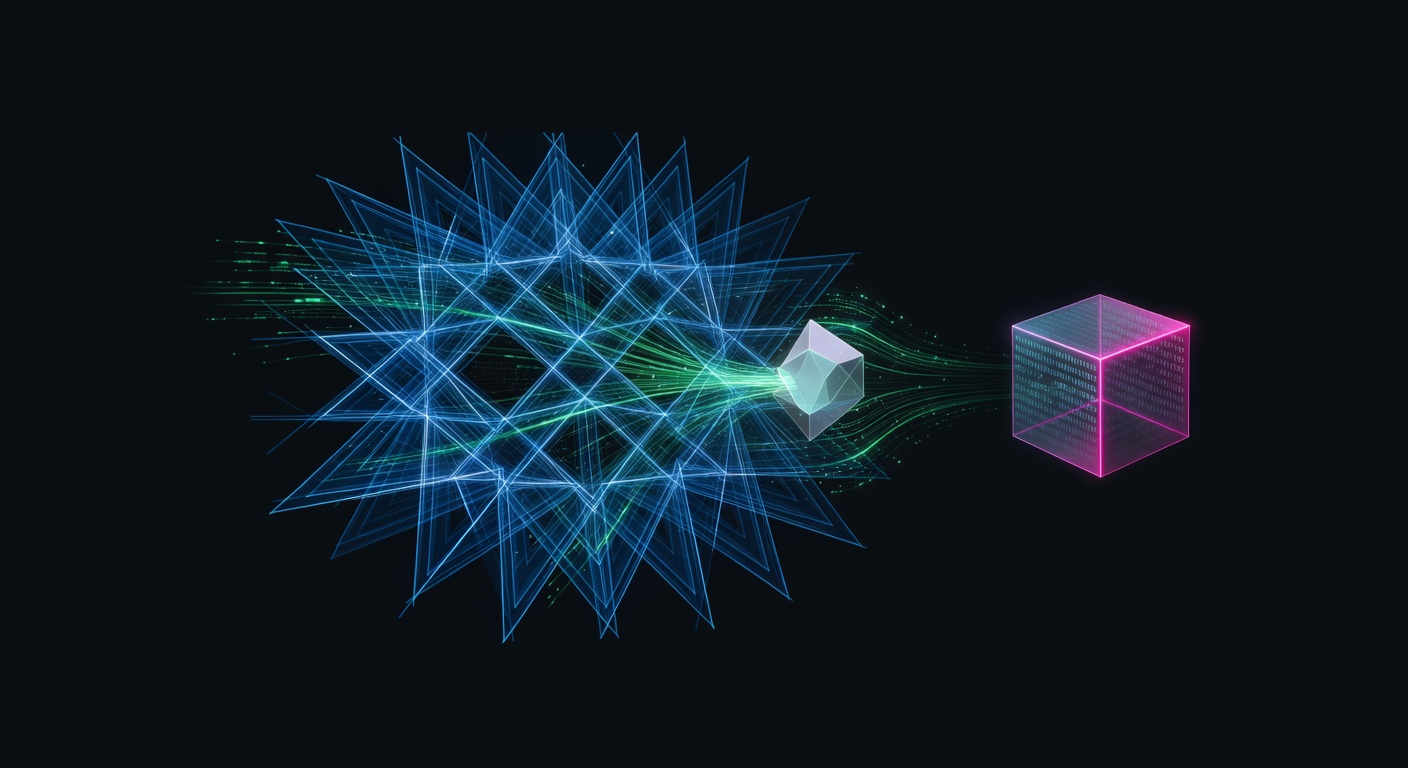
When light pulses travel through fiber optic cables, the cables slightly stretch and compress different wavelengths (that's called dispersion, if you're curious). This creates the perfect condition for the Talbot effect to work. Basically, sequences of light pulses can reconstruct themselves as they travel, and by measuring how they interfere with each other, you can detect different quantum states.
The Genius Simplification
Here's where it gets really elegant. Traditional quantum systems need a bunch of interconnected detectors and interferometers—imagine a complicated tree of mirrors and splitters all working in perfect synchronization. It's like trying to balance ten spinning plates while riding a unicycle.
The Warsaw team's approach? Use a single photon detector.
Just one.
Instead of splitting light into multiple paths and measuring each one separately (which wastes a lot of data), their system processes multiple pulses together. It's more efficient, fewer parts need replacing, and—this is my favorite part—you don't need to constantly recalibrate everything.
But Is It Actually Secure?
Here's where I'll be honest: their system does have slightly higher error rates than some other methods. But and this is important, those error rates don't actually prevent quantum key distribution from working. The researchers proved their system maintains security even with these errors.
Plus, the setup uses completely standard, commercially available components. No exotic equipment. No proprietary parts you have to special order. This could actually get deployed in the real world, unlike some laboratory curiosities that never leave academia.
Why This Matters
What excites me about this research is that it shows a path toward quantum security that's actually practical. We don't just need unhackable encryption—we need unhackable encryption that doesn't cost a fortune and doesn't require a PhD to maintain.
By combining 200-year-old physics with modern quantum theory, these scientists have created something that could make ultra-secure communication accessible to more people and organizations. Universities could do it. Banks could do it. Eventually, maybe even regular companies could implement this without it being a massive undertaking.
The Bottom Line
Sometimes progress doesn't come from the newest, flashiest technology. Sometimes it comes from someone asking, "Wait, what if we use this old thing in a completely different way?" That's exactly what happened here, and it's exactly the kind of creative thinking we need as we build a more secure digital future.
The best part? This research is already being tested in real fiber networks, not just laboratory conditions. That suggests we might not be too far away from seeing this technology in actual deployment.
Pretty cool that a discovery from when Queen Victoria was still ruling the world could be the key to protecting our digital secrets, right?