
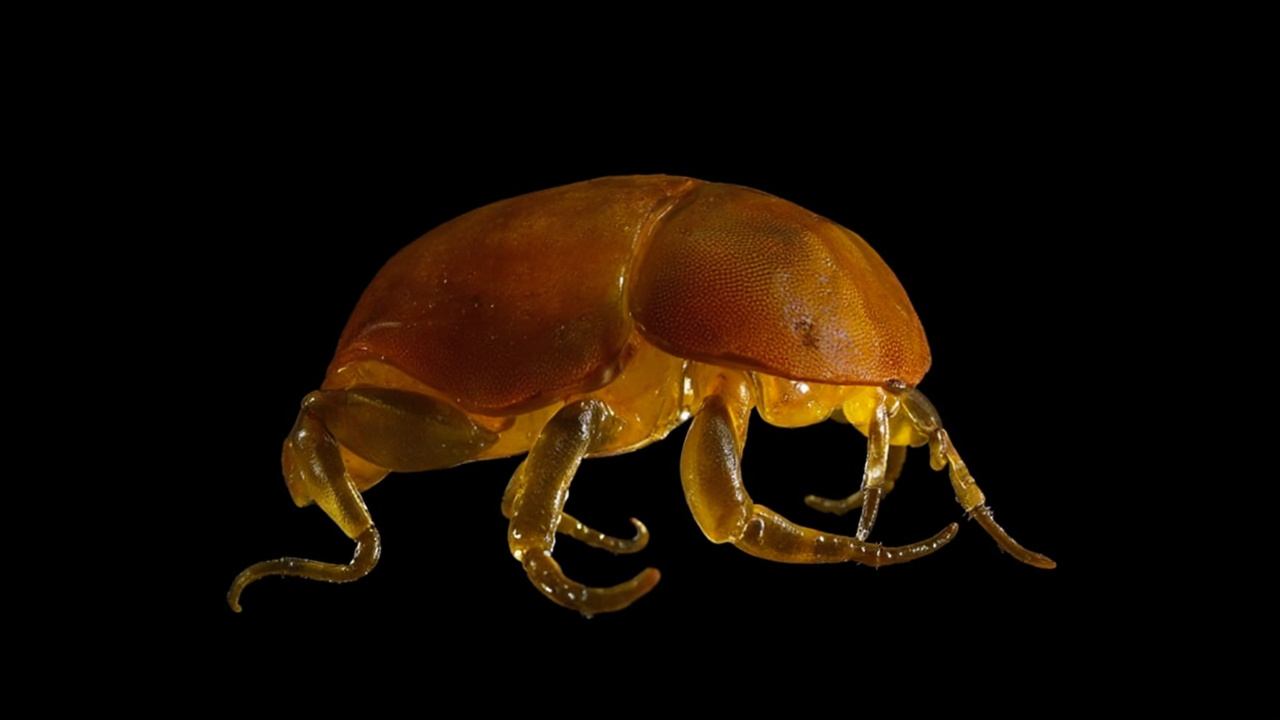
When Nature Says "Let's Give This Bug Some Crab Hands"
Imagine you're a paleontologist carefully examining a piece of amber that's been sitting around for 100 million years, and you discover a bug with giant pincer claws. Not wings. Not antennae. Actual crab-like appendages. That's exactly what just happened, and honestly, it's kind of wild.
Researchers at Ludwig Maximilian University of Munich stumbled upon this creature in amber from Myanmar's Kachin region—a place that's basically become the insects-trapped-in-time capital of the world. The preserved resin has been revealing all sorts of incredible fossils from the Cretaceous period, but this one? It's a total oddball.
The Weird Anatomy Nobody Expected
The insect, which scientists have now named Carcinonepa libererrantes, is technically a true bug—the kind of classification that includes water bugs and their cousins. But here's what makes it freak out the scientific community: its front legs don't end in the delicate, thread-like structures you'd expect. Instead, they end in these huge, claw-like structures called chelae that function kind of like forceps. Basically, imagine grabby hands designed to snatch prey out of the water or off a branch.
What's even crazier? These structures are super rare among insects. Before this discovery, scientists had only found claw-like appendages like this in three other insect groups. Finding them on a fourth group means this evolved independently—nature basically said "hey, this solution works" and came up with it again in a completely different lineage.
The Detective Work Was Intense
To figure out exactly what they had, the research team (which included scientists from universities in Munich, Rostock, and Finland) used micro-computed tomography—fancy 3D imaging that lets you see every tiny detail of a fossil without destroying it. Then they got really serious and compared the claws to more than 2,000 similar grasping appendages from living and extinct species.
The verdict? These claws were nothing like anything you'd find on other insects. Instead, they were strikingly similar to what you'd see on crabs, lobsters, shrimps, and other crustaceans. Which is completely bonkers when you think about it—a bug that evolved hardware that matches hardware from an entirely different branch of the arthropod family tree.
What Was This Thing Even Doing?
The scientists believe Carcinonepa libererrantes was probably a predator that hung out in coastal forests during the Cretaceous, using those massive claws to grab and hold small insect prey. Its body structure suggests it was related to modern toad bugs—creatures that hunt on land for small insects. So picture this ancient bug prowling through a Cretaceous forest, snapping its crab claws at unsuspecting prey.
It's the kind of specific evolutionary adaptation that makes you realize nature has been experimenting with solutions to hunting problems for literally hundreds of millions of years. And apparently, big grabby appendages are a pretty successful strategy.
The K-Pop Backstory (Yes, Really)
Here's where things get delightfully weird: the species name "libererrantes" is actually a nod to Stray Kids, a K-pop group. One of the researchers on the paper is a fan, and apparently the way the fossil's claws are positioned reminded her of the group's famous pose. So now we have a 100-million-year-old prehistoric bug named after 21st-century pop stars. Only in science, folks.
Why This Actually Matters
The discovery of Carcinonepa libererrantes tells us something important about evolution: when a solution works, evolution doesn't always stick with it only once. Crab-like claws evolved independently in four different insect groups, which shows that certain body plans are genuinely good at solving specific problems. It's like nature discovered a winning strategy and kept using it whenever the opportunity came up.
Plus, every fossil like this helps us build a more complete picture of ancient ecosystems. This wasn't just some random bug—it was part of a thriving forest community during one of the most dramatic periods in Earth's history. And thanks to amber, we get to see it in incredible detail, 100 million years later.
So next time someone tells you insects are boring, you can tell them about the Cretaceous bug with the crab hands. Because nature is genuinely, undeniably wild.