
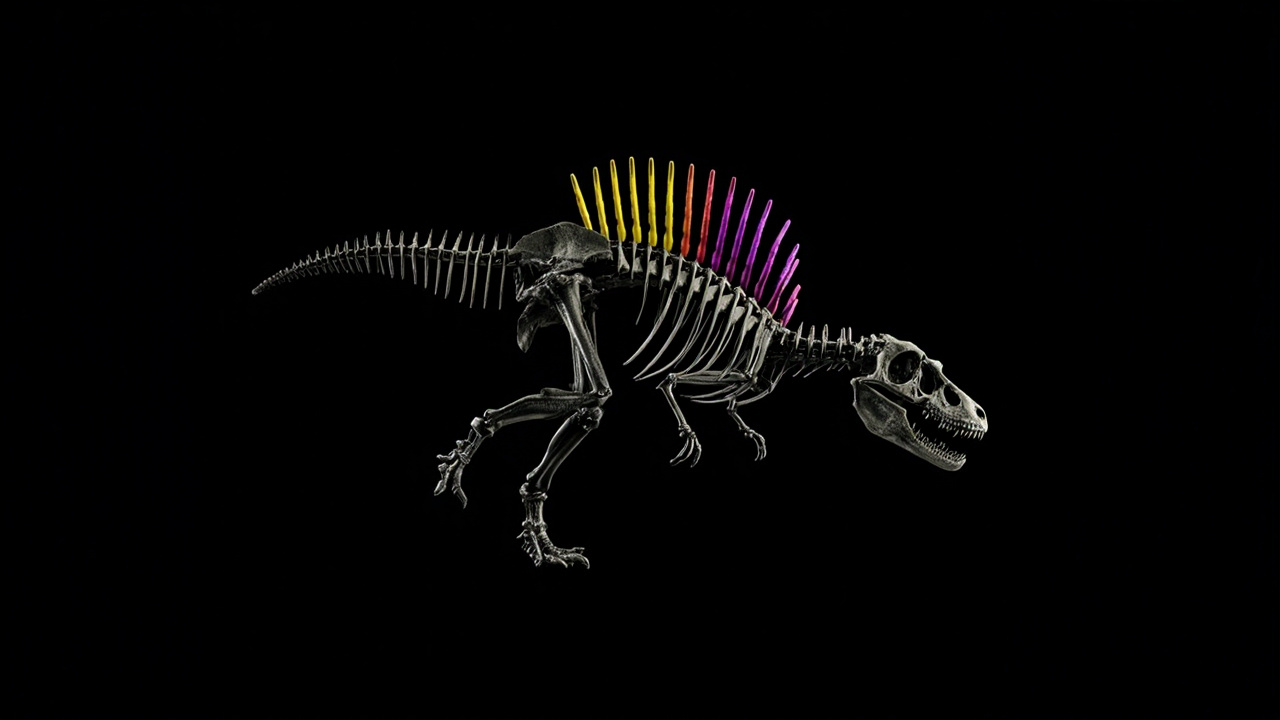
When a Dinosaur Skull Actually Survives the Millions of Years
Here's something wild that most people don't realize: finding a complete dinosaur skull is like winning the lottery. Those things are fragile, delicate, and basically designed by nature to fall apart into a million pieces. So when paleontologists in Spain found an exceptionally well-preserved stegosaur skull, it was genuinely a huge deal.
We're talking about one of the best stegosaur skulls ever found in Europe, folks. That's not hyperbole—that's just the reality of what makes this discovery special.
Meet Dacentrurus Armatus: Europe's Favorite Plated Dinosaur
The fossil they found belongs to a species called Dacentrurus armatus. If you're not familiar with it, think of stegosaurs as the iconic dinosaurs with those distinctive rows of bony plates running down their backs and spiky tails. They were herbivores (plant-eaters) who got around on four legs, and they roamed the Earth roughly 150 million years ago.
This particular specimen dates back to the Late Jurassic period and was excavated from a site in Riodeva, Spain, which honestly sounds like the kind of place where archaeologically important stuff just keeps happening.
Why This Skull Changes the Game
So what's the big deal about one skull, even if it's in great condition? Well, researchers have used this find to completely reassess how stegosaurs were related to each other and how they spread across the planet. They've even created a whole new classification group called Neostegosauria based on what they learned.
According to the new research, this group includes medium to large stegosaurs that lived on different continents during different time periods. We're talking Africa and Europe during the Middle and Late Jurassic, North America during the Late Jurassic, and Asia during the Late Jurassic stretching into the Early Cretaceous.
Essentially, scientists are saying: "Hey, we've been thinking about stegosaur family trees wrong. Let us explain it differently."
A Goldmine That Keeps on Giving
Here's what really excites me about this story: the fossil site isn't done producing discoveries. The team found this amazing skull, but they've also uncovered additional bones from the same adult animal and remains from juvenile stegosaurs, which is incredibly rare.
Think about it—finding baby dinosaur fossils is already tough enough, but finding them preserved at the same location as an adult? That's the kind of material paleontologists dream about because it tells us so much about how these animals grew up and lived.
Teruel is Becoming Dinosaur Central
Spain's Teruel region is quietly becoming one of the most important places on Earth for understanding prehistoric life. Between this discovery and what's presumably coming next from ongoing excavations, the region is basically becoming a time capsule of dinosaur evolution. If you're interested in how life changed and adapted over millions of years, this is the place to watch.
The fact that governments are actively funding research there and supporting excavation work shows just how serious the scientific community is about unlocking what these rocks have to tell us.
The Bottom Line
A single well-preserved skull might not sound like earthshaking news, but in the world of paleontology, it absolutely is. This discovery has already shifted how we understand stegosaur evolution and global distribution, and there are still more fossils buried at the same site waiting to be studied.
The natural world keeps surprising us with its secrets—we just have to dig carefully enough to find them.