
Okay, I have to be honest with you — reading about new viruses discovered in ticks is not exactly my idea of a relaxing evening. But this story from the world of infectious disease research is actually pretty fascinating, and honestly, a little bit unsettling.
Scientists in China recently stumbled upon something that had been hiding in plain sight: a brand new tick-borne virus that's been making people sick without anyone knowing what it was. The virus has officially been named the Asian longhorned tick nairovirus, or ALTNV for short. (Scientists aren't always the most creative with names, are they?)
So Why Were They Looking in the First Place?
Here's where the story gets interesting. These researchers weren't just randomly testing ticks for fun. They were trying to solve a medical mystery.
See, there's another tick-borne illness out there called SFTS (severe fever with thrombocytopenia syndrome), caused by a virus called Dabie bandavirus. It's a nasty disease — we're talking a death rate somewhere between 10% and 30%. Not exactly something you want to mess around with.
But here's the puzzle: about 30% of patients who clearly had SFTS-like symptoms kept testing negative for the virus. So what was making them sick?
The research team, working at the State Key Laboratory of Pathogen and Biosecurity in Beijing, decided to investigate. They collected samples from people who'd been bitten by ticks and treated at hospitals in areas where tick-borne diseases are known to circulate. Using some pretty sophisticated genetic sequencing techniques, they found their answer.
A completely new virus. One that had been flying under the radar all this time.
What Does This Virus Actually Do to You?
Great question. The symptoms sound uncomfortably familiar — we're talking fever, exhaustion, stomach problems. Basically the kind of feeling you'd get with a bad flu, minus the respiratory stuff (usually).
The most common complaint? Fatigue. A whopping 84% of patients infected with ALTNV alone reported feeling absolutely wiped out. Gastrointestinal issues came in as a close second, affecting about 80% of cases. Some patients developed low platelet counts, and others showed signs of liver inflammation.
The good news? Everyone recovered completely. No deaths were reported in people who had ALTNV alone.
But here's where things get more concerning: when ALTNV teams up with its cousin SFTS, the combination is significantly more dangerous.
The Double Trouble Problem
Researchers identified 38 patients who were infected with both viruses. These poor folks had a rougher time of it.
Respiratory symptoms were more common (61% versus 38% in SFTS-only patients). Kidney problems increased too. And perhaps most alarmingly, 7 of those 38 coinfected patients died — that's an 18.4% fatality rate in that group.
That's a sobering reminder that having multiple infections at once can turn a manageable illness into something far more serious. Your immune system is already fighting one battle, and now it's got to handle two invaders simultaneously.
The Tick Situation
Now for the part that might make you check yourself for ticks after reading this: ALTNV was found in ticks across 15 different provinces in China. Researchers tested nearly 50,000 ticks, and about 1.3% carried the virus.
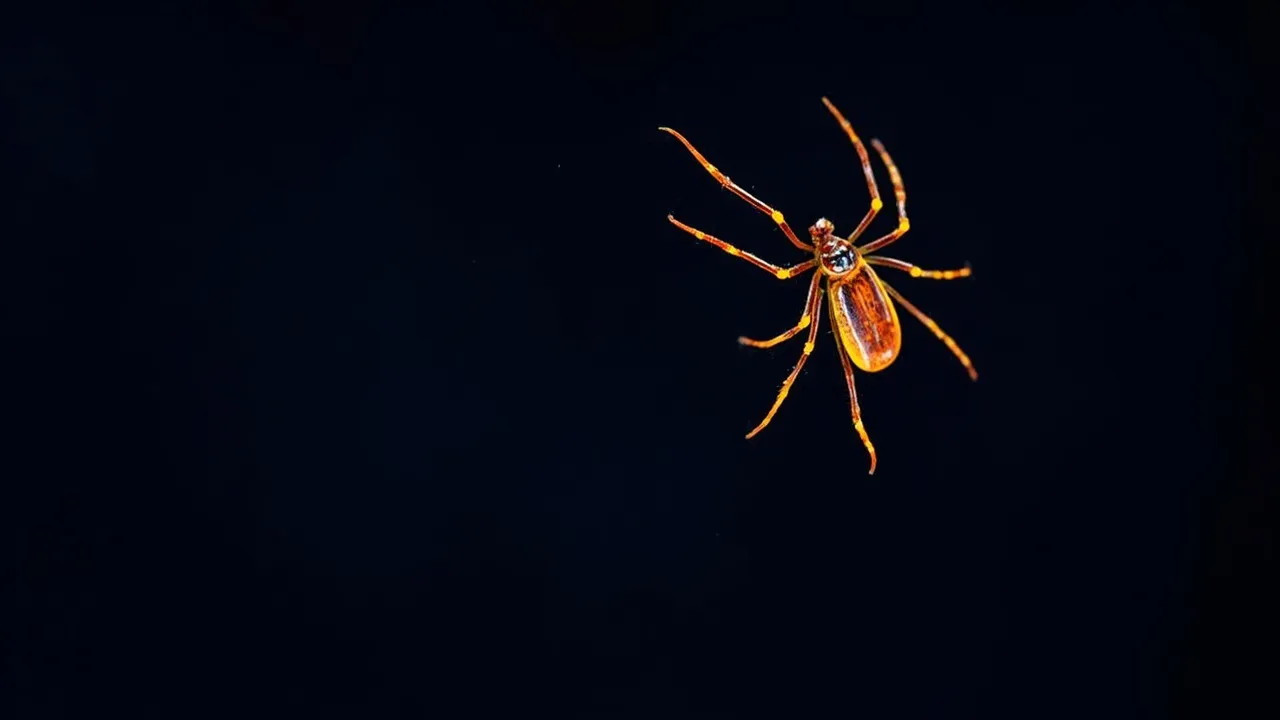
The prime suspect? The Asian longhorned tick (scientifically known as Haemaphysalis longicornis). This little bloodsucker had the highest infection rate at 1.8%, and researchers were able to confirm in lab experiments that it can indeed transmit the virus to mammals.
What's particularly noteworthy is that this same tick species also carries SFTS. So in certain areas, you're potentially dealing with two dangerous viruses from the same creepy-crawly.
Why Should Regular People Care?
Look, I'm not trying to turn you into a paranoid hermit who never goes outside. But here's the takeaway: tick-borne diseases are more common and more diverse than we sometimes realize.
This discovery suggests that in regions where SFTS is found, there could be another illness lurking that's been misdiagnosed or simply unnoticed. Better diagnostic tools will be essential going forward — doctors need to be able to tell these infections apart to treat them properly.
And honestly? This makes me think about all the other pathogens that might be hiding in nature, waiting to be discovered. Scientists are doing the important (if somewhat unsettling) work of finding these things before they catch us off guard.
The Bottom Line
A newly identified virus is causing flu-like illness in parts of Asia, transmitted by ticks that also carry other dangerous diseases. Researchers caught it because they were asking why some patients didn't fit the expected pattern — a good reminder that in medicine, what you don't know can hurt you.
So next time you're out hiking or spending time in grassy areas where ticks like to hang out, maybe do a quick tick check when you get home. It's one of those small habits that takes no time at all but might save you from something unpleasant.
Sometimes science is about the big dramatic discoveries. And sometimes it's about carefully solving puzzles that have been hiding in the details all along.
Source: https://www.sciencedaily.com/releases/2026/09/260927225027.htm