
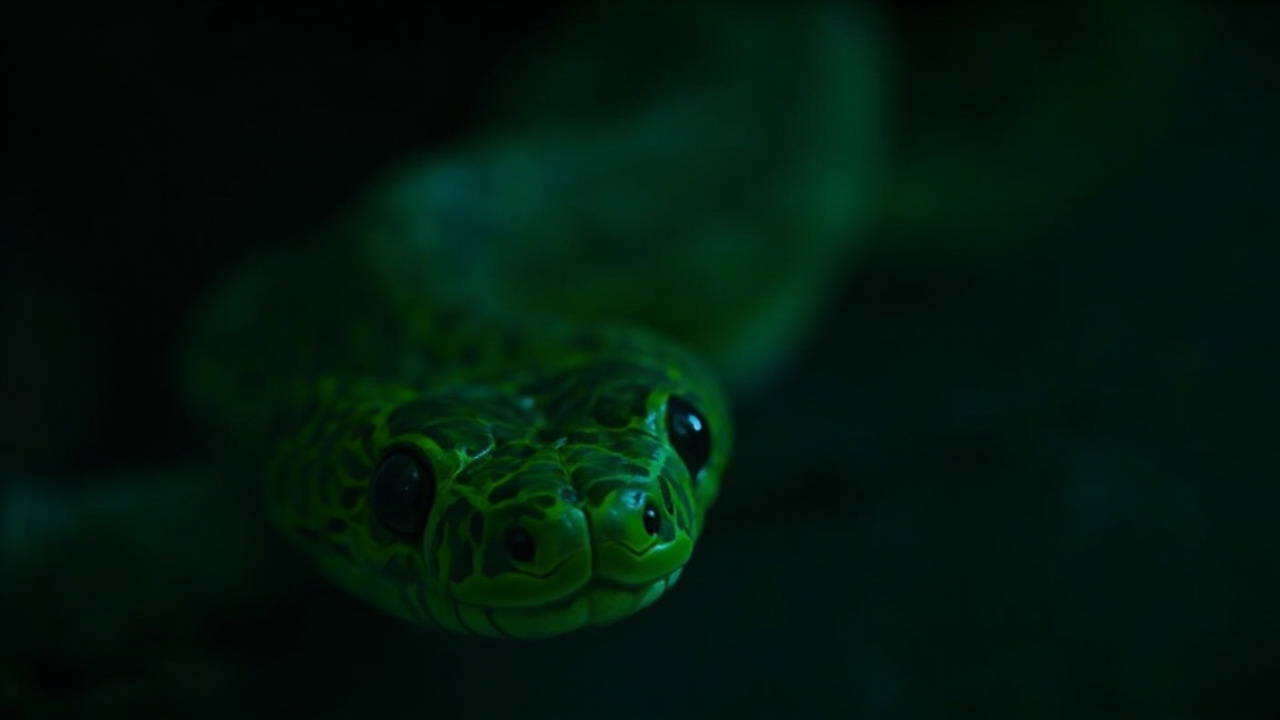
The Perfect Disguise
Imagine being a scientist and thinking you've found something ordinary, only to discover you're actually looking at a completely unknown species. That's exactly what happened recently in the lush forests of western Sichuan, China, where researchers stumbled upon a snake so beautiful and so well-camouflaged that nobody had noticed it was actually a brand-new animal.
The culprit? A breathtaking green pitviper that blends so seamlessly into the misty mountain vegetation that it basically became nature's ultimate hide-and-seek champion. For years, scientists had lumped it together with its cousins, assuming it was just another common bamboo pitviper. But here's where it gets interesting — DNA told a completely different story.
When Genetics Rewrites What We Thought We Knew
The team from the Chengdu Institute of Biology decided to do some serious detective work using genetic testing, and boy did they uncover something cool. The DNA showed that these snakes weren't just a variation of an existing species — they were their own unique evolutionary branch. It's like finding out a long-lost relative exists in your family tree.
What's even more fascinating is that they also noticed some physical differences that had been hiding in plain sight. The scales on the head have a slightly different texture, and the eye colors and stripe patterns vary between males and females in ways that set them apart from related species.
Meet the Huaxi Green Pitviper
The new species was officially named Trimeresurus lii, also known as the Huaxi Green Pitviper. I absolutely love the backstory here — the research team named it after Laozi (also written as Lao Tzu), the ancient Chinese philosopher whose teachings emphasized living in harmony with nature. Pretty poetic, right? Especially since they discovered it in the Giant Panda National Park, which is literally dedicated to conservation.
Now here's where things get visually stunning: these snakes are showstoppers. Both males and females rock that gorgeous grass-green coloring, but they look pretty different otherwise. The guys sport bold red and white stripes running down their sides with striking amber eyes that honestly look like they're glowing. The females are slightly more understated with yellow stripes and orange-yellow eyes. Nature's fashion sense is impeccable.
The Beauty Comes With a Warning
I should mention the not-so-pretty part: these snakes are venomous. They're equipped with pit organs (which is why they're called pitvipers) that help them hunt, but they're also armed with venom capable of causing serious snakebites. Since they live in areas where humans hike and work, locals and tourists need to be respectful of their space and watch their step.
The snakes themselves aren't huge — they max out around 32 inches — but they're perfectly adapted to their mountainous home in the humid forests near Mt. Emei and Xiling Snow Mountain.
What This Discovery Really Means
Here's what I find most mind-blowing about this: we're not talking about some remote corner of the Amazon that nobody has ever explored. This is the West China Rain Zone, a biodiversity hotspot that scientists have been studying for years. And yet, this entire species was just... there. Waiting to be found.
It's a humbling reminder that even in places we think we know pretty well, there are still massive gaps in our understanding. Scientists estimate we've only discovered a fraction of the species on Earth, and discoveries like this prove it. There could be countless other animals living alongside us, hidden by perfect camouflage or simply overlooked because we weren't looking closely enough.
The Bigger Picture
This find is the 58th species in the Trimeresurus genus, and it's only the second one from its particular subgenus found in Sichuan Province. These numbers might sound dry, but they represent something important: our planet's incredible biological diversity is far richer and more complex than our textbooks give it credit for.
The research team's message is clear: we need to keep exploring, keep studying, and keep protecting places like the Giant Panda National Park. Because who knows what other stunning creatures are out there, blending into the forest, waiting for someone to look a little closer.
Pretty cool, right? A gorgeous green snake reminding us that the world still has secrets to share.