
A Mystery Solved After 100+ Years of Confusion
Imagine being a scientist and realizing that something you've been studying your entire career—something you thought you understood—is actually way more complicated than anyone realized. That's basically what just happened in the penguin world.
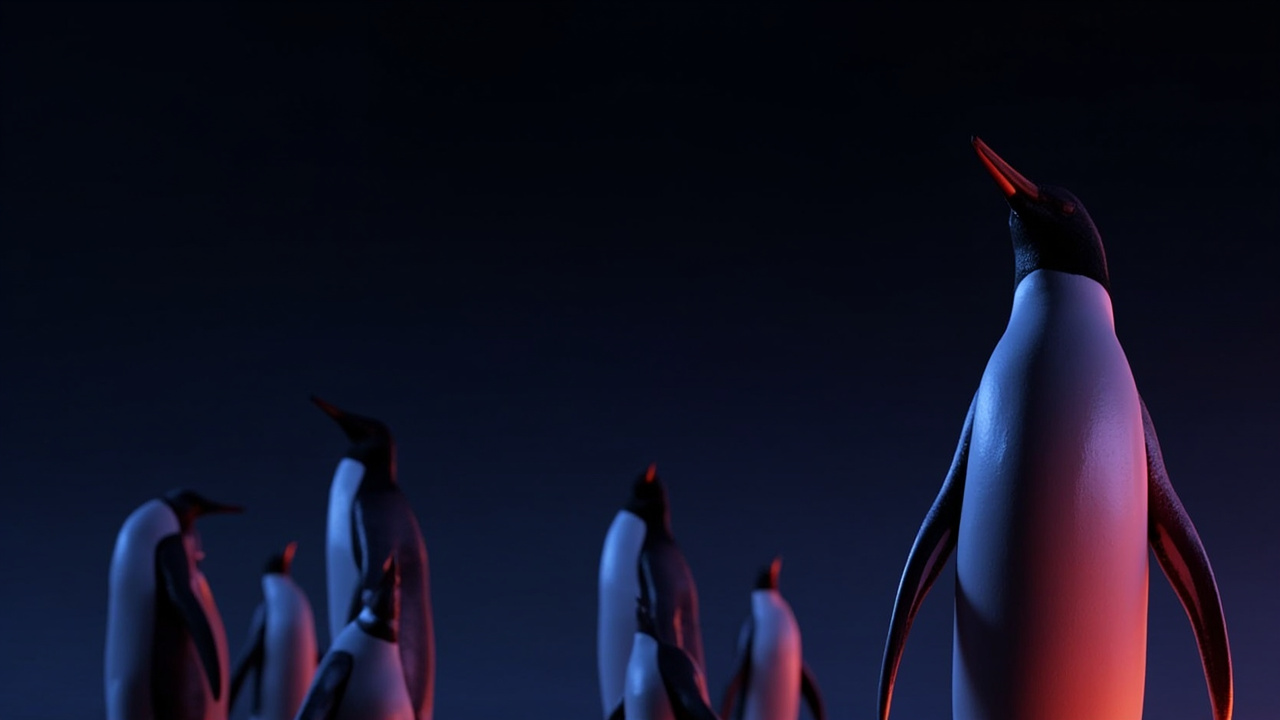
For over a century, researchers have been scratching their heads over gentoo penguins. These charismatic birds live across the South Pacific and Antarctica, and scientists kept arguing about whether they were one species, four species, or something in between. Now, a major new study published in Communications Biology has finally put the debate to rest—and it turns out the "complicated" answer was right all along.
The Plot Twist: Four Species, Not One
Here's where it gets interesting. Researchers from around the world, led by UC Berkeley's Rauri Bowie, got together and did something that wasn't really possible 20 years ago: they sequenced the complete genomes of 64 gentoo penguins from 10 different breeding colonies scattered across their entire range.
What they found blew everyone away. These penguins weren't just slightly different populations of the same species—they were actually four genetically distinct species that had been evolving separately for hundreds of thousands of years. One of those four? Completely new to science. The researchers named it Pygoscelis kerguelensis, and it lives on Kerguelen Island (and probably the nearby Heard Island) in the remote Southern Ocean.
Why This Matters More Than It Might Sound
Okay, so there's a new penguin species. Cool, right? But here's the thing: this discovery matters way more than just adding another name to a list.
Each of these four penguin species has evolved unique adaptations perfectly suited to their specific environment. The southern gentoo penguins living near Antarctica have beefed-up genes for storing fat and generating heat—basically, they're built like tanks to survive extreme cold. Meanwhile, the northern gentoo penguins living around South America have different genetic tweaks that help them stay underwater longer while hunting, like enhanced muscle and heart performance.
This is evolution in action, and it shows us how these birds have carved out their own niches across one of Earth's most hostile environments.
Here's Where Climate Change Enters the Room
Now for the sobering part: this discovery is happening at exactly the moment we need to understand these penguins better.
Gentoo penguins are spread across a huge range—from the Antarctic continent to tiny, vulnerable islands. That unique distribution makes them like a living test case for climate change. Some populations might actually find new territory as Antarctica shifts (though that's a mixed blessing at best). But the island populations? They've got nowhere to go if their homes become uninhabitable.
Juliana Vianna, one of the study's senior authors, put it perfectly: island species with tiny populations are basically trapped. If their environment changes, they can't just pack up and move somewhere else. They're stuck.
The Bigger Picture
This whole story captures something important about modern science. We're not discovering new species because we're out exploring uncharted jungles (though we are). We're discovering them because our DNA technology has gotten so good that we can finally see what was hidden in plain sight.
But it also reminds us that as we're discovering these species, we're simultaneously putting them at risk. We finally know gentoo penguins are actually four species—and now we have to figure out how to protect each one as the planet warms up.
Science giveth, and climate change taketh away. That's the awkward reality we're living in right now.