
Okay, I need to talk about this study because it's genuinely one of the most hopeful things I've read in a while.
You know that thing we've all heard about — how nerve damage in the brain or spinal cord is basically permanent? How people with spinal cord injuries or certain neurological diseases have to live with the damage because science just can't fix it?
Well… maybe not anymore.
Scientists at the University of Cambridge have been doing something pretty incredible. They grew miniature human brains and spinal cords in their lab — we're talking tinypea-sized organoids here, not anything you'd mistake for an actual brain. But these little structures are enough to study how our nervous system develops and, crucially, how it loses the ability to repair itself.
Here's the wild part.
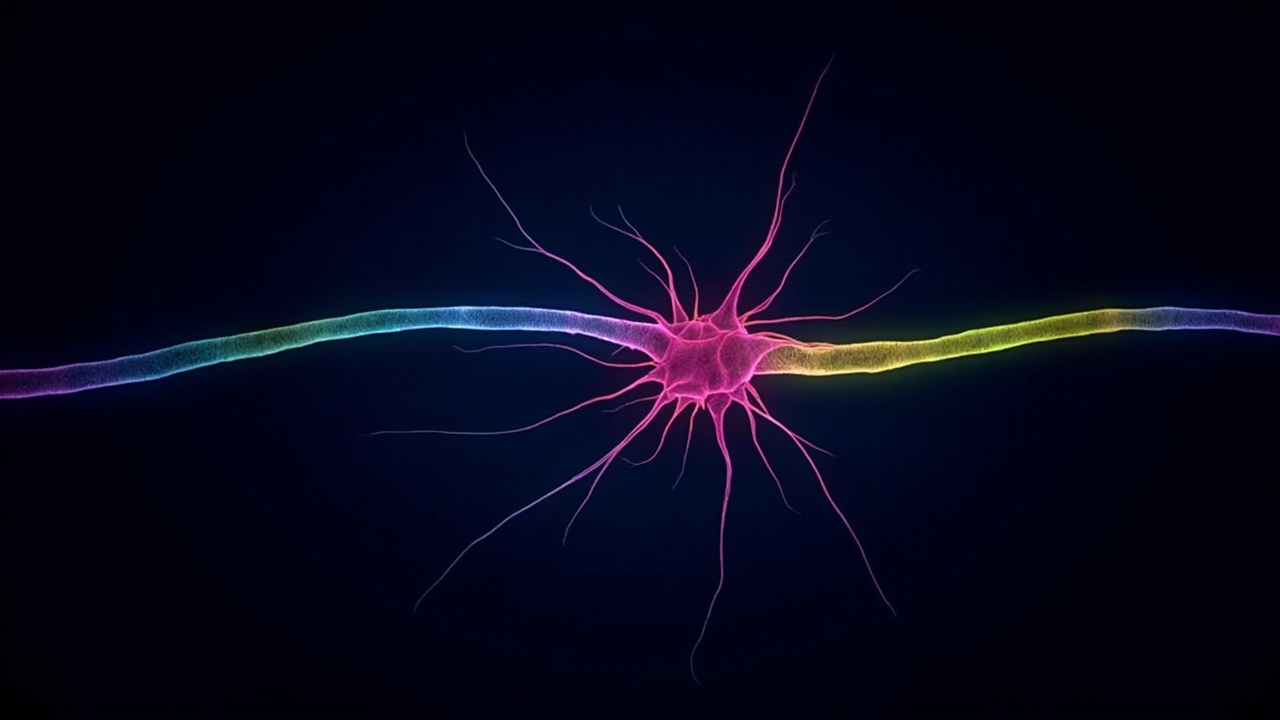
The researchers discovered that up until about 150 days of development (which roughly corresponds to the middle of a pregnancy), human neurons can still regrow their axons — those long fibers that carry signals between brain and spinal cord. But after that point? The regeneration ability drops off a cliff. It's basically built into our neurons as they mature.
George Gibbons, one of the researchers, put it this way: neurons from younger organoids could regrow long fibers after injury, but those from more mature organoids showed a sharp drop. Poor regeneration isn't something that happens to us later in life — it's programmed into us while we're still developing in the womb.
So what does this mean for the millions of people living with paralysis or nerve damage?
Here's where it gets really interesting. The team identified a network of genes that acts like a biological off switch. As neurons mature, this network kicks in and limits axon growth. But here's the thing — when the researchers blocked the key regulators in this network, the neurons started growing axons again. The switch wasn't broken; it was just flipped to the wrong position.
And it gets better.
They went through databases of existing drugs to find something that could affect this gene network, and they found lynestrenol — a hormone drug currently used for menstrual disorders and contraception. When they tested it on damaged neurons, it significantly boosted axon regrowth.
Now, I want to be careful here because this isn't a cure. Dr. András Lakatos, who led the study, is clear that lynestrenol itself probably isn't the answer to spinal cord repair. But what it proves is that we can directly target human neurons and restore their ability to regenerate. That's massive.
Think about it — for decades, we've accepted that nerve damage is permanent. We've built our understanding of spinal cord injuries around that assumption. But this research suggests that the block on regeneration happens during development, and it can still be reversed after this point.
The researchers are honest that they still need to show this strategy can help re-establish proper connections between brain and spinal cord cells. But they also point out that younger neurons can actually grow through environments that normally block repair at injury sites. So we're not talking about science fiction here — we're talking about a real mechanism that could potentially be targeted.
What I find really compelling is what this tells us about why animal models have been so frustrating for this kind of research. Mice and rats have given us some insights, but their biology is different enough that results often don't translate to humans. By using human stem cell-derived organoids, researchers can study the actual mechanisms in human neurons. This is why I find organoid technology so exciting — it lets us look at our own biology in ways we simply couldn't before.
Obviously, we're not going to see this in treatment tomorrow. There's years of research ahead, animal testing, human trials, and countless obstacles along the way. But for people living with conditions that were considered untreatable, this represents something real: a mechanistic understanding of why nerve damage happens, and a proven principle that it can potentially be undone.
Sometimes in science, the most important breakthroughs aren't the treatments themselves — they're the proof that a treatment is even possible.
Source: https://www.sciencedaily.com/releases/2026/05/260528082459.htm