
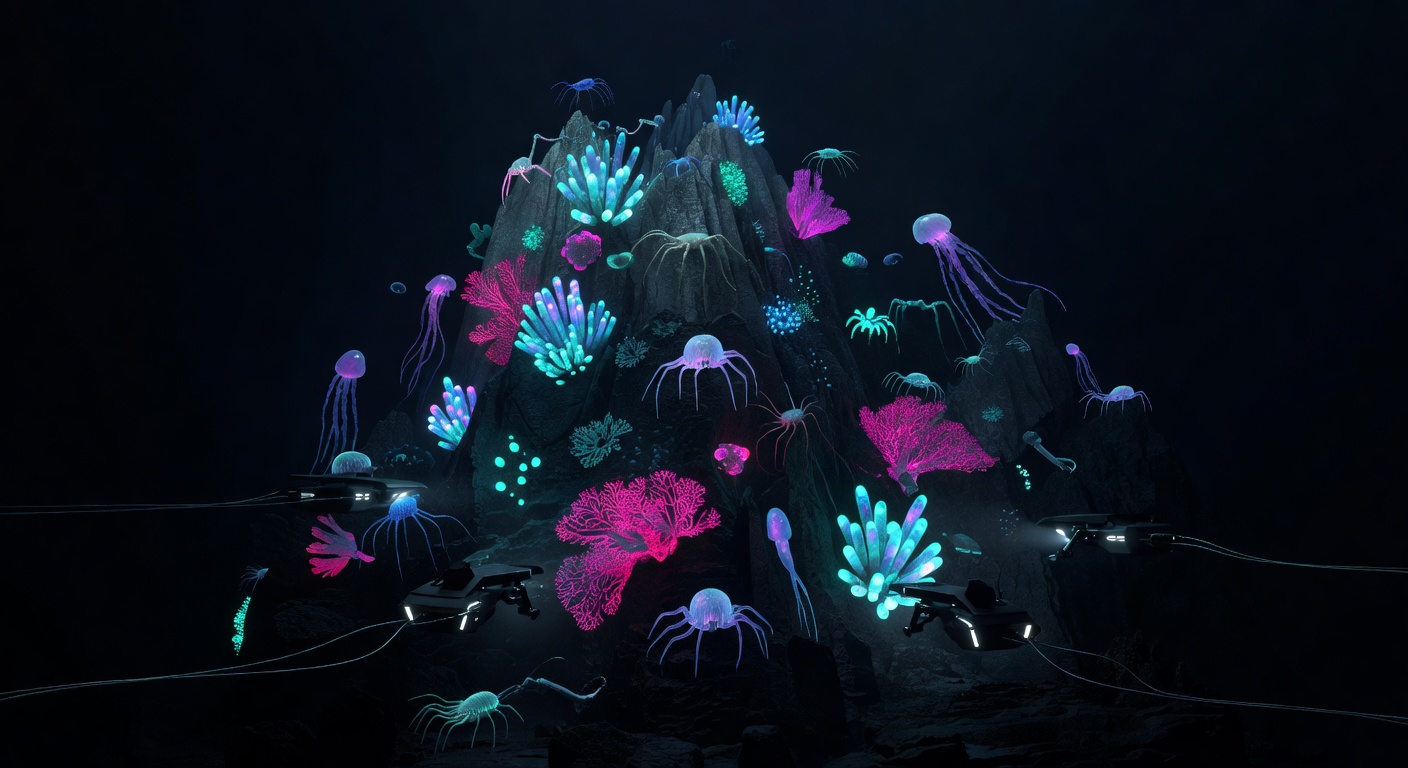
When Your Ocean Expedition Gets Really Lucky
Imagine spending four weeks on a research vessel hunting for secrets in the ocean, and then—boom—you find a massive underwater mountain that nobody really knew much about. That's exactly what happened to the team at the Schmidt Ocean Institute in 2024 when they were exploring the Nazca Ridge, way out in the Pacific Ocean (about 900 miles west of Chile, if you're keeping track).
The best part? They named their research ship the Falkor (too), after the luck dragon from The Neverending Story. And honestly, they might've needed that luck.
A Mountain That Makes Mount Olympus Look Small
Here's the thing about underwater mountains—we don't talk about them much because, well, they're underwater. But this particular seamount? It's genuinely massive. We're talking 3,109 meters tall, which makes it about 200 meters taller than Mount Olympus (you know, the famous Greek peak that over a million people have actually climbed).
To put it in perspective, it's roughly four times the height of the Burj Khalifa in Dubai—the world's tallest building. Except instead of tourists taking selfies at the top, there are mysterious creatures that barely anyone has ever seen before.
Mapping the Unmappable
One thing that really blew my mind while reading about this expedition: we've only mapped about 26 percent of the ocean floor in high resolution. That's right—26 percent. The ocean covers almost 71 percent of Earth's entire surface, and we're basically still fumbling around in the dark.
The team used sonar technology to create detailed digital maps of the seafloor. The way it works is pretty cool—sound waves get sent down, bounce off the ocean floor, and come back up. By measuring how long that journey takes, scientists can figure out what the terrain looks like. It's like a really, really sophisticated version of echolocation.
The Creatures Are Where It Gets Weird
But mapping mountains? That's just the opener. The real magic happened when researchers used underwater robots to explore what was actually living on these rocky slopes.
The discoveries were genuinely remarkable. They found:
The Promachoteuthis squid — This thing is so rare that everything scientists knew about it came from maybe a handful of specimens collected way back in the 1800s. Finding a living one (well, documented evidence of one) is like discovering a dinosaur.
A Caspar octopus — This was the first confirmed sighting of this species in the southern Pacific Ocean. Imagine being the first person to document something living in an entire ocean basin.
Flying spaghetti monsters — Okay, that's not the real name (it's actually Bathyphysa siphonophores), but honestly? The nickname is perfect. These creatures look exactly like what a three-year-old might draw if you said "make me something that looks like spaghetti flying through water."
A Living Garden Three Stories Deep
Beyond the weird critters, the team discovered underwater coral and sponge gardens that sprawl across areas the size of tennis courts. These ancient ecosystems have been chillin' on the ocean floor for who knows how long, basically untouched by humans.
The rocky slopes of these underwater mountains are like apartment buildings for sea life—perfect homes for creatures that want to live their best lives without much disturbance from the surface world.
The Bigger Picture
Here's what gets me excited about this research: it's not just about discovery for discovery's sake. The scientists are hoping these findings will actually influence policy and conservation efforts for these deep-sea areas.
Think about it. We protect national parks, we protect endangered species on land, but these underwater ecosystems? They're largely ignored simply because out of sight, out of mind, right? But they're just as valuable and fragile as any rainforest or coral reef you've ever heard about.
During their third expedition to this region in 2024, the team documented over 150 previously unknown species. That's not a typo. Scientists found 150 creatures that literally had no scientific record before.
The Real Adventure Is Just Beginning
The wild part is that we're still in the early stages of understanding these underwater mountains and how they all connect to each other. The seamounts of the southeastern Pacific are clearly biological hotspots, but we're only just scratching the surface (pun intended).
Every expedition adds more data, more understanding, and hopefully more motivation to keep these pristine environments safe. Because at the end of the day, you don't need to be able to climb a mountain for it to matter. Sometimes the most important mountains are the ones nobody ever sees.