
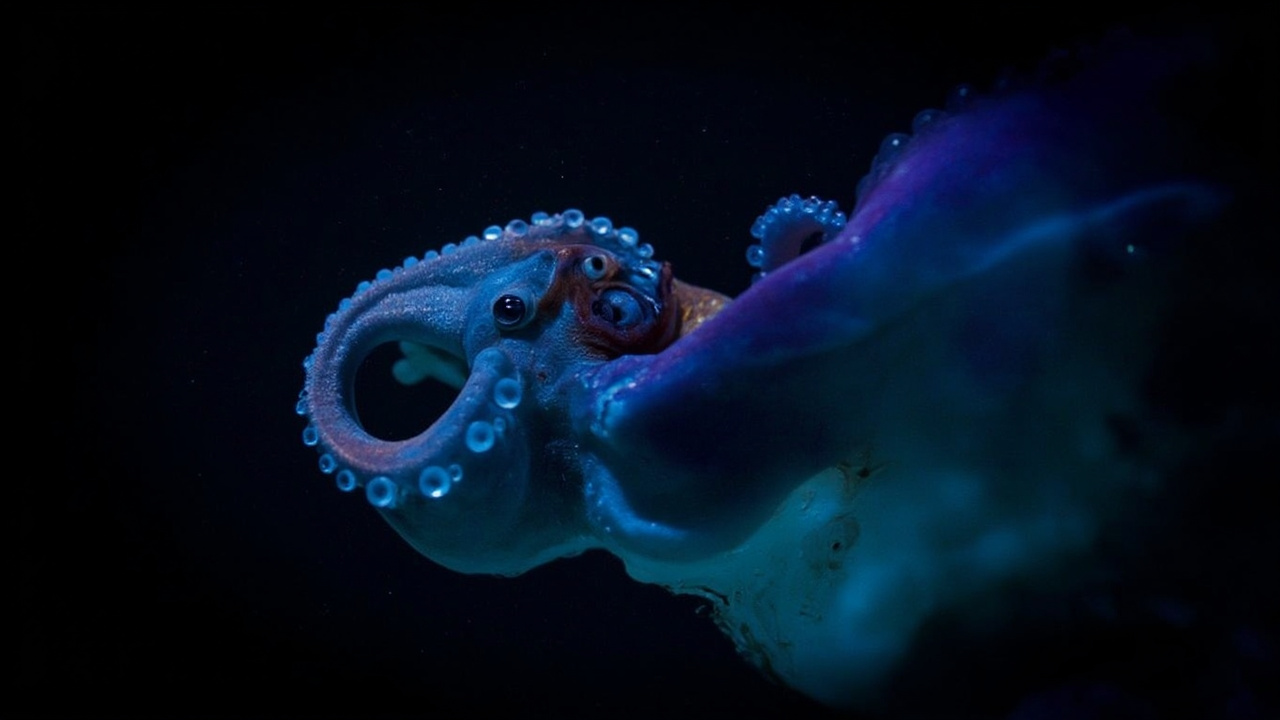
A Tiny Blue Surprise From the Abyss
Imagine you're commanding a robot submarine nearly 6,000 feet underwater, and suddenly something catches your eye—a little creature no bigger than a golf ball, glowing blue against the dark ocean floor. That's exactly what happened to researchers exploring near Darwin Island in the Galápagos back in 2015, and honestly, it sounds like something out of a sci-fi movie.
The Galápagos has always been famous for weird and wonderful wildlife—giant tortoises, marine iguanas, and creatures you won't find anywhere else on the planet. But this tiny blue octopus? That's a whole new level of "wait, that exists?"
The Hunt for a Mystery Octopus
The discovery happened during a deep-sea expedition led by the Charles Darwin Foundation and the Galápagos National Park Directorate. A remotely operated vehicle (basically an underwater robot with cameras) was exploring an underwater mountain when researchers spotted not just one, but three of these mysterious blue octopuses. They managed to collect one specimen and capture video footage of the others.
When they brought their catch back to the Charles Darwin Research Station, the little octopus immediately stood out from all the other deep-sea specimens they'd collected. It was so unusual-looking that researchers knew they had something special on their hands. They got in touch with Janet Voight, an octopus expert at the Field Museum in Chicago, and sent her photos.
Her reaction? "I'd never seen anything like it."
The Problem With Only Having One Specimen
Here's where things get tricky. Normally, when scientists want to officially describe a new octopus species, they have to dissect it. They need to examine the mouth, beak, teeth, and internal structures—all the tiny details that separate one species from another. But Voight had a problem: they only had one confirmed specimen, and she didn't want to destroy their only example by cutting it open.
So what do you do when you can't use traditional methods? You get creative.
Enter: CT Scanning Technology
The team decided to use advanced micro CT scanning—basically really sophisticated X-ray technology that can create detailed 3D images of objects without damaging them at all. Stephanie Smith, who runs the Field Museum's CT imaging lab, helped create incredibly detailed scans of the tiny octopus.
Here's what's cool about this approach: CT scanning combines thousands of X-ray images into a complete 3D model that shows both the outside and inside of something. It's like getting a peek inside without actually opening anything up. For such a rare specimen, this was perfect—they could see all the internal organs, the mouth structures, and everything else they needed to classify it as a new species, all without harming it.
"There's nothing like spending the day looking at something no other human has ever seen," Smith said. And honestly, that's a pretty amazing job description.
Meet Microeledone galapagensis
The new octopus was officially named Microeledone galapagensis, and it represents something pretty significant in the scientific world. For Janet Voight, who's spent over 40 years studying octopus evolution, this was the first time she officially led the description of a brand-new octopus species. That's incredible when you think about it.
Why This Matters More Than You Might Think
This discovery might seem like just a fun fact for trivia night, but it actually highlights something important: we barely know what's living in our oceans. These little octopuses live so deep that almost nobody on Earth has ever seen one. Voight makes a mind-blowing point—if you took every piece of land on Earth and put it all together, it wouldn't even cover the size of the Pacific Ocean. There's so much down there that we have no idea about.
Every discovery like this reminds us that the ocean is basically an alien world sitting right here on our own planet. And who knows? There might be thousands more species hiding in the depths, waiting for some curious researchers with a robot submarine to find them.
Pretty cool, right?