
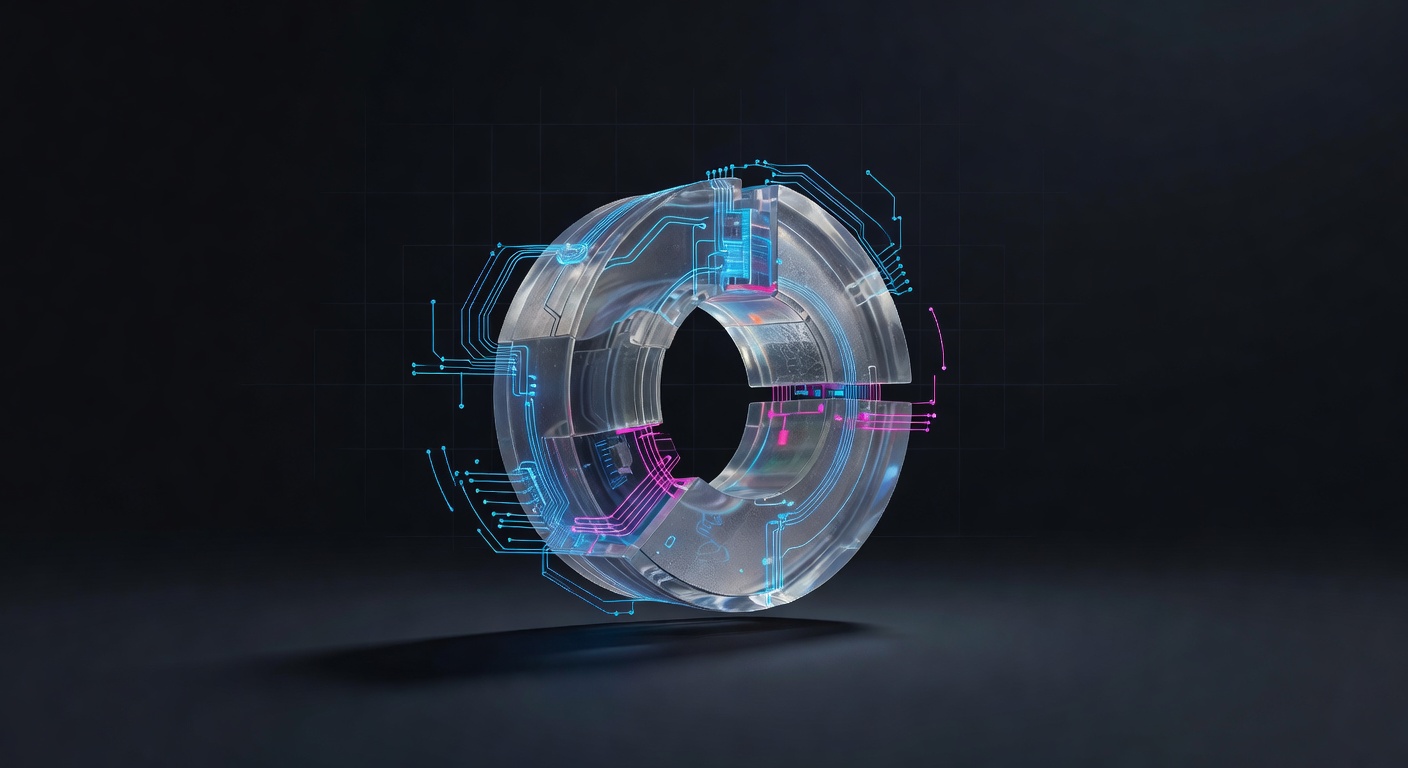
The Motor Problem Nobody Really Talks About
Here's something wild that most of us never think about: every electric motor that powers anything—from your phone to industrial factories—is secretly wasting energy. A lot of it, actually.
You'd think after hundreds of years of making motors, we'd have nailed this whole "turning electricity into motion" thing perfectly. And honestly, we've gotten really good at it. But there's still a fundamental physics problem we've never fully solved, and it's been quietly draining energy the entire time.
That Sneaky Energy Thief Called "Iron Loss"
Let me explain what's happening inside your motor right now.
Most motors work by using magnets and metal coils that create and switch magnetic fields constantly. Imagine a spinning rotor surrounded by magnets trying to push and pull it along. Simple enough, right? But here's where it gets annoying: every time that magnetic field flips and changes direction, the metal has to basically "remagnetize" itself.
Think of it like trying to change your mind really fast over and over again. Each time you switch, it takes effort. Each time the metal's magnetic properties flip, a tiny bit of energy gets wasted as heat. When a motor spins thousands of times per second, those tiny losses add up. This waste is called "iron loss," and it's the kryptonite of electric motor efficiency.
The faster the motor spins, the worse it gets. And the tinier the motor, the more pronounced the problem becomes. It's almost like physics is trolling us.
Enter: Metallic Glass (Yes, It's Real)
Now here's where a team at Saarland University decided to think outside the box—way outside.
Instead of accepting this fundamental inefficiency as inevitable, they asked: "What if we made motors from something completely different?"
Their answer? Metallic glass.
I know what you're thinking—"Isn't glass fragile? How is that going to help?" That's actually a great question, and it shows how counterintuitive this discovery really is.
Regular glass feels weak, but it's actually weird stuff. Glass is technically a solid, but its atoms are arranged randomly, almost like a liquid that got frozen in place. Scientists call this an "amorphous" structure. Here's the kicker: when you make glass out of metal atoms instead of silicon, you get something that's stronger than steel but maintains that disordered, amorphous atomic arrangement.
And that's exactly what you want for a motor.
Why Glass Actually Fixes Everything
The genius here is that metallic glass's amorphous structure—the fact that it has no organized crystal lattice—means something important happens during re-magnetization: the magnetic domains (tiny regions called Weiss domains) can reorient freely without getting blocked by crystalline structures.
In regular iron alloys used in motors, the atoms are arranged in neat, organized crystals. Those crystals actually obstruct the magnetic domains and make it harder for them to flip. It's like trying to reorient yourself in a crowded room versus an empty one.
With metallic glass, there are no crystal obstacles. The magnetic properties can shift smoothly and effortlessly. The energy loss plummets.
Ralf Busch, the researcher leading this project, put it perfectly: because there's no crystal structure to get in the way, the magnetic regions are free to dance around when the field changes. It's genuinely elegant.
The Manufacturing Challenge (And How They Solved It)
Of course, inventing something cool in a lab is the easy part. Making it at scale is where things get tricky.
The team needed to find metallic glass alloys that:
- Could easily turn to glass (vitrify) during manufacturing
- Had the right magnetic properties for motors
- Could be 3D printed using modern additive manufacturing techniques
That last requirement is huge. Nobody wants to manufacture motors the old-fashioned way anymore. 3D printing could mean custom motors designed for specific applications, produced on demand without massive factories.
Finding the right alloys took years. But about a year ago, the breakthrough happened: they identified three different metallic glass alloys that check all the boxes. These materials resist crystallization during the manufacturing process and can be successfully 3D printed into fully glass-like motor components.
That's genuinely impressive.
What This Means (And What Comes Next)
If they can scale this up—and that's a big if—we're looking at an entirely new generation of electric motors.
Imagine motors that waste significantly less energy as heat. Imagine electric vehicles that go farther on a single charge. Imagine smaller, more powerful industrial motors. Imagine medical devices and robotics that run cooler and more efficiently.
The team is now focused on refining the 3D printing process itself (specifically something called Laser Powder Bed Fusion) to make it more reliable and consistent. The European Union is funding this research to the tune of millions of euros, which tells you how seriously the scientific community takes this potential breakthrough.
The irony is delicious: we're solving a centuries-old efficiency problem with glass—one of the oldest materials humans have ever worked with. Sometimes the answer to a modern problem is hiding in plain sight.
My Take
What I find most interesting here isn't just the technology itself—it's the approach. Instead of accepting that motor efficiency had hit a hard ceiling, these researchers asked what rule of physics they could actually bend.
That's the kind of thinking that drives real innovation. Not incremental improvements, but fundamental rethinking of how we solve problems.
We're not quite at the point where you'll see glass motors in consumer products next year. But keep your eyes on this one. Sometimes the future sneaks up disguised as a solid piece of glass.