
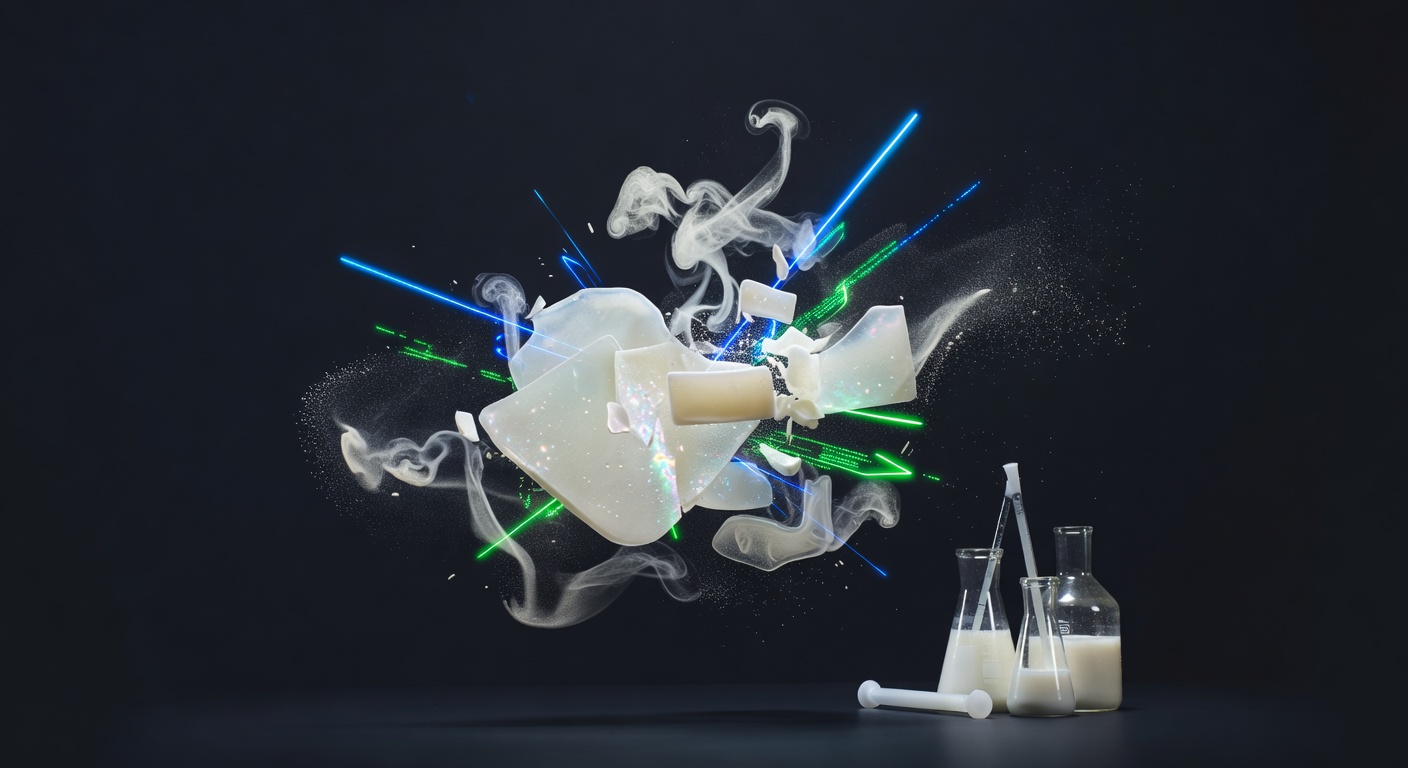
The Plastic Problem is Getting Out of Hand
Let's be honest — we all know plastic is a problem, but the numbers are honestly terrifying. We've gone from producing 2 million tons of plastic in 1950 to a staggering 475 million tons by 2022. That's like creating the weight of 250 million cars worth of plastic every single year!
And here's the kicker: about 60% of all plastic is used just once before getting tossed. Only 10% actually gets recycled. The rest? It's piling up in landfills, floating in our oceans, and breaking down into microplastics that are literally everywhere now.
Enter the Milk-Based Game Changer
But here's where things get exciting. Scientists at Flinders University in Australia have been experimenting with something pretty incredible — making plastic-like materials from milk protein. I know, it sounds weird at first, but stick with me here.
They're using casein, which is the main protein in milk (the same stuff that makes cheese possible), and combining it with modified starch and something called bentonite nanoclay. Add a few other ingredients to make it flexible and durable, and you've got a material that acts like conventional plastic but with one huge difference: it completely disappears in soil within 13 weeks.
Why This Actually Matters
What I find fascinating about this research is that they're not just creating another "green" material that barely works. They specifically designed this to perform like regular plastic while solving the environmental nightmare we've created.
The team tested it thoroughly and found that bacterial levels stayed within safe limits, meaning it's not going to cause weird health issues. Plus, because it's made from natural ingredients like milk protein and clay — materials that have been around forever — it integrates back into the environment naturally.
The Global Collaboration Angle
What's also cool about this research is the international collaboration aspect. The Australian team worked with chemical engineers in Colombia, and together they focused on using "inexpensive ingredients that are biodegradable and environmentally friendly."
This isn't just some expensive lab experiment that'll never see the real world. They're thinking practically about cost and scalability from the start, which is exactly what we need if we want this technology to actually make a difference.
The Bigger Picture
Look, I'm not saying milk-based plastic is going to solve all our environmental problems overnight. But projects like this give me hope because they show scientists are finally taking the plastic crisis seriously and coming up with genuinely innovative solutions.
The researchers point out that most single-use plastic comes from food packaging — think about all those takeout containers, plastic wraps, and disposable utensils we go through. If we could replace even a chunk of that with materials that safely disappear in a few months instead of hanging around for centuries, that would be huge.
What Happens Next?
The team says they want to do more antibacterial testing and continue developing the material. The next big hurdle will be scaling up production and making sure it can compete with traditional plastics on cost and performance.
But honestly? This feels like the kind of breakthrough we've been waiting for. A plastic alternative that actually works, doesn't cost a fortune, and disappears when we're done with it. That's the trifecta we need to start tackling this plastic mess seriously.
Source: https://www.sciencedaily.com/releases/2026/02/260227071922.htm