
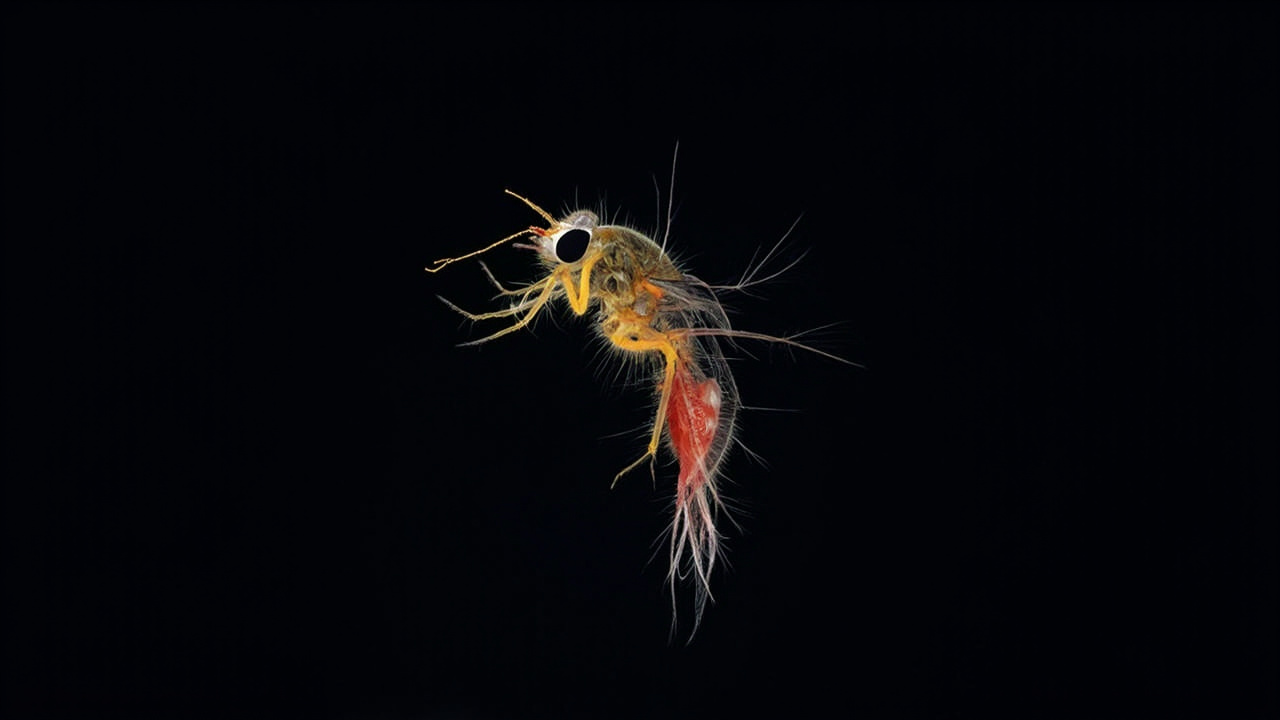
Okay, I have to share something with you that's genuinely exciting me this week. Scientists have done something pretty incredible: they've mapped every single neural connection in an adult fruit fly's nervous system. Not just the brain — the whole thing, brain plus the fly's version of a spinal cord, all connected together.
I know what you're thinking. "A fruit fly? Really? That's the big news?" But hear me out. This is actually a massive deal, and the reason why might surprise you.
Why Fruit Flies Are Neuroscience Superstars
Here's the thing about fruit flies — they're basically the lab rats of the genetics and neuroscience world. They're tiny, easy to breed, and don't take up much space. But here's what really matters: their brains contain about 160,000 neurons. That might sound like a lot, but compared to the roughly 86 billion neurons in a human brain? It's actually manageable.
Yet these little guys can still do complex stuff. They can navigate around obstacles, interact socially with other flies, learn from experience, and respond to all kinds of sensory information. Scientists have had incredible genetic tools to study individual neurons in fruit flies for years. But there's always been a missing piece.
The Missing Puzzle Piece
See, neuroscientists have long wondered: how exactly do neurons in the brain and body coordinate to create behavior? We knew pieces of the puzzle, but not the whole picture. In 2024, one team published a complete map of the fruit fly brain. Another team was working on mapping the nerve cord — the fly's spinal cord equivalent that controls the legs, wings, and other appendages.
The problem? Until now, these two maps were separate. You couldn't see how information flowed from the brain to the body and back again. It was like having a phone book for New York and a phone book for New Jersey, but no way to call between the two states.
That's exactly what this new research fixes. Scientists at Harvard Medical School and Princeton University combined their brain and nerve cord maps into one unified connectome — basically a complete wiring diagram of every neuron and how they connect to each other.
The Really Cool Part
Now here's where it gets interesting. When the researchers studied this complete map, they discovered something unexpected. Many fruit fly behaviors appear to be directed by local neural circuits in the relevant body parts, rather than by one central command area in the brain.
Think about that for a second. When you walk, you probably assume your brain is sending detailed instructions to your legs. But according to this research, fruit flies might be doing things differently. The circuits in their legs might be making a lot of the decisions locally, with the brain playing more of a supervisory role.
This is a completely different way of thinking about how nervous systems work. And honestly? It makes a lot of sense from an engineering perspective. If your legs can handle the details locally, your brain doesn't have to micromanage every step. That's efficient!
How Did They Actually Do This?
I want to take a moment to appreciate the technical achievement here, because it's genuinely mind-blowing. The researchers sliced a single fruit fly into thousands of impossibly thin sections. Then they used electron microscopy to capture millions of images showing every neuron and synapse. Then AI tools helped align all those images and assemble them into a 3D map.
The result shows exactly how each neuron connects with other neurons in the brain and nerve cord at the level of individual synapses. It's like having a street map that shows not just which roads connect, but exactly where each car meets each other car on every corner.
Why This Matters for All of Us
Here's my take on why this matters beyond just knowing more about fruit flies. Understanding the rules that govern nervous systems could help us understand our own brains better. The fundamental principles of how neurons connect and coordinate likely apply across species.
And the best part? This complete connectome is now freely available online. Researchers around the world can access it and use it for their own studies. That's the kind of open science that really accelerates progress.
So next time you see a fruit fly buzzing around your kitchen, maybe take a moment to appreciate that you're looking at a creature with a nervous system that we now understand better than ever before. These tiny insects just helped us take a giant leap toward understanding how brains — any brain — work.
Science is pretty cool sometimes, isn't it?