
When Metal Gets Weird
Okay, so imagine this: you look at a coffee cup on your desk. It's there. One place. Right? That's common sense, and it works great for everyday life.
But what if I told you that scientists just proved tiny pieces of metal can not be in just one place? What if they can be in multiple locations at the same time? Sounds like science fiction, right? Well, it just happened in Vienna, and I'm genuinely fascinated by what this means.
The Quantum Party Trick You've Probably Heard About
You might vaguely remember something called "superposition" from a science class or a pop culture reference. It's that wild quantum thing where particles can be in multiple states simultaneously until someone actually looks at them. Physicists have been playing with this for decades using tiny things—electrons, atoms, individual molecules.
The problem? The bigger something gets, the more it refuses to play along with quantum weirdness. A tennis ball never materializes in two different locations. Your car doesn't split into a superposition of being parked in your driveway and simultaneously cruising down the highway.
There's always been this unspoken question: where's the cutoff? At what point does the quantum world stop being strange and start being boring and classical?
The Metal Lump That Broke the Rules
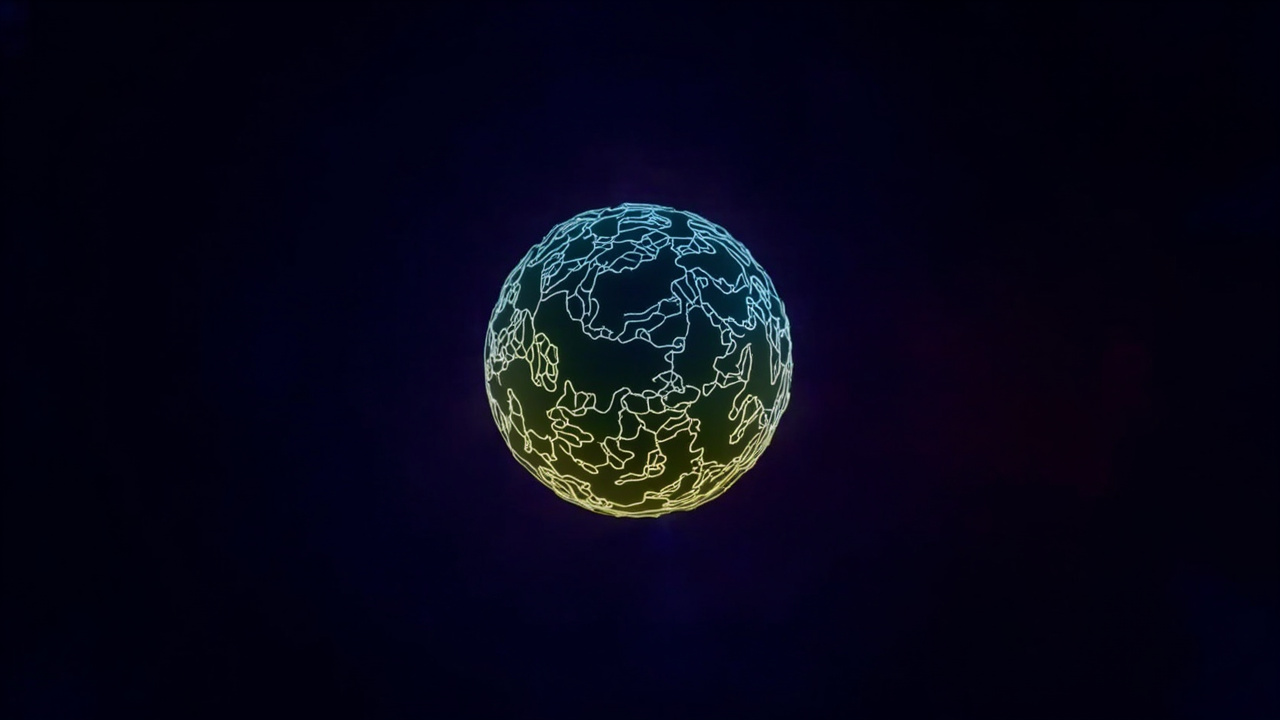
Here's what makes the Vienna experiment genuinely impressive: these aren't single atoms we're talking about. These are clusters of sodium metal containing thousands of atoms—we're talking 5,000 to 10,000 atoms bunched together. That's roughly 8 nanometers across (that's the scale of a transistor on your phone) and weigh over 170,000 atomic mass units.
To put it in perspective, that's heavier than most proteins floating around in your cells.
And yet... these little metal lumps still pulled off the quantum trick.
How They Actually Did It
The setup is almost artistically clever. The researchers created these cold sodium clusters and shot them through a series of barriers made from ultraviolet laser beams—essentially gratings of light.
The first laser grating nudged the clusters into superposition (physicist-speak for "existing in multiple states at once"). As these clusters traveled through the apparatus, they followed multiple paths simultaneously. When those different paths met up on the other side, they created an interference pattern—those characteristic stripes you get when waves overlap.
This pattern was exactly what quantum mechanics predicted it should be. The particles weren't secretly picking one path; they genuinely existed across a region dozens of times larger than their actual size. Total Schrödinger's cat energy.
Why This Is Actually a Big Deal
Scientists have a way of measuring how impressively an experiment tests quantum mechanics. They call it "macroscopicity," and honestly, it's a pretty cool concept. It basically asks: "How much harder would we have to work to see the same quantum effect using something bigger or different?"
This Vienna experiment hit a macroscopicity value that's about 10 times higher than anything done before. To replicate this using electrons instead of metal clusters? Scientists would need to keep electron superpositions intact for nearly 100 million years.
The metal clusters did it in a hundredth of a second.
Let that sink in.
The Creepy Part (In a Good Way)
What genuinely gets me about this is the philosophical angle. We've always sort of assumed there's a threshold where quantum effects fade away and the classical world kicks in. Bigger objects should "decohere"—quantum effects should collapse.
But this experiment keeps pushing that threshold further and further. What if there isn't a clean cutoff? What if quantum mechanics is actually universal, and we just haven't gotten good enough at our experiments to prove it? What if your coffee cup is technically in superposition too, but the measurement is just too sensitive to detect?
Okay, probably not. There's likely still some boundary. But not knowing exactly where it is? That's genuinely unsettling in the best way.
What Comes Next?
The team isn't stopping here. They're planning to test even larger particles and different materials. If they can keep pushing this boundary, they might eventually get to scales we can actually see with our eyes.
There's also a practical side. These quantum experiments work as incredibly precise force sensors—sensitive enough to detect forces that are absolutely minuscule. Future versions could have real applications we haven't even thought of yet.
The Bottom Line
This is one of those experiments that reminds me why quantum mechanics is simultaneously the most reliable scientific theory we have and absolutely bonkers. A lump of metal that exists in multiple places at once shouldn't work, but it does. Every time scientists push these boundaries, they force us to question what reality actually is.
And honestly? That's the kind of "breaking the rules" I can get behind.