
blog content with markdown (## for headings, etc.)
The Four-Letter Code That Makes Everything Alive
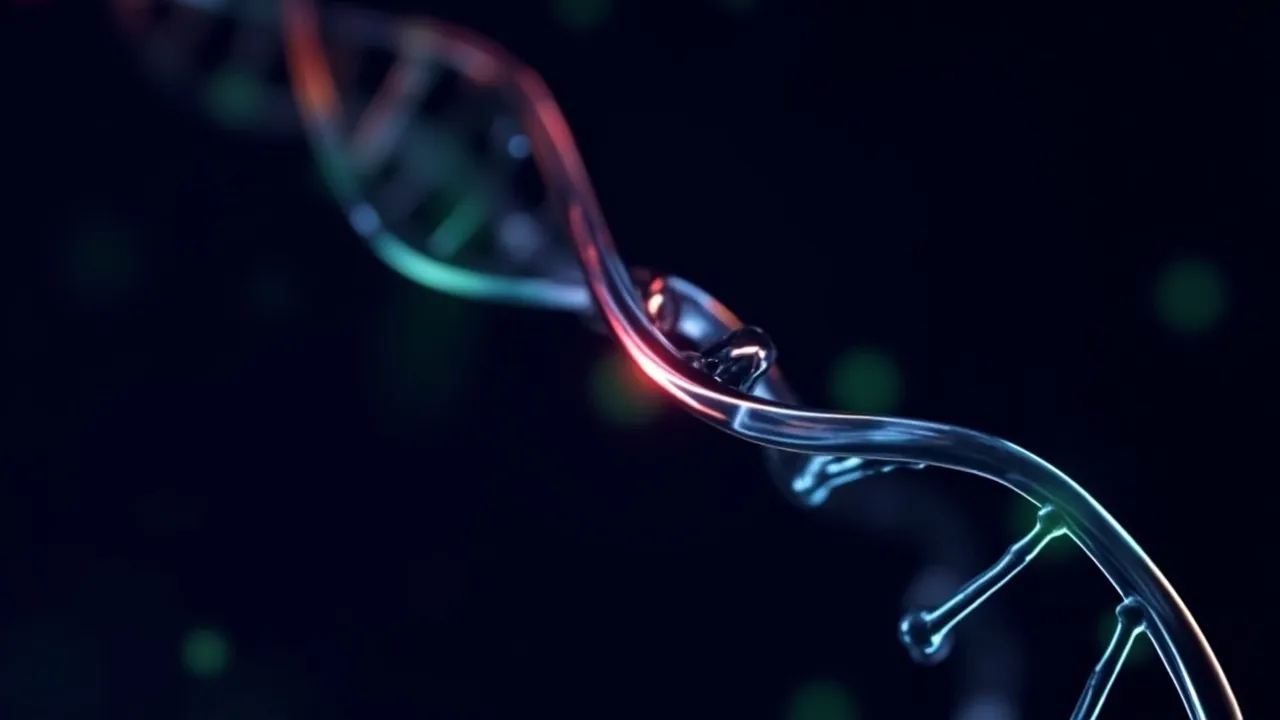
Here's something that blows my mind every time I think about it: every living thing on this planet — from your grandma to that weird mushroom in your backyard — uses the exact same four-letter genetic alphabet. A, T, G, and C. That's it. Four letters, and they spell out the instructions for everything that lives, breathes, and exists.
But what if we could add more letters to that alphabet? What if life could learn to read, write, and copy a whole new language?
That's exactly what researchers at the University of California San Diego just showed us is possible. And honestly? The implications are wild.
Meet the Tiny Translator
So here's the deal. Your cells have this amazing little machine called RNA polymerase. Think of it as the world's most dedicated translator. It reads the DNA in your cells (those four letters) and creates RNA copies — which is basically how your genes actually get expressed and do their thing.
The researchers wanted to know: could this molecular workhorse handle a bigger alphabet? Like, what if we handed it a genetic code with eight letters instead of four?
To figure this out, they used some seriously cool technology called cryo-electron microscopy. This thing can show us structures at scales smaller than the width of a single atom. We're talking serious close-up action at the molecular level.
Eight Letters? No Problem
What they found was fascinating. The RNA polymerase from E. coli bacteria could read and copy synthetic DNA letters — ones that don't exist in nature — using many of the same tricks it uses for the natural letters.
In other words, life's existing machinery doesn't just tolerate an expanded alphabet; it can actually work with it pretty naturally. The enzyme recognized these foreign letters through the same biochemical signals it evolved to use for the original four.
They even showed this works with base pairs that completely lack the hydrogen bonds scientists always thought were essential for this process. So basically, the enzyme is more flexible than we ever imagined.
Why Should You Care?
Okay, so scientists proved something cool in a lab. But here's why this matters for you and me:
Earlier research already used expanded genetic alphabets to create synthetic DNA that can specifically recognize liver cancer cells. Imagine diagnostic tools that are basically designed to find exactly what they're looking for, or medicines that are hyper-targeted to attack disease while leaving healthy cells alone.
By understanding exactly how RNA polymerase handles these synthetic letters, scientists now have a roadmap for building technologies around expanded genetic codes. We're talking about new diagnostics, new therapeutics, and maybe even engineered biological systems that can do things nature never figured out how to do.
It's a foundation. A starting point for an entirely new way of thinking about what biology can do.
My Take
I don't know about you, but I find this stuff absolutely thrilling. We're not just reading the code of life anymore — we're learning to edit the dictionary itself.
The fact that life's basic machinery can adapt to new letters so readily suggests that evolution, if left to its own devices for a few billion more years, might have stumbled onto this itself. The door was always there; we just found the key.
The researchers published two studies on this in Nature Communications and PNAS. The science is solid, the implications are huge, and honestly? I can't wait to see where this goes next.
Source: https://www.sciencedaily.com/releases/2026/09/260904000310.htm