
When Ancient Brewers Were Better Chemists Than We Realized
Okay, so here's something wild: while you're trying to perfect your homebrew recipe, the Qin people figured it out literally 2,300 years ago.
Recently, researchers excavating a tomb near China's Great Wall stumbled upon what might be the ultimate conversation starter for beer lovers everywhere—a bronze bottle containing about 15 cups of fully intact, ancient beer. And I'm not talking about some murky, unidentifiable liquid that might have been beer. This stuff was preserved so well that scientists could actually analyze its exact chemical composition.
The Giveaway: A Garlic-Shaped Bottle
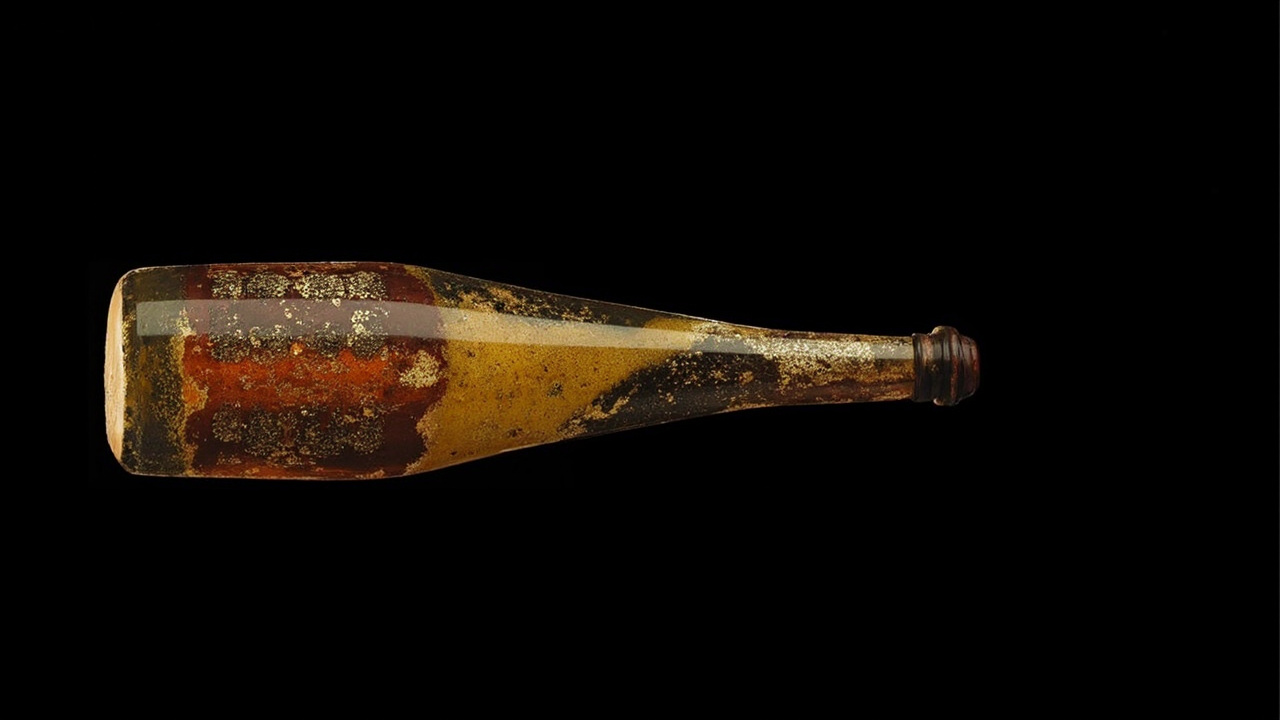
Before the researchers even cracked open this ancient time capsule, they had a pretty good hunch about what was inside. The bottle itself was shaped like a head of garlic, which was basically the ancient Chinese equivalent of slapping a beer label on something. It was the design choice for alcohol containers back then.
But here's where it gets really interesting—the shape wasn't just for show. These brewers understood that proper storage mattered. They sealed the bottle with fabric and a mud-organic compound mixture (a double-layer seal, if you will) that somehow kept everything fresh for over two millennia. That's some serious dedication to the craft.
The Chemistry Was Legitimately Impressive
When scientists ran tests on the pale, blue-green liquid inside, they found over 2,400 unique chemical compounds. That's not a coincidence—that's intentional design.
The beverage was grain-based (think ancient beer), loaded with lactic acid and oxalic acid, and packed with amino acids, fatty acids, and carbohydrates. The presence of nearly 8,600 yeast cells suggested the brewers had mastered fermentation starter techniques in a way that honestly sounds pretty advanced.
Here's what really blew my mind: they used a combination of proso millet, wheat, and barley—a trio that hasn't popped up anywhere else in historical records. This wasn't some universal ancient recipe. This was the Qin people's secret sauce.
These Weren't Accidental Brewers
What makes this discovery so significant is that it proves the Qin brewers weren't just lucky. They understood flavor profiling, they knew how to develop reliable fermentation starters, and they could execute a technically complex brewing process consistently enough that even regular people could enjoy it.
The tomb where this was found (Tomb M39 at Shanjiabo cemetery) wasn't some royal palace. It was part of a public cemetery that served both soldiers and civilians. The fact that well-made beer was accessible to non-elites tells us something important: these brewing techniques were refined enough to scale and reproduce, not just one-off experiments by master craftspeople.
Why This Actually Matters
It's easy to joke about finding ancient beer, but this discovery is genuinely important for understanding how technology develops. The Qin people didn't have modern chemistry textbooks or scientific equipment, yet they figured out the complex relationships between ingredients, temperature, time, and fermentation. They systematized it. They perfected it.
In a lot of ways, they were doing what modern brewers do today—just without the Instagram aesthetic or the craft beer pricing.
Plus, there's something oddly humbling about opening a bottle and realizing that people from 2,300 years ago were asking themselves the same question we ask today: "How do we make this taste good?"
The answer, it turns out, is the same now as it was then: understanding your ingredients, respecting the fermentation process, and sealing everything really, really well.