
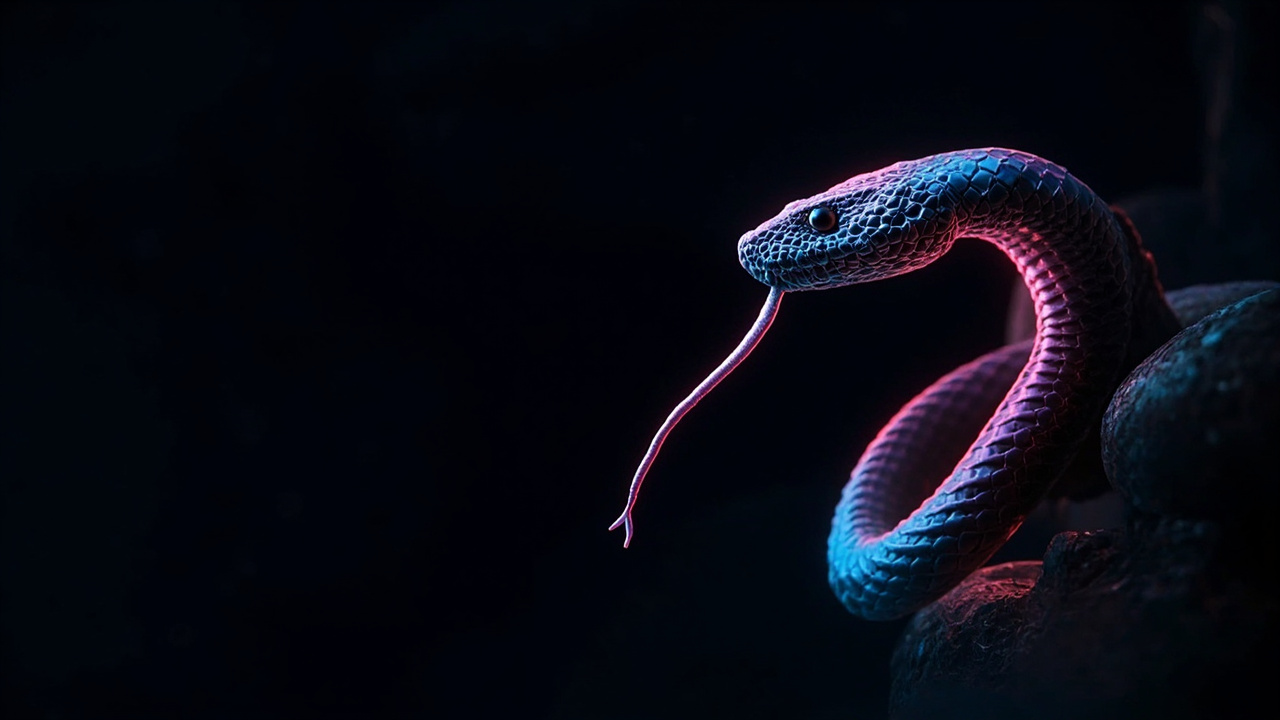
When Snakes Ruled the Earth
Imagine taking a walk through the forests of ancient India 47 million years ago. Now imagine doing that while genuinely worried about stepping on a snake the size of a city bus. Yeah, that's basically what life could've been like during the Middle Eocene period, thanks to a newly identified species scientists are calling Vasuki indicus.
Researchers Debajit Datta and Sunil Bajpai made this incredible discovery by studying fossils pulled from a lignite mine in Gujarat, India. And honestly? This find is shaking up what we know about prehistoric snakes in some really exciting ways.
The Evidence That Tells the Story
So here's where it gets interesting. The scientists didn't find a complete skeleton—instead, they have 27 vertebrae from this ancient serpent. Now, you might think that's not much to go on, but these bones tell an amazing story.
Each vertebra is massive—we're talking about bones that are roughly 2-4 inches wide and a little less than that in length. When you line up all those chunky vertebrae, the math gets wild. Based on these measurements alone, researchers estimate this snake stretched somewhere between 36 to 49 feet long. That's genuinely enormous.
To put it in perspective, the longest snakes alive today—your anacondas and reticulated pythons—top out around 20-25 feet. This ancient beast would've basically doubled that length.
Comparing It to Earth's Largest Snake Ever
Here's the thing that really gets people talking: we're comparing Vasuki indicus to Titanoboa, a prehistoric snake discovered in Colombia that currently holds the "largest snake ever" title. Both of these creatures occupy roughly the same size range, though scientists admit there's still some uncertainty in exactly how long Vasuki indicus was.
But here's what makes this comparison so cool—these two monsters evolved on completely different continents, in different time periods, from different evolutionary lineages. It's like nature ran the same "giant snake" experiment twice and got basically the same result. That's genuinely mind-bending if you stop and think about it.
How Did It Actually Live?
Okay, so we know it was big. But what does that actually mean for how the snake lived day-to-day?
Based on its massive, thick body structure, scientists reckon Vasuki indicus wasn't exactly zipping around. Instead, it probably moved slowly and deliberately, relying on the classic ambush hunting strategy you see in modern anacondas and pythons. Picture this: the snake lies motionless in the water or among thick vegetation, waiting for prey to come close enough. Then—boom—it strikes with incredible power and constriction.
For a 50-foot snake, that's a devastatingly effective strategy. You're not catching an animal that size trying to actively chase down prey.
The Family History
What I found genuinely fascinating about this research is how it connects Vasuki indicus to a larger family of snakes called Madtsoiidae. These snakes were hanging around Earth for almost 100 million years—from the Late Cretaceous period right through to the Late Pleistocene.
The really cool part? These snakes weren't limited to just one area. Fossil evidence suggests they spread across Africa, Europe, and India. According to this new research, giant species like Vasuki indicus might have actually originated on the Indian subcontinent and then migrated westward toward southern Europe and Africa during the Eocene epoch.
This suggests ancient snakes were genuinely mobile, moving across continents and establishing themselves in new territories. It's a reminder that the prehistoric world was far more dynamic and interconnected than we sometimes imagine.
Why This Matters
Discoveries like this one reshape our understanding of Earth's history. They show us that enormous predatory snakes weren't some weird one-off phenomenon—they were successful creatures that evolved multiple times across different continents.
It also highlights just how incredible the fossil record can be. From 27 well-preserved vertebrae, scientists can confidently estimate an animal's full size and behavior. That's the kind of detective work that makes paleontology genuinely exciting to follow.
The Bottom Line
Every time we find evidence of prehistoric mega-snakes like this, it reminds us how absolutely wild Earth's ancient ecosystems were. These weren't just bigger versions of snakes we know today—they were apex predators that shaped entire food webs and ecosystems. Vasuki indicus deserves its spot among Earth's largest serpents, and honestly, it's thrilling that we're still discovering creatures this impressive after millions of years.
Source: https://www.sciencedaily.com/releases/2026/04/260429043500.htm