
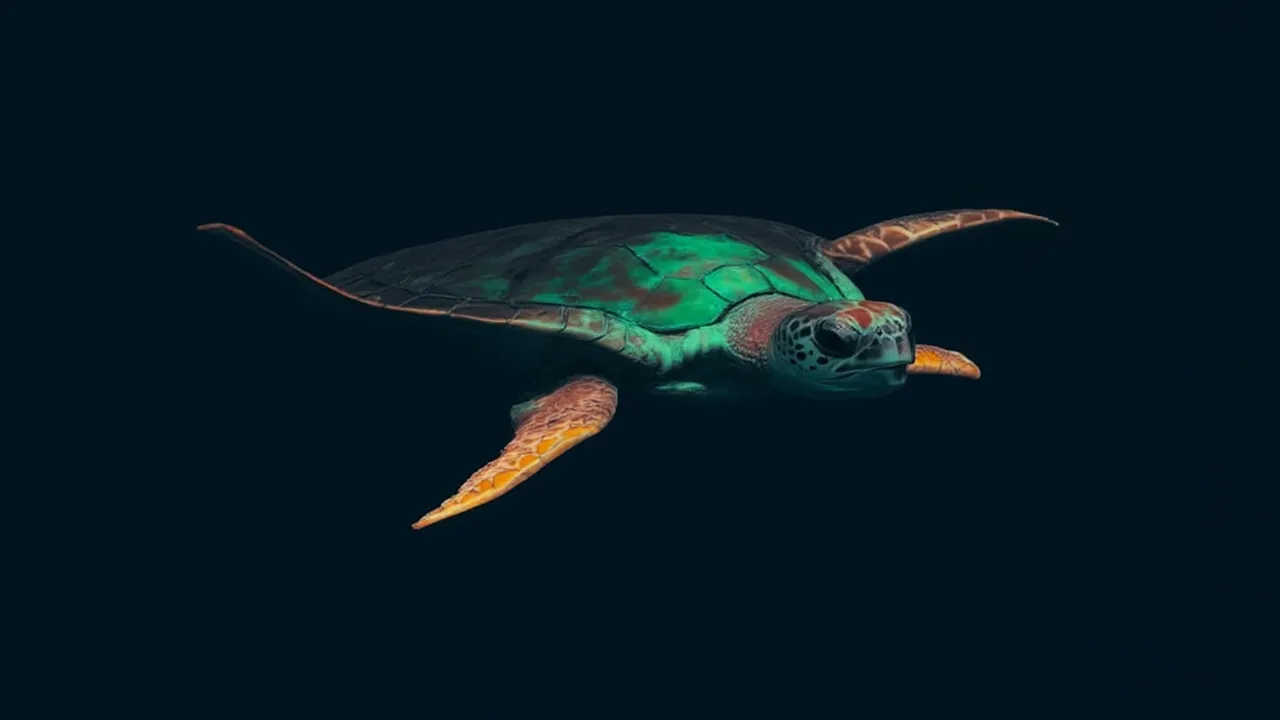
Okay, I have to admit — when I first heard about this study, I expected the usual sea turtle story. You know the one: brave little turtles hatching on a beach, scurrying toward the ocean, and then embarking on an incredible journey spanning thousands of miles across open water. Sea turtles are basically the marathon runners of the animal kingdom, right?
Well, scientists studying yellow-morph green sea turtles in the Galápagos just got a plot twist they didn't see coming.
The Homebodies of the Sea Turtle World
A team of researchers from the United States and Ecuador decided to tag nine adult turtles near several islands in the Galápagos Marine Reserve back in 2015. They slapped electronic trackers on these guys (carefully, of course), connected them to satellites, and settled in to watch where these turtles would go.
Here's what they expected: the turtles would eventually head off toward distant beaches in the western Pacific to reproduce, following the epic migratory patterns that sea turtles are famous for.
Here's what actually happened: over three years of tracking, not a single tagged turtle left the Galápagos Marine Reserve. Not one.
"I was genuinely surprised," said Dr. John W. Rowe, one of the study's authors. "We expected them to migrate to distant beaches in the western Pacific to reproduce, yet interestingly, none of our satellite-tagged turtles even left the Galápagos Marine Reserve."
Meanwhile, these turtles had names like Bernardo, Sara, Ainoa, and Leandro. How adorable is that? Science can be cute sometimes.
What's the Deal With These Yellow Morphs?
Let me break down what makes these turtles special. Green sea turtles are unique among the seven sea turtle species because adults are basically underwater cows — they're the only ones who are primarily vegetarian, munching on seagrass and algae instead of jellies and fish.
There are two genetically distinct types of green sea turtles in the Pacific: yellow morphs (found in the western Pacific) and black morphs (found in the eastern Pacific, off the Americas). The Galápagos is the only place on Earth where both types swim together in the same waters. How cool is that?
But here's the interesting part: even though they share the same dining spots, these two groups seem to have different lifestyles. The yellow morphs appear to be the homebodies, while black morphs are more likely to take extended trips — some have even been documented traveling to feeding grounds off Central and South America.
A Tortoise (Turtle?) of a Different Color
The tracking data revealed some fascinating patterns. Most of the tagged turtles preferred to hang out near a single island, with occasional trips just a few kilometers offshore. But a few of them got a bit more adventurous.
Ainoa was the free spirit of the group. After being tagged near San Cristóbal, she eventually made her way to Santa Cruz and then to Isabela. Bernardo and Sara also traveled between islands, while Leandro went back and forth between Isabela and Española.
The researchers also noticed something interesting about timing. The turtles only moved between islands during the cooler months — April through October. During the warmer parts of the year, they seemed content to stick closer to home. Maybe they're not fans of the summer heat? Honestly, I can relate.
On average, each turtle used a home range of about 1,498 square kilometers, though some turtles were much more roam-happy than others.
So Why Are They Staying Put?
Here's where things get really interesting. The scientists think they've figured out part of the puzzle.
Female yellow-morph turtles aren't known to lay their eggs on Galápagos beaches. So at some point, these ladies will need to leave to find their natal beaches somewhere in the western Pacific — the place where they were born and where they feel instinctively compelled to return to reproduce.
But here's the catch: the study only followed turtles for up to 418 days. That's just a snapshot in the life of an animal that can live for decades. Those longer migrations might happen eventually, just not during the study period.
Dr. Juan Pablo Muñoz Pérez, another researcher on the team, thinks the females will eventually take that big migration. The males, on the other hand? They might genuinely be year-round Galápagos residents. Who can blame them? Beautiful islands, plenty of food, no need to deal with Pacific Ocean traffic.
Why This Matters for Conservation
Here's where science meets real-world action. Since some of these turtles travel between multiple islands, protecting just one spot isn't enough.
The Galápagos Marine Reserve covers around 198,000 square kilometers — that's a massive area. But if turtles are routinely moving from island to island, then the waters between those islands matter too. Those corridors need protection just as much as the feeding grounds themselves.
Think of it like protecting a national park but forgetting about the highways connecting different parts of it. The wildlife still needs those connections to thrive.
This is especially crucial because green sea turtles are already listed as endangered. Understanding their movement patterns helps us figure out where to focus conservation efforts and how to keep these ancient creatures swimming around for generations to come.
The Bigger Picture
I love stories like this because they remind us that nature is full of surprises. We think we know how things work — sea turtles migrate, birds fly south, bears hibernate — and then the natural world throws us a curveball.
These yellow-morph turtles in the Galápagos have apparently figured out that there's no place like home. And honestly? Maybe they've got the right idea.
What do you think? Would you rather be a marathon ocean traveler or a cozy island resident? Drop a comment below and let me know!
Source: Frontiers in Amphibian and Reptile Science via ScienceDaily