
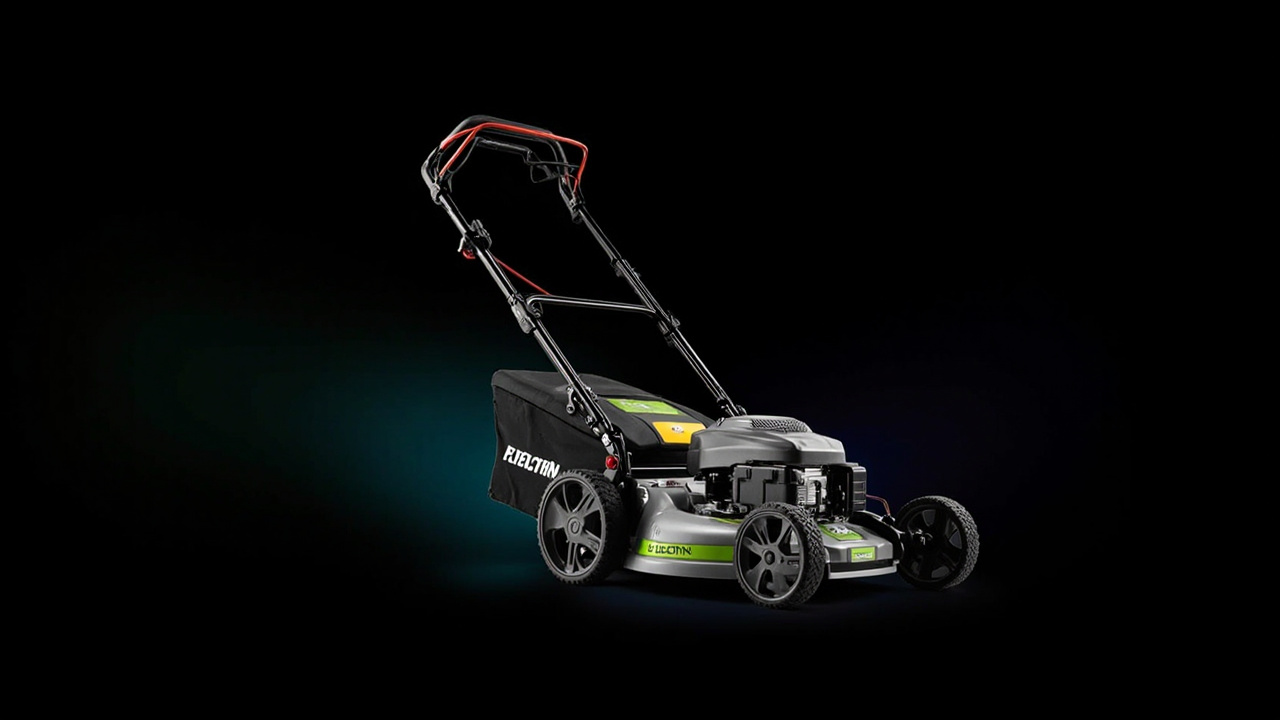
The Mower That Does Half the Work For You
Let me paint a picture: You've got a yard that's a bit too big to comfortably push a regular mower around, but not massive enough to justify dropping thousands on a riding mower. Sound familiar? This is where self-propelled mowers enter the chat.
Here's the magic: instead of your arms doing all the heavy lifting, the engine or motor powers the wheels. You just squeeze a handle or nudge a lever, and boom—the mower glides forward like it's got a mind of its own. Release the lever, and it stops. It sounds simple because it is, and that's the whole point.
The Great Gas vs. Electric Showdown
This is where things get interesting. For years, gas-powered mowers dominated the market without much competition. But lately, electric models are making serious moves, and honestly? They're not just gimmicks anymore.
Team Gas makes some solid arguments:
- More raw power, especially when dealing with thick, overgrown grass
- Refueling takes five minutes. You're done.
- They've been perfected over decades
Team Electric has some compelling counterpoints:
- Whisper-quiet operation (your neighbors might actually appreciate you)
- Zero emissions and way less maintenance headaches
- No more dealing with stale fuel or spark plugs
- The initial cost is often lower
The catch with electric? Battery life. If you've got a massive property, you might find yourself waiting around for a recharge mid-mow. For most suburban yards, though, it's increasingly becoming a non-issue.
How Do They Actually Test These Things?
You know what I appreciate? The fact that these mowers get real-world testing. We're not talking about some guy mowing a perfect lawn once in ideal conditions. Real testing means:
- Tackling wet grass (the nightmare scenario)
- Battling hills and slopes
- Different seasons, different grass types
- Mulching, bagging, side discharge—the whole operation
- Actually exhausting batteries and recharging them
- Using every feature the mower claims to have
This is the kind of testing that separates the hype from the honest truth. A mower that works great on a dry, flat lawn might completely choke on your overgrown spring mess. The best reviews account for that.
The Sweet Spot
What really matters is matching the mower to your actual life. If you're mowing a quarter-acre every week in good conditions? Electric makes sense—quieter, cleaner, simpler. If you've got dense grass, wet conditions, or you procrastinate on lawn care until it's practically a jungle? Gas might still be your best friend.
The good news? We're at a point where you genuinely have solid options either way. The days of electric mowers being "basically toys" are long gone. And gas mowers have gotten better at efficiency and ease of use too.
What's Really Changed
The biggest shift I'm seeing is that electric isn't the underdog anymore. Battery technology has improved so much that even heavy-duty self-propelled models can run all season without stress. Manufacturers are pouring serious R&D money into these machines because they know consumers care about clean air, quiet mornings, and not having to wrench on their equipment.
That said, gas still reigns in certain situations. Professionals and people with genuinely large properties still reach for gas. But for the average homeowner? The calculation is getting closer every year.
The Real Bottom Line
Self-propelled mowers beat manual pushing any day of the week—that much is settled. The real question is which fuel source fits your life. Test drive both if you can. Think about your typical mowing conditions, how often you actually mow, and whether you care about noise and emissions.
Both options work. Both have gotten genuinely good. Pick the one that feels right for you, and stop overthinking it. Your lawn will be fine either way.
Source: https://www.popularmechanics.com/home/lawn-garden/a27103287/self-propelled-lawn-mowers