
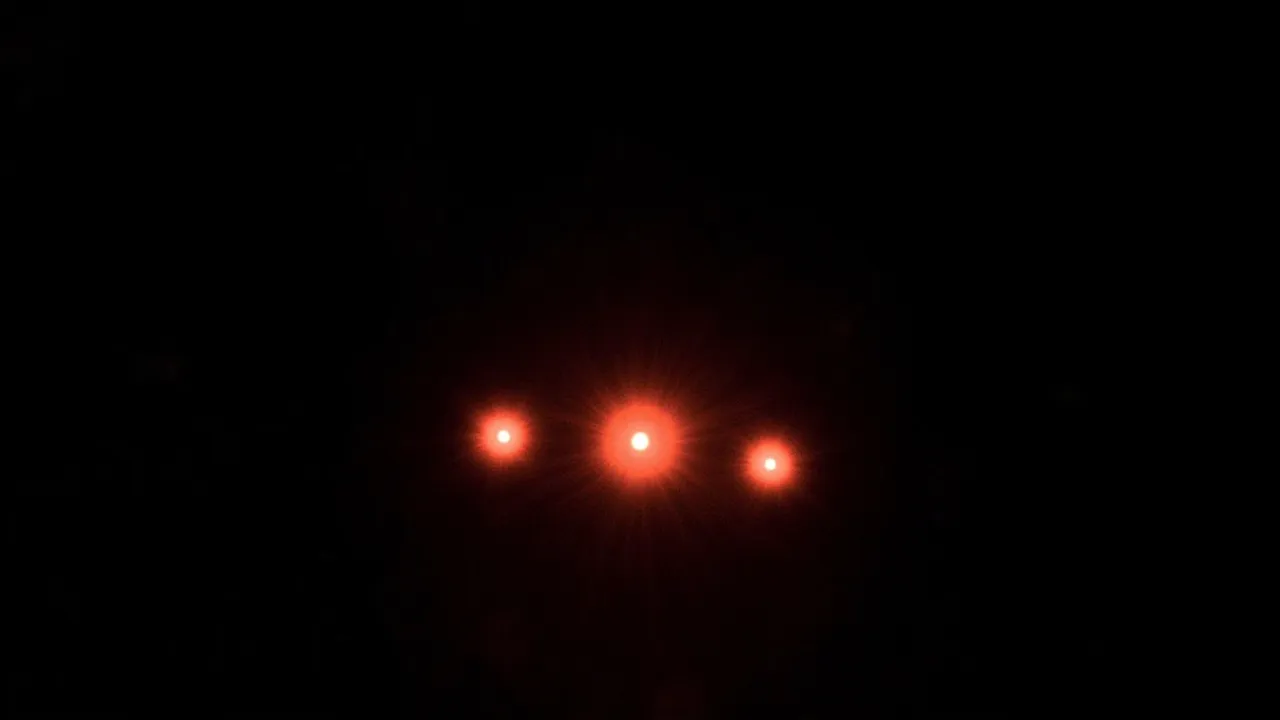
The Lights That Captured America's Imagination
Okay, can we talk about the Marfa Lights for a second? Because this is one of those stories that perfectly captures why humans are so fascinated by the unknown.
Picture this: you're a cowboy in 1883, driving cattle through the Chihuahuan Desert under a vast West Texas sky. The sun's setting, the horizon's turning gold and purple, and then—you see them. Floating orbs of light, red and blue and white, dancing and swirling in ways that make absolutely no sense. No cars, no houses, no explanation.
What would you think?
Probably ghosts. Maybe Indians trying to signal something. Or, honestly, if you were me, you'd probably question every single life choice that led you to be alone in the desert watching spooky lights. (I have a very active imagination and this would not end well for my blood pressure.)
From Local Legend to Tourist Attraction
Here's the thing about the Marfa Lights—they've been enchanting (and freaking out) people for well over a century. The first written account appeared in a 1945 newspaper, but locals say a cowboy named Robert Reed Ellison spotted them way back in 1883 while moving cattle through the Paisano Pass.
Over the decades, these mysterious orbs became the weird thing in Texas. People would drive out to a designated viewing area just to watch the lights dance at dusk. You can still visit today, and honestly? That alone makes me want to plan a road trip.
The explanations over the years have run the gamut: swamp gas, St. Elmo's fire (which is basically lightning's weird cousin), rocks that somehow create electrical charges, and—of course—aliens. Because of course aliens. When you can't explain something, at some point someone will suggest extraterrestrials.
The Science Squad Shows Up
But here's where it gets interesting. In recent years, actual scientists decided to investigate.
In 2004, a group of students from the University of Texas at Dallas loaded up their car with lasers, walkie-talkies, traffic monitoring equipment, and high-speed video cameras. They drove out to Marfa and set up shop at the viewing area. Their mission? Capture the lights and figure out what was going on.
And you know what they found? The explanation was... cars.
When they flashed headlights along Highway 67 (about two miles away), the lights at the viewing location matched perfectly. Four years later, another team from Texas State University ran spectroscopic experiments and came to the same conclusion. Car headlights. Campfires. Very normal, very Earth-based things.
I have to admit, there's something both satisfying and slightly disappointing about this. On one hand, science works! We can figure things out! On the other hand... come on, I wanted it to be ghosts.
But Wait—There's a Plot Twist
Here's what really got me about this story, though.
Those studies explain the lights pretty well—cars driving along the highway, headlights bouncing and refracting through the atmosphere in ways that create those dancing, colorful orbs. Case closed, right?
Except... Robert Ellison saw the lights in 1883. The automobile didn't really arrive in West Texas until the early 1900s. So what were those original lights?
Scientists talked to Ellison's granddaughter, and she said her grandfather mentioned "lights down there they couldn't explain." But his descriptions were vague. He mentioned thinking they might be Indian fires, but nobody really knows for sure.
Here's where it gets really interesting, though. A 2025 geological survey discovered something wild: Marfa is sitting on top of a legitimate geothermal hotspot. We're talking about some of the hottest rocks underground east of the Rocky Mountains.
So while the car-headlight theory might explain the lights tourists see today, those 1883 lights? Maybe they had a different source entirely. Maybe they were connected to what's bubbling away beneath the surface.
Why This Story Stuck With Me
I love this story because it reminds me that the world is both more ordinary and more extraordinary than we think.
Yes, the Marfa Lights have a boring scientific explanation most of the time. And that's wonderful. It means our tools and methods for understanding the world are getting better. It means we don't have to default to "ghosts" or "aliens" when something seems mysterious.
But the world is also genuinely strange in ways we're still discovering. That geothermal hotspot under Marfa? That's real geology, real Earth magic, even if it's not supernatural. The atmosphere does weird things to light. Cars create optical illusions. The desert is vast and mysterious and beautiful.
Maybe the lesson here isn't that the Marfa Lights were never mysterious—it's that mysteries evolve. We solve one puzzle and discover a new one underneath.
If you ever find yourself driving through West Texas near sunset, I genuinely recommend stopping at the Marfa Lights Viewing Area. Watch the horizon. See if you can spot the dancing lights.
And then, if you want to really embrace the spirit of the place, learn a little about what's going on beneath your feet. Because the real secret of Marfa might not be in the sky at all.
It might be everything we've been standing on this whole time.