
Okay, Let's Talk About the Ocean Stuff
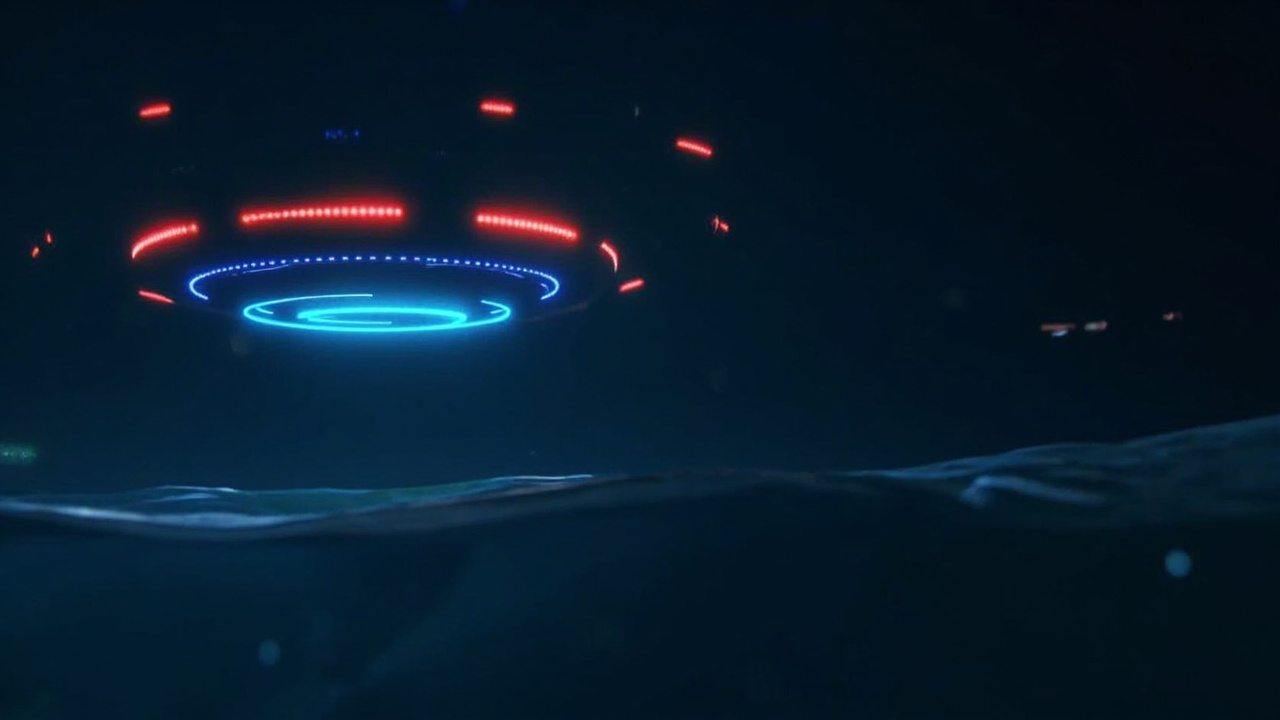
I've been following UFO stories for years, and honestly? Most of them are pretty easy to dismiss. A blurry video, some lights in the sky that turned out to be airplanes—classic pareidolia doing its thing. But lately, something has shifted. There's a whole new category of sightings that's way harder to explain away: Unidentified Submerged Objects, or USOs.
Since August 2025, an app called Enigma has collected over 9,000 reports of mysterious objects near U.S. coastlines and major bodies of water. That's not just a few random sightings—it's a pattern. And here's what makes it interesting: people aren't just spotting things in the sky anymore. They're seeing objects that seem to move between water and air at absolutely jaw-dropping speeds. We're talking hundreds of miles per hour.
Most of these reports are coming from two places: California and Florida. Which, honestly, makes sense—coastal areas with lots of water traffic, fishermen, boaters, and naval operations. If you're going to spot something strange, these are the hotspots.
The Government Finally Gets Serious (Sort Of)
Here's the thing that made my jaw drop: the U.S. government actually changed the terminology. They shifted from calling these objects "Unidentified Aerial Phenomena" to "Unidentified Anomalous Phenomena"—UAPs. The "A" in UAP now stands for "Anomalous" instead of "Aerial."
Why does that matter? Because it opens the door to phenomena that aren't just in the air. We're talking about objects in water, in space, and everywhere in between. This isn't fringe science anymore—this is officially recognized by Congress.
A bipartisan group actually pushed for this change, which tells me this isn't a partisan thing. This is about national security, and people from both sides of the aisle are taking it seriously.
The Pentagon's "Orbs Over the Pond" Video
Recently, the Pentagon released footage from an iPhone—yes, an iPhone—of something hovering over a pond. According to the official analysis, it looked like a "plasma-like sphere" that was changing shape and brightness. Sometimes the main light would split into smaller glowing points. It hung around for about 45 minutes before disappearing.
Now, here's the kicker: the official explanation was "sunlight backscattering from reflected snow illuminating the underside of low-altitude clouds." But the analysis came with "low confidence," and the case is still considered unresolved.
When the Pentagon themselves can't explain something and admit it, that's noteworthy.
The Tic-Tac Incident: The One That Started Everything
If there's one USO event that turned skeptics into believers (or at least into people who won't dismiss it), it's the Tic-Tac sighting.
Back in November 2004, U.S. Navy Commander David Fravor was flying his F/A-18F off the coast of San Diego. He spotted something on radar about 100 miles out. When he looked down, he saw a white, oblong object hovering above the whitewater. It was about 45 feet long, with no wings or visible propulsion system.
The object was observed in both infrared and visible light. And here's the crazy part: it seemed to match his movements. Like it was following him. No exhaust, no noise, nothing that made sense.
When Fravor tried to intercept it, the thing accelerated so fast the sensors couldn't track it.
This remained classified for over a decade. A blurry video leaked online and went mostly unnoticed. But then, in 2017, The New York Times published Fravor's account, and suddenly everyone was paying attention.
That incident directly led to the creation of the Pentagon's UAP Task Force.
What Do the Experts Think?
At a 2023 congressional hearing, retired Rear Admiral Tim Gallaudet—who was the Navy's chief meteorologist—put it bluntly:
"We are pretty convinced these craft are operated by higher-order intelligence that is not human. I don't believe they're of the natural world as we know it. They may come from Earth, but I don't believe they belong to the plant and animal kingdoms as we know them."
That's not some guy in a tinfoil hat talking. That's a retired Navy admiral.
Gallaudet also commented on another famous video—the "Go Fast" footage from 2015, captured by an F/A-18's infrared sensor. You can barely see the object; it looks like a tiny white dash zooming across the screen. But according to Gallaudet:
"So far, we have not built anything that can go that fast in the water and does not change speed from water to air. Many have had super-fast acceleration and made right-angle turns. We have not yet been able to engineer vehicles that can do that."
Right-angle turns. In water. At high speed. Our best engineers can't replicate it.
So... Aliens? Or Something Else?
Here's where my own brain starts doing somersaults. Gallaudet has suggested these could be extraterrestrials that found a home in Earth's oceans—which covers 70% of our planet and we've barely explored any of it. It's a wild idea, but honestly? Given the evidence, is it any wilder than dismissing everything?
The truth is, we simply don't know. And I think that's what makes this moment so fascinating. We're at a point where high-ranking military officials, people who've dedicated their lives to national security, are testifying before Congress and saying, "We don't know what these are, but they're real, and they're not ours."
Whatever these objects are, one thing's for sure: the conversation has changed. This isn't about little green men anymore. It's about unexplained phenomena that deserve serious scientific and security attention.
The ocean is vast. We know more about the surface of Mars than we do about our own ocean floor. So if something is down there... maybe we've finally started looking.
Source: Popular Mechanics