
Okay, I need you to picture this with me.
You're a potter in Italy, roughly 3,000 years ago. The Bronze Age is fading, the Iron Age is just getting started, and you're working on a small clay figure—a woman, maybe for a household ritual, maybe as an offering, maybe just because you wanted to try something. You shape her body, add the basic form of a head, and then... something happens. You set her down. You never come back.
She sinks into the mud at the edge of a lake. Time passes. The lake level rises. And there she stays, frozen in that moment of incompletion, for three thousand years.
Until some divers show up.
A Lake Full of Secrets
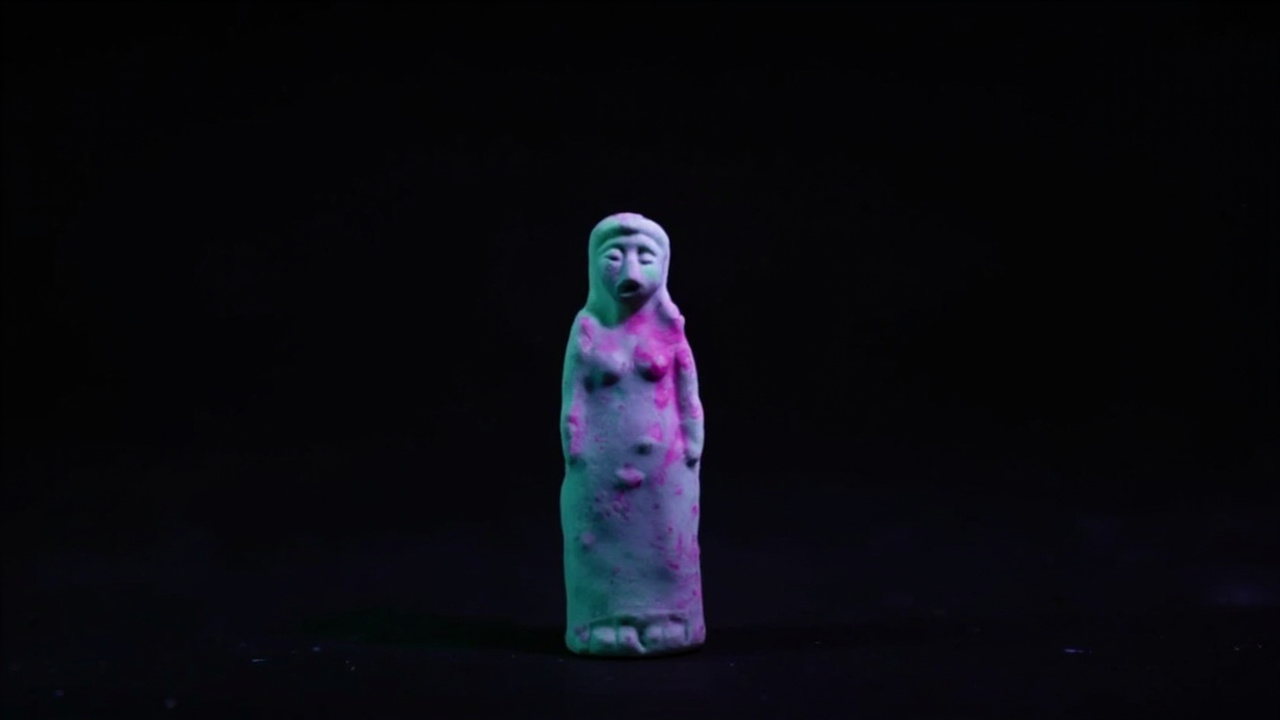
That's basically what happened at Lake Bolsena in Italy, where researchers recently pulled up a palm-sized clay figurine from an underwater archaeological site called Gran Carro di Bolsena. The little statue dates to somewhere between the 10th and 9th centuries BC—making it Iron Age, baby!
And here's the thing that really got me: you can still see the fingerprints. The actual fingerprints of whoever made this thing, pressed into the clay before it ever dried. I don't know about you, but I find that absolutely wild. We've got a direct physical connection to a specific person who lived three millennia ago, someone whose name we'll never know, whose life we'll never understand—but whose fingertips left an impression that's still visible today.
Not Quite Finished
Now, I have to be honest—this figurine isn't exactly going to make you gasp at a museum. She looks like what archaeologists would call "rudimentary." More of a first draft than a finished masterpiece, if you ask me. She's got a basic body shape, a suggestion of a head, and... that's about it.
But here's what I love about archaeology: even the "simple" finds tell stories. The researchers noticed what looks like fabric impressions under the figurine's chest area, suggesting she might have been dressed at some point. Which makes you wonder—did someone put tiny little clothes on her? Did she have some kind of ritual outfit?
Was she even supposed to be finished? Maybe the maker intentionally left her incomplete for some reason we can't understand anymore. Or maybe—and this is the scenario I find most charming—she was a work in progress that got abandoned when life got in the way.
A Neighborhood Where Everything Happened
What makes this discovery even more interesting is where it was found. The Gran Carro site isn't just some random spot in a lake—it's a whole complex archaeological neighborhood where stuff was happening for thousands of years.
We're talking Bronze Age origins, substantial Iron Age remains, and evidence of residential areas overlapping with what looks like cultic or religious spaces. Researchers have found signs of ritual fires, food offerings in big ceramic containers, and fancy metal objects deliberately placed among stones. Later on, Roman stuff shows up too—Constantinian-era coins and pottery suggesting people were still visiting the area for centuries.
So our little unfinished clay lady was found in a place where homes, workshops, worship spaces, and ceremonial activities all kind of blended together. It paints a picture of a busy, layered community that existed for a very long time—much more complex than a simple village.
The Coolest Part: It's Now a Tourist Destination
Here's a fun twist: this whole underwater archaeological site is being turned into an accessible underwater park. By 2026, visitors will be able to snorkel through it, take transparent-bottom boat tours, and even experience night lighting. There are plans for routes designed for non-sighted visitors, 3D recordings, virtual tours, and scale models.
I love this. Instead of just scooping everything up and putting it in a museum case somewhere (which, let's be honest, is what usually happens), they're keeping the site accessible and letting people experience it where it was found. Underwater archaeology has this magical quality anyway—the feeling of diving into the past—and turning Gran Carro into a public experience just makes that magic available to everyone.
Why This Matters
Look, I get it—a tiny unfinished clay figurine might not sound as exciting as a golden pharaoh's tomb or a giant dinosaur skeleton. But that's kind of my point. History isn't just made of the impressive stuff. It's also made of everyday moments, abandoned projects, and ordinary people who left behind little traces of their existence.
Someone made this figurine. Someone's fingers pressed into this clay. And that person had a life—thoughts, feelings, plans, distractions that might have pulled them away from finishing their work. We'll never know why they left her incomplete. Maybe they got called away. Maybe they decided she wasn't good enough. Maybe they died before they could finish.
But for three thousand years, she's been waiting at the bottom of that lake, preserving that moment of abandonment. And now we know she was there.
I don't know about you, but I think that's kind of beautiful.