
Something in the Water: The Bizarre Scientific Instrument That Might Have Heard MH370's Final Moments
Okay, I need to tell you about something that genuinely gave me chills while researching it.
Picture this: It's March 2014. A Boeing 777 with 239 people aboard has just vanished somewhere over the Indian Ocean. Search teams are scrambling. Nobody knows where to look. And meanwhile, floating hundreds of miles away in those same dark waters, there's a network of underwater microphones that might have accidentally recorded the plane's final moments.
The catch? The scientists who deployed those microphones didn't even know what they might have captured. And when they finally figured it out, nobody seemed all that interested.
Until now.
The Ocean Was Already Listening
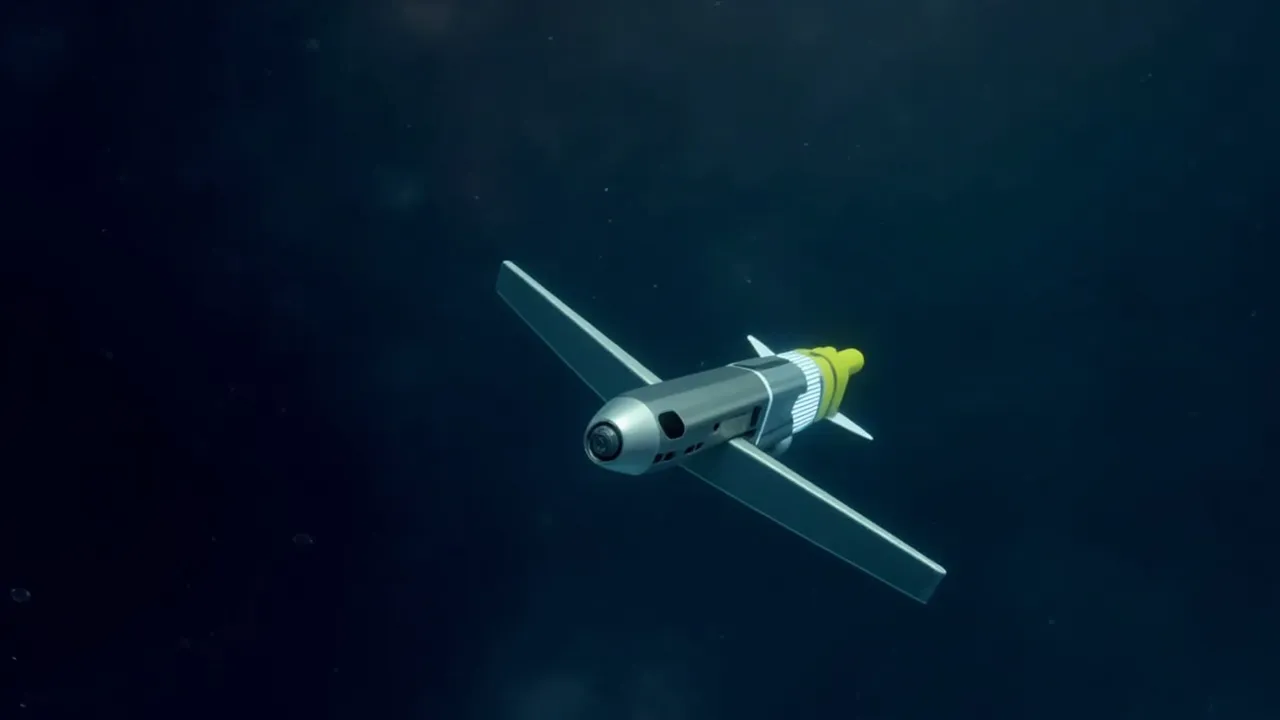
Jean-Yves Royer is a scientist at CNRS, the French government's research organization. A few weeks before MH370 disappeared, Royer's team had sunk something pretty remarkable into the southern Indian Ocean: a network of autonomous hydrophones called OHASISBIO.
These weren't ordinary devices. They were designed to sit on the ocean floor for months, listening to everything from whale calls to underwater earthquakes to volcanic eruptions. Six of them, moored in some of the most remote waters on Earth—near islands like Crozet and Kerguelen, in the Madagascar Basin, along the Southeast Indian Ridge.
They were basically the ocean's ears, recording the planet's deep bass notes.
And then, just weeks later, a commercial airliner vanished somewhere in that same stretch of water.
The Wait
Here's where it gets almost unbearably frustrating.
Royer realized what his hydrophones might have captured. Maybe—maybe—one of those devices had recorded the sound of a Boeing 777 hitting the Indian Ocean. That would be an enormous clue. The loud, distinctive impact of a massive aircraft slamming into water creates a signature that hydroacoustic instruments can detect from incredible distances.
But there was a problem.
His hydrophones weren't streaming data back to shore. They were storage devices, quietly recording everything and waiting for their mission to end. Royer had to wait. And wait. And wait.
The buoys didn't surface until January and February 2015.
By the time he finally got his recordings back, downloaded everything, and analyzed them for signals from the night MH370 went silent, months had passed. He produced a detailed 18-page report by late 2016. He sent it to investigators in France and Australia.
And then... nothing.
The report basically disappeared. It never became part of the official search record. It sat there, gathering digital dust, for nearly a decade.
A Decade Later
Can you imagine being Royer? You have this data that might—might—tell us something about what happened to 239 people, and nobody seems to care?
Recently, journalists started asking questions. Royer dug out that old file and shared it. Eighteen pages of spectrograms, maps, arrival times, careful analysis.
And here's the thing: the timing is remarkable. Ocean Infinity, the marine robotics company searching for MH370, just got its contract extended. They've got until 2027 to cover the remaining 2,868 square miles of seabed. Their ships are expected to return between November 2026 and April 2027.
Meanwhile, Royer's hydrophone data points to the southern Indian Ocean—exactly where investigators have been searching all along. But it's a different kind of evidence. It's not another interpretation of satellite pings. It's an actual recording from instruments that were physically present that night.
The Question Nobody Can Ignore
Look, I'll be honest with you: I don't know if Royer's hydrophones captured anything meaningful. The ocean is full of sounds. Distinguishing an aircraft impact from a whale call or an underwater earthquake isn't simple.
But here's what strikes me. After all these years, after billions spent and thousands of hours of searching, we're still asking the same question: What happened to this plane?
And now there's this old report, this data that nobody looked at properly, sitting there with the potential to add a new piece to the puzzle.
If Ocean Infinity's search comes back empty, the question becomes impossible to ignore: What did the ocean record that night?
Maybe nothing. Maybe everything.
Either way, I think we owe it to the 239 people who were on that flight—and to their families—to find out.