
markdown formatted blog content
The Universe Has a Growth Problem
Okay, I need to tell you about something pretty wild that Webb just found. astronomers have spotted a galaxy cluster that's acting way too mature for its age — like, imagine meeting a kindergartener who looks and sounds like a college student. That's basically what's happening here, except the "kindergartner" is 10 billion years old.
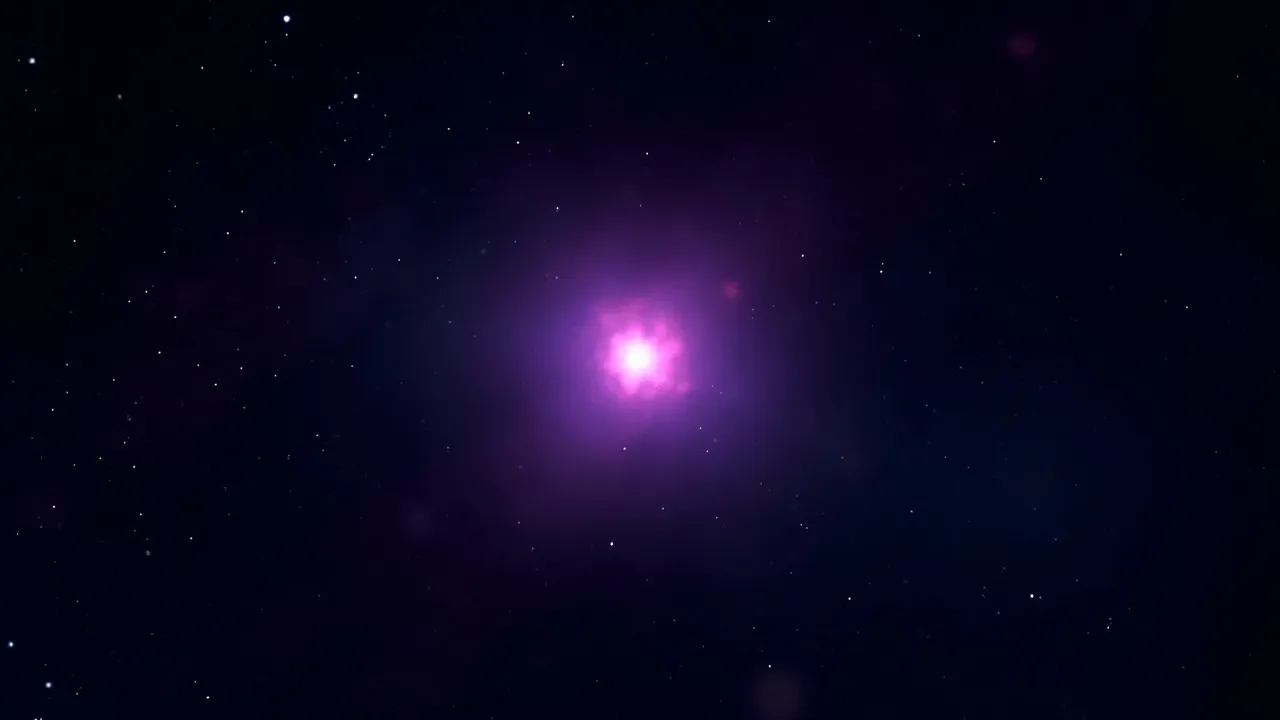
The cluster is called XLSSC 122, and it's sitting about 10.4 billion light-years away from us. That's incredibly far. We're talking light that left that region when the universe was still a baby — just a few billion years old. But here's the thing: when scientists looked at it with the James Webb Space Telescope, they found something surprising.
This cosmic baby looks way too grown up.
Why Does This Cluster Look So... Done?
Galaxy clusters are basically cosmic cities — huge collections of galaxies held together by gravity. According to our current understanding of how the universe evolved, these massive structures should have taken their sweet time forming. Think of it like building a mega-city: you start with small towns, they gradually merge, and eventually you get one big, organized metropolis.
But XLSSC 122? It basically skipped ahead.
"XLSSC 122 is one of the first clusters we know of that formed in the universe, and it has a mass concentration that doesn't agree with our cosmological model predictions," said Kyle Finner, a researcher at IPAC.
The cluster has a hugely concentrated core — way more mass packed into its center than our models predicted for something this young. It's like finding a fully constructed skyscraper in what should be an empty construction site.
Webb to the Rescue
Now, here's where things get really interesting. Scientists already knew XLSSC 122 existed — the European Space Agency spotted it back in 2014 using X-ray observations. Hubble also took a look and confirmed how far away it was. But Hubble couldn't quite figure out the full picture.
Then James Webb stepped in.
Webb spotted something remarkable: curved arcs of light surrounding the cluster's center. These aren't just pretty cosmic decorations — they're evidence of something called strong gravitational lensing.
Gravity as a Magnifying Glass
Gravitational lensing happens when a massive object (like a galaxy cluster) sits between us and something farther away. The cluster's gravity literally bends and warps the light coming from those distant galaxies behind it.
It's like holding a curved piece of glass in front of a flashlight — the light bends and distorts.
This is useful because it lets scientists measure how much mass is packed into the cluster. And here's the kicker: most of that mass isn't even visible. It's dark matter — the mysterious stuff we can't see directly but know is there because of its gravitational effects.
Dark matter is roughly five times more abundant than the regular matter that makes up everything we can see and touch. So when Webb observed that intense lensing effect, it was actually "seeing" mostly invisible stuff pulling the strings.
"Before JWST, we couldn't do this level of science in the early, distant universe," Finner explained.
So What Does This Mean for Us?
Honestly? This is exactly the kind of discovery that makes scientists both excited and a little nervous.
It means our models of how the universe evolved might need some tweaking. Either massive structures formed faster than we thought, or there's something else going on that we haven't accounted for yet.
And honestly? I love this.
Science works best when reality refuses to fit neatly into our expectations. Every time we find something that challenges our models, we learn something new. Either our understanding needs refinement, or we've stumbled onto an entirely new phenomenon.
XLSSC 122 is now the most distant galaxy cluster ever observed showing strong gravitational lensing — a title it holds thanks to Webb's incredible sensitivity. That makes it an invaluable tool for studying how mass — especially dark matter — is distributed in the early universe.
The Bottom Line
Space never stops being surprising. Just when we think we've got the cosmic rulebook figured out, something comes along and throws us for a loop.
James Webb keeps proving it's the ultimate space detective, revealing details that older telescopes simply couldn't catch. And as we peer deeper into the universe's past, we're finding that the cosmos had more creative ideas about how to grow up than we ever imagined.
So the next time you look up at the night sky, remember: somewhere out there, a baby galaxy cluster is already acting like a grown-up — and we have no idea why.