
Blog post content with headings covering:
- Introduction to the discovery
- What we thought we knew about protons
- What the new evidence shows
- Why baryon number matters
- What this means for physics
- Looking ahead
Okay, I need you to sit down for this one. Researchers just found something inside protons that honestly makes my inner science nerd want to do a little happy dance.
You probably remember from high school chemistry that protons are made of three smaller particles called quarks, and that something called "gluons" hold them together. Simple enough, right? Well, turns out reality had other plans.
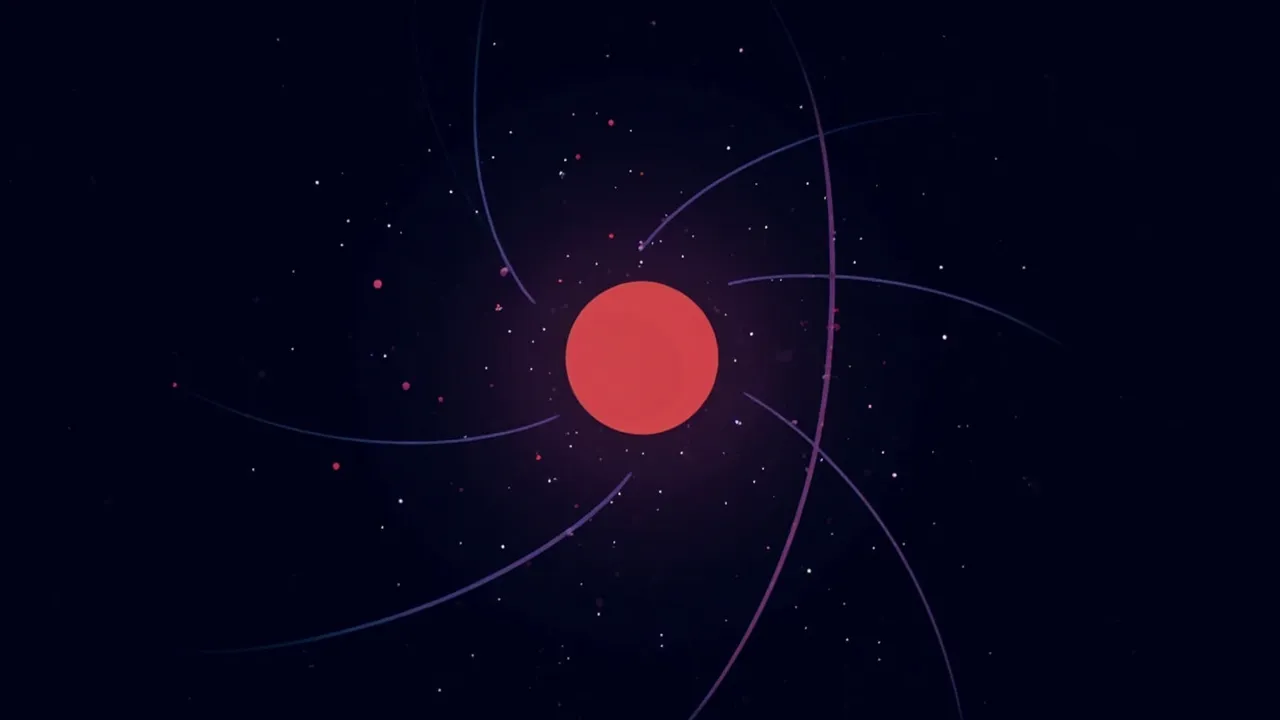
A team working at the STAR detector — that's at the Relativistic Heavy Ion Collider in New York — has spotted evidence that gluons might be doing something nobody expected: carrying what's called baryon number. This is a big deal because for decades, scientists have assumed that baryon number lives entirely in the quarks. Each of the three quarks in a proton carries one-third of it. Basic textbook stuff.
But here's where things get interesting.
The "Gluon Junction" That Could Change Everything
Back in the 1970s, some physicists had a wild idea: what if there's a Y-shaped junction where gluons connect the three valence quarks — and this junction itself might be responsible for baryon number? It sounded cool but was impossible to test... until now.
The STAR team has developed clever ways to probe this using different types of particle collisions. And what they found? An unexpected excess of baryons shooting out sideways from the collisions. Not the pattern you'd expect if quarks were the sole carriers of baryon number.
"Our findings strongly support the idea that baryon number is more favorably carried and transported by gluons," explained Zhangbu Xu, one of the researchers involved. "When arranged in this special configuration."
When arranged in this special configuration. I love that phrase. Like gluons are just waiting for the right moment to show off.
Why Should You Care About Baryon Number?
Here's where this gets really mind-bending. Baryon number conservation is one of those fundamental rules that governs how the universe works. It basically means that the total number of protons and neutrons (three-quark particles) stays the same before and after any interaction. Always. No exceptions.
"Since the Big Bang, the number of protons and neutrons all together never changes as a function of time," said Nicole Lewis, a physicist at Rice University who worked on this project. "The reasons for this conservation are not well understood. It's one of the mysteries of the universe, related to why we have more matter than antimatter."
Wait — why we have more matter than antimatter? Yeah, this ties into one of the biggest puzzles in all of physics. Somehow, in the early universe, matter won out over antimatter. And baryon number conservation might be part of why.
But there's something even more down-to-earth (pun intended): this conservation is why protons are so incredibly stable. Like, incredibly stable.
"It's believed that the lifetime of a proton is longer than the lifespan of the universe," Lewis noted. "This allows atomic nuclei to form and be stable -- which means matter, as we interact with it in the universe, can exist."
So yeah, thank your proton's stability for being able to read this sentence right now.
Your Textbooks Are Lying to You (Kind Of)
If this gluon junction idea holds up, it means the simplified picture of protons we've been teaching students for decades is... incomplete. And honestly, that's not surprising.
"In the naïve quark model, there are three quarks inside a proton, but nothing else," said Tommy Tsang, who worked on this research. "But if we look at details inside, there are not only three quarks but also a lot of gluons interacting, connecting between those quarks, and there are also quarks and antiquarks that pop up from the vacuum, so it's actually a really complex object."
Translation: protons are a seething, chaotic mess of particles popping in and out of existence, held together by gluon webs that might be doing way more heavy lifting than we ever realized.
What Comes Next?
This isn't a "we proved it" moment — it's a "this is really promising and we need to keep looking" moment. The researchers are cautiously excited, and rightfully so. These results suggest the baryon junction idea might be on the right track, but the physics community will want to see this confirmed and expanded.
Still, imagine the implications if gluons really do carry baryon number in certain configurations. It could reshape how we understand everything from the fundamental forces to the large-scale structure of the cosmos.
Science at its best, folks. We think we understand something, peek a little closer, and discover the universe is even stranger and more wonderful than we imagined.
Source: ScienceDaily, August 2026
https://www.sciencedaily.com/releases/2026/08/260815064805.htm