
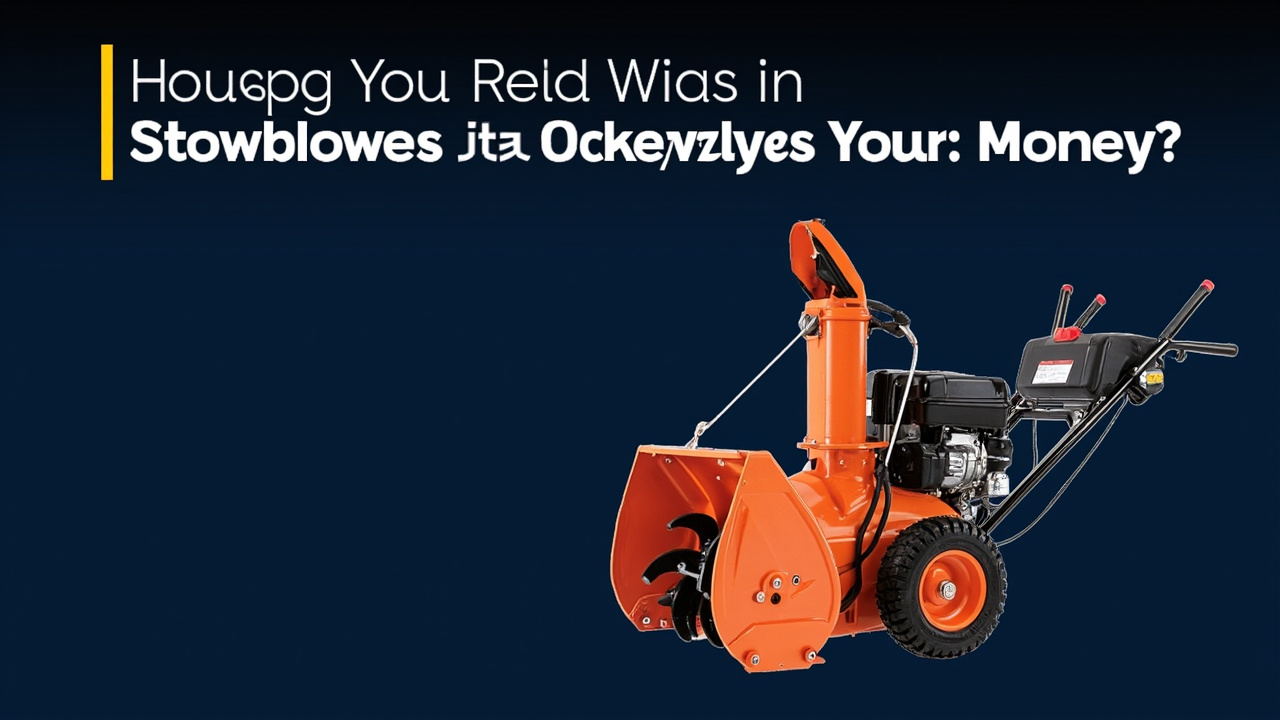
Stop Dreading Winter: Which Snowblower Is Actually Worth Your Money?
Look, I get it. Winter is coming, and the thought of spending the next few months shoveling is about as appealing as a root canal. But here's the thing: the right snowblower can actually be a game-changer. I'm not saying it'll make you love snow removal, but it might just make you stop dreading it quite so much.
The Great Debate: Electric vs. Gas
So you're standing in the garage contemplating life, and you're wondering: should I go electric or stick with gas? This is the question that divides snowblower enthusiasts and confused homeowners alike.
The Electric Appeal
Let me paint a picture. Imagine clearing your driveway at 6 AM without waking up your entire neighborhood. No growling engine, no fumes, and—here's my favorite part—no wrestling with pull cords in the freezing cold. Electric snowblowers are genuinely lighter and quieter, which matters if you've got neighbors closer than a football field away.
The downside? Battery life. If you've got a massive driveway or live somewhere that gets dumped on regularly, you need to think carefully about runtime. Manufacturers will tell you one thing, but the heavier and wetter your snow, the faster those batteries drain. It's kind of like how your phone dies faster in the cold—same physics.
Gas-Powered Reliability
Gas snowblowers are the tried-and-true option. They're more powerful, they last longer per tank, and they don't care if it's negative twenty degrees outside. They'll start (eventually) and they'll keep working. But you'll sacrifice the quiet morning snow removal experience, and yeah, you'll need to maintain the engine like any other piece of equipment.
What Actually Matters When You're Buying
Here's what I've learned from paying attention to how these things actually work in real conditions:
Size Matters
A single-stage snowblower is your friend if you've got a small driveway and light snow. Two-stage machines are the heavy hitters—they'll handle deeper snow, wet snow, and bigger areas without breaking a sweat (or a belt). Think of it like the difference between a compact car and a truck.
The Throw Distance
I know this sounds silly, but where the snow actually lands is important. If your snowblower throws snow twenty feet, great. If it throws thirty feet, you're not piling everything back where you started. Longer throw distance = smarter snow removal.
Ease of Use in Harsh Conditions
This is something the manufacturers don't always emphasize, but you will care about it. Can you adjust things with gloved hands? Is the chute direction control intuitive? Will you want to throw the machine in a snowbank out of frustration? These things matter when it's cold and you're tired.
The Real Test: How We Know These Actually Work
Here's something I appreciate: actual testing instead of just reading spec sheets. The best reviews involve real-world testing with materials similar to snow (like heavy, wet sawdust) to see how these machines handle challenging conditions. That matters way more than marketing claims about "18-car driveway clearing capacity."
The truth is, heavy, wet snow is harder on these machines than light powder. So if a snowblower handles the tough stuff, it'll definitely handle the easy stuff.
Making Your Decision
If you've got a smaller property and your utility bills make you cringe, go electric. You'll get peace and quiet, lower operating costs, and zero guilt about waking the neighbors at dawn.
If you've got a bigger driveway, live in heavy snow country, or just want the reliability of proven technology, gas is still your answer. Yes, you'll maintain it. Yes, it'll make noise. But it'll also handle whatever winter throws at you without drama.
The best snowblower is the one you'll actually use—and that you won't dread starting up when the flakes start falling. So pick your poison, prep your driveway, and maybe, just maybe, winter won't be so terrible after all.
Source: https://www.popularmechanics.com/home/tools/a29489351/best-snow-blowers