
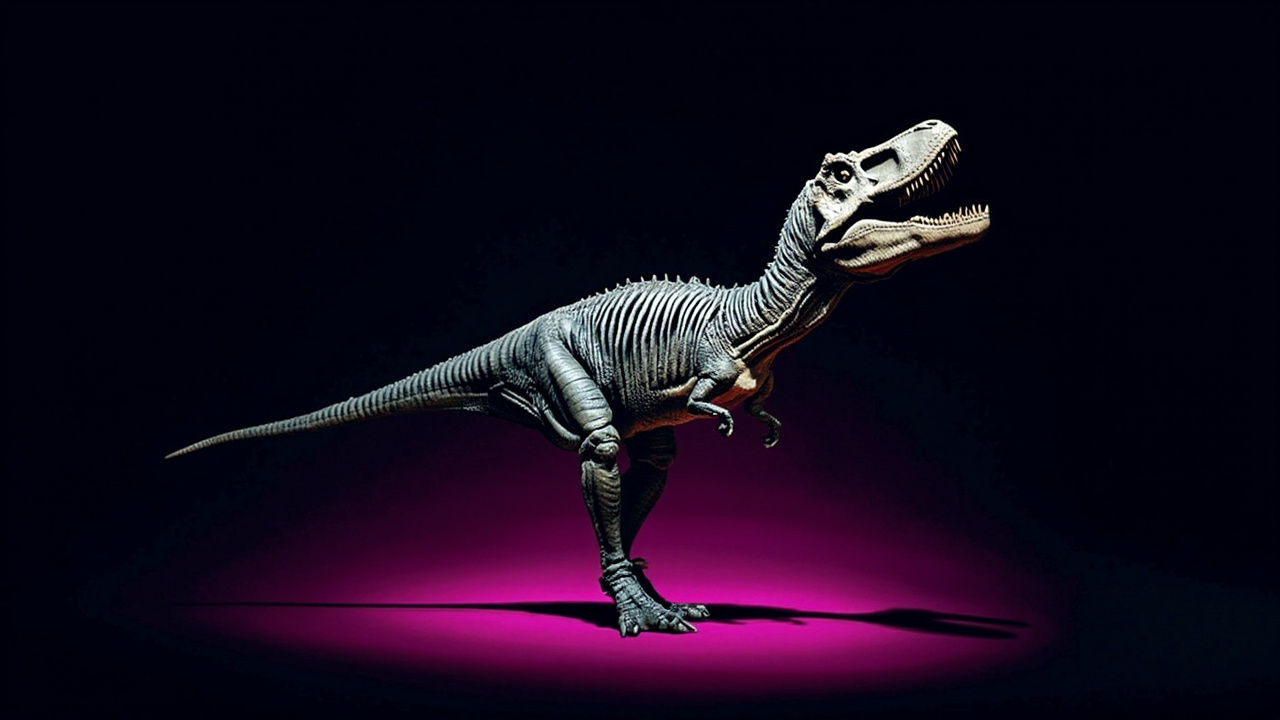
The Dinosaur Secret Nobody Expected
When you think of a T-Rex, you probably picture it as this unstoppable killing machine, tearing through prey with terrifying efficiency. But here's the thing about apex predators that nobody talks about much: they're also incredibly practical eaters.
Turns out, tyrannosaurs were the ultimate resourceful survivors. A new study just proved something wild—they didn't waste food, even when that food was basically leftover bones from dead dinosaurs. And yeah, sometimes those dead dinosaurs were their own relatives.
How Scientists Found Out
A Master's student named Josephine Nielsen from Aarhus University in Denmark decided to examine a fossilized foot bone from a tyrannosaur that died over 75 million years ago. This bone was found in Montana's Judith River Formation, which is basically a time capsule of an ancient ecosystem.
When Nielsen used advanced 3D scanning to zoom in on this bone, she spotted something unexpected: 16 distinct bite marks, all made by a smaller tyrannosaur.
Here's what makes this even cooler—these weren't random scratches. Nielsen analyzed the depth, angle, and placement of each mark and could prove they came from precise, intentional bites. It's like finding a fingerprint at a crime scene, except the crime scene is 75 million years old and involves dinosaurs.
The "Cleaning Up" Theory
The bone was from the foot—which is basically the dinosaur equivalent of a chicken wing drumette. There's not much meat on a foot, so why would another tyrannosaur bother?
Because it was hungry, and every calorie counted.
Nielsen noticed the bone showed no signs of healing, meaning the smaller dino bit into it after the larger one was already dead. Plus, since the meat on feet is minimal, this wasn't a fresh kill scenario. The smaller tyrannosaur was essentially doing what you do when you finish the last crumbs at the bottom of a cereal box—salvaging whatever was left after the main event.
"It suggests that the dinosaur was 'cleaning up' and eating the last remains of an old carcass," Nielsen explained.
Why Digital Dinosaurs Matter
Here's something I love about modern paleontology: Nielsen didn't actually work with the original fossil. Instead, she studied a digital 3D scan and a 3D-printed model made at her university.
I know that might sound less dramatic than handling a real 75-million-year-old bone, but honestly? It's actually brilliant. You don't have to risk shipping a priceless fossil across the ocean, and the digital version lets you zoom in on microscopic details way better than you ever could with your naked eye, no matter how good your eyesight is.
Nielsen used something called the CM (Category-Modifier) classification system to categorize every single bite mark based on objective criteria. No guessing, no "that looks like a bite-ish mark." Just pure data-driven paleontology.
What This Tells Us About Dinosaur Life
This discovery is genuinely significant because it reveals something real about how tyrannosaurs actually lived and ate. They weren't these perfectly efficient predators that only hunted fresh prey. They were survivors who took what they could get, when they could get it.
It's actually pretty relatable when you think about it. Humans do the same thing—we don't waste food, we eat leftovers, and we've always scavenged when hunting was tough. Even the apex predators of the Cretaceous had practical survival strategies.
Nielsen's work also highlights something important about how technology is transforming paleontology. You don't need to work with the original fossil to unlock its secrets anymore. High-resolution digital models are letting scientists spot details they might have missed otherwise, and it's way safer for preserving these irreplaceable pieces of Earth's history.
The Bigger Picture
What I think is really cool here is that this research shows tyrannosaurs as more complex creatures than the "mindless killing machine" stereotype. They were smart enough to recognize a food source when they saw one. They were efficient. They weren't wasting energy on pride or hunting fresh meat when a perfectly good carcass was available.
That's actually the behavior of intelligent predators. And it makes you wonder what else we're missing about dinosaur behavior just because we haven't had the right technology to look closely enough.
A Master's student with some good detective work, a fossilized foot bone, and a 3D scanner just rewrote a tiny piece of dinosaur history. Not bad for a day's work.