
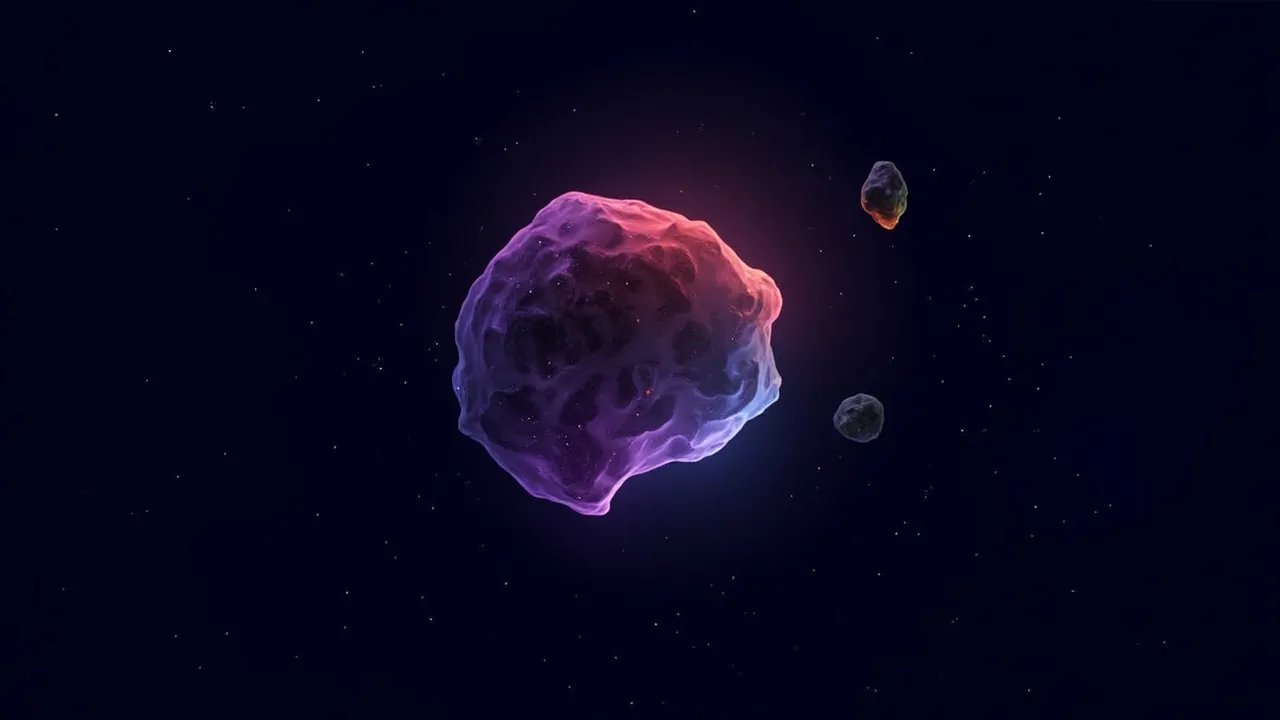
Picture this: you're a dinosaur, happily munching on some prehistoric ferns, when suddenly—bam—the sky is on fire and your entire existence is about to become a plot point in every future science textbook. Classic Monday, right?
Well, scientists have finally gotten around to figuring out exactly what kind of cosmic bully came crashing through Earth's atmosphere and ended the reign of the dinosaurs. And honestly? The answer is both fascinating and a little humbling.
The "Smoking Gun" Might Not Be What We Thought
For years, scientists believed that sulfur ejected from the meteorite itself played a huge role in the extinction event. The idea was that this sulfur would have created a devastating atmospheric blanket, blocking out the sun and causing global cooling. Makes sense, right?
But here's where it gets interesting. A team of researchers from universities in Canada, France, Belgium, and Austria recently published findings suggesting that the meteorite's composition tells a different story. Their analysis points to what's called a CO chondrite—a type of meteorite that's notably low in sulfur and other volatile elements.
"This finding doesn't change our understanding of that an asteroid killed the dinosaurs," the research team explained. "But it does mean sulfur from the impactor probably wasn't the main culprit behind the climate catastrophe that followed."
Instead, the real villain might have been the sheer volume of debris blasted into the upper atmosphere—tiny particles that hung around for years, blocking sunlight and disrupting ecosystems worldwide.
How Do You Identify a Meteorite From 66 Million Years Ago?
Here's the thing: the meteorite essentially vaporized on impact. We're not talking about picking up a space rock from the crater. What scientists have to work with is a thin layer of clay deposited worldwide after the event—known as the KT boundary.
So how do you identify something that essentially self-destructed?
The answer lies in nickel isotopes. These are like chemical fingerprints that can persist even when the original object is long gone. By analyzing these isotopes with incredibly precise instruments, the team was able to narrow down the impactor to this rare CO chondrite category.
Just How Rare Are We Talking?
Let me put this in perspective. Of all the meteorites that have been found and catalogued on Earth, only about 5% are carbonaceous chondrites—the family of space rocks that include our culprit. And CO chondrites specifically? They're a tiny subset of that already rare group.
These aren't the chunky meteorites you'd see in a natural history museum. CO chondrites are some of the most primitive materials in our solar system—essentially leftover building blocks from when the planets were forming, barely altered over billions of years.
"Being struck by such a rare, distant projectile really underscores how unlucky the dinosaurs were," one researcher noted. And honestly? That's an understatement.
What This Means for Understanding Mass Extinctions
This new identification helps scientists build more accurate models of what happened in those crucial moments after impact. Rather than focusing on sulfur released from the meteorite itself, researchers can now concentrate on other mechanisms—particularly the global distribution of fine ejecta material that would have affected climate systems worldwide.
The more we understand about how the extinction happened, the better we can appreciate both the fragility and resilience of life on Earth.
So the next time you hear someone say "the dinosaurs went extinct because of an asteroid," you can chime in with: "Yeah, but not just any asteroid. It was one of the rarest kinds in the solar system."
Just imagine how different history might have been if that particular space rock had been a few million miles to the left.
Curious about other space mysteries? Stick around—this universe is full of stories waiting to be told.