
Okay, I need to tell you about something that genuinely blew my mind this week, and I've been thinking about it ever since.
What if aging isn't about our bodies breaking down? What if it's about our cells... forgetting who they are?
That's the wild idea being championed by David Sinclair, a geneticist at Harvard who honestly sounds like he stepped out of a science fiction novel. The guy runs genetics labs at both Harvard AND the University of New South Wales in Sydney. He's been named one of Time's most influential people in healthcare. And his latest pet theory might just revolutionize how we think about getting old.
The Scratch on the CD
Here's the concept in plain English: Your DNA is like a massive instruction manual for making you—you. But DNA on its own doesn't do anything. It needs a reader to interpret it and turn those instructions into actual proteins, cells, and functions. That reader is called the epigenome.
Sinclair's theory? Aging happens when the reader gets scrambled.
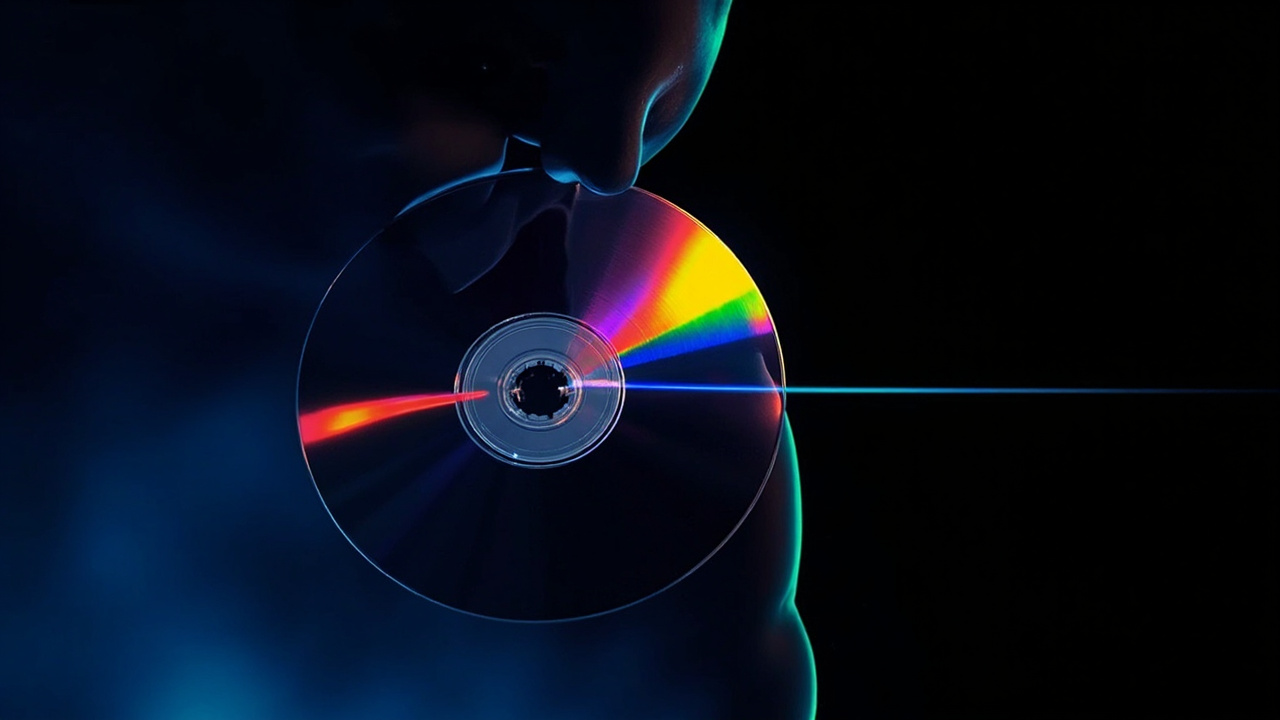
He uses this beautiful metaphor: think of your genome as a CD and the epigenome as the laser that reads it. When a CD gets scratched, the music doesn't disappear—the laser just can't find it anymore. Your DNA still contains all the instructions it always did. But something's gone wrong with the system that reads those instructions.
In other words, your liver cells start forgetting they're supposed to be liver cells. Your brain cells lose the plot. It's not that the blueprint is damaged—it's that the construction crew can't read it properly anymore.
The Evidence That Made Scientists Do Double-Takes
Now, here's where it gets really interesting.
Sinclair's lab did an experiment that, honestly, sounds like something from a budget sci-fi movie—but it's real, published in Nature. They took old mice with damaged optic nerves—damage that should have been permanent in adult animals—and somehow convinced those cells to act young again.
The result? The mice regained their sight.
Let that sink in. They reversed blindness in elderly mice by resetting their cells' epigenetic state. The cells "remembered" how to function properly, even though they were supposed to be too old to repair themselves.
This is the kind of thing that makes scientists spill their coffee.
But Here's the Thing...
Before we all start planning to live to 150, let me be straight with you. Other researchers aren't ready to throw all their other theories out the window.
Nir Barzilai, who runs the Institute for Aging Research at Albert Einstein College of Medicine, gives Sinclair's theory high marks—he'd rank it first among competing ideas. But he also points out that aging is probably more complicated than any single explanation. Radiation, metabolism, diet—these all play roles that might exist independent of epigenetics.
So while Sinclair might be onto something huge, we're probably not looking at the complete answer. Just the most promising lead in a very long time.
What Does This Mean For You, Right Now?
Here's the funny part. While Sinclair is out there working on gene therapies and lab breakthroughs, his actual lifestyle recommendations are refreshingly... normal?
Exercise. Eat lots of plants. Don't smoke.
That's it. That's his prescription. He does have one quirky habit—he prefers eating plants that have been mildly stressed during growth, theorizing that the survival mechanisms in those vegetables might do something good for us. But honestly, the man is practically a walking cliche of "eat your vegetables."
I don't know about you, but I find that oddly comforting. In a world of impossible promises and miracle cures, here's a serious scientist making serious discoveries—and his advice is still basically what your grandmother would say.
The Real Takeaway
The reason I wanted to share this with you is simple: we're living through a genuine shift in how we understand aging. It wasn't that long ago that getting old was considered just... what happens. Like gravity. Inevitable and unexplainable.
Now? Scientists are talking about aging as a disease we might actually treat. Not by finding the fountain of youth, but by understanding why our cells lose their way in the first place.
And if the mouse experiments are any indication, the future might be stranger and more hopeful than we ever imagined.
Your cells might just be waiting for someone to remind them who they are.