
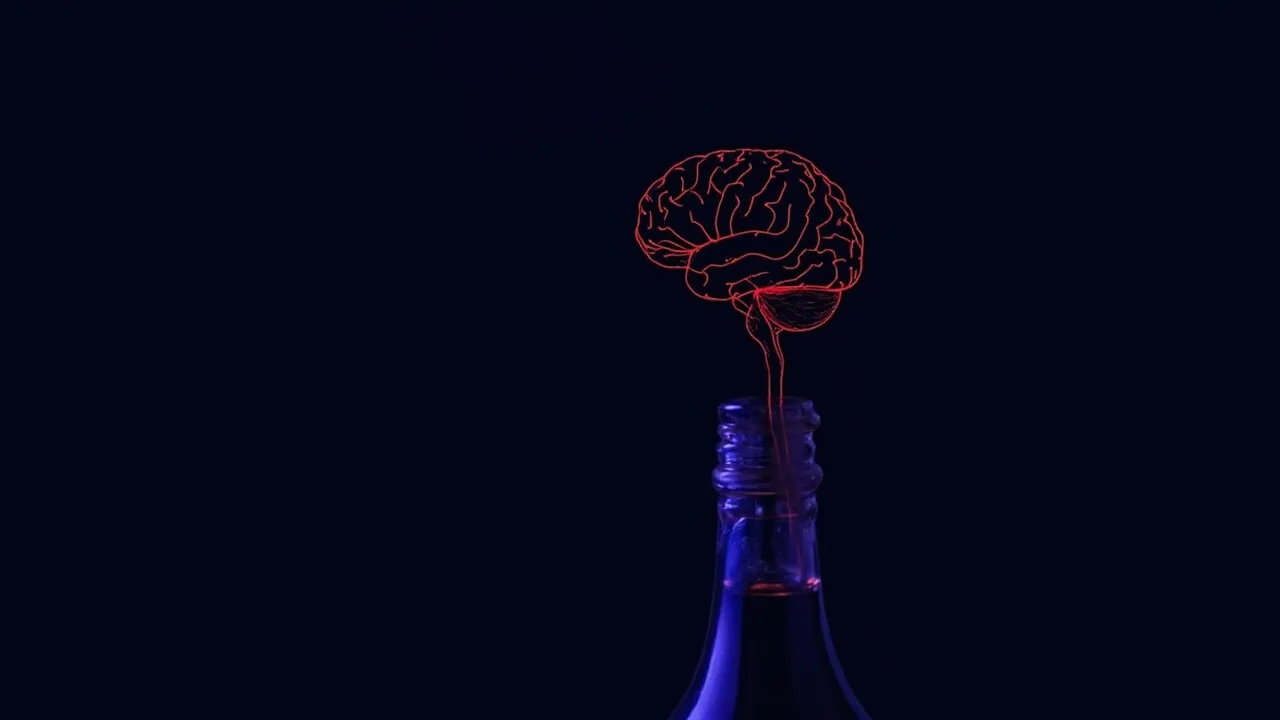
So Here's the Thing About That Glass of Wine After Work...
I don't know about you, but I've definitely been in that situation where a rough day at work makes me think, "I deserve a drink." And honestly? A lot of us have been there. The idea that alcohol helps us "unwind" is so deeply embedded in our culture that we rarely stop to question whether it's actually doing us any favors.
Well, friends, a new study just dropped some knowledge that might make you think twice about that coping mechanism—and I honestly think it's some of the most important neuroscience research I've come across recently.
The Study That Made My Heart Sink a Little
Researchers at the University of Massachusetts Amherst recently published findings in the journal Alcohol Clinical and Experimental Research that honestly kept me up at night thinking about it.
Here's the gist: using alcohol to deal with stress during your twenties and early thirties doesn't just create a habit that you can break later. It appears to physically change your brain in ways that don't reverse, even after years of sobriety.
Let that sink in for a second.
The scientists studied mice (I know, I know—it's not humans, but their brain circuits are remarkably similar to ours, which is why researchers use them for this kind of work). What they found was that the combination of stress and heavy drinking created much more brain damage than either factor alone.
But here's what really got me: even after long periods of abstinence, the mice who had been "stress drinking" in their younger days were significantly more likely to return to alcohol when they faced stress again in middle age. Their brains had been fundamentally reprogrammed.
Wait, What's Actually Happening in the Brain?
Okay, let me break this down in a way that doesn't require a neuroscience degree.
Your brain has this little region called the locus coeruleus (say that three times fast—I'll just call it the LC). Think of it as your brain's "adaptation center." When you're stressed, the LC kicks into gear to help you respond appropriately. Once the stress passes, it normally settles back down.
But according to this research, when you repeatedly flood your brain with alcohol during stressful periods, something goes wrong. The LC loses its ability to "turn off." It's like a light switch that gets stuck in the ON position. The researchers found that this disruption persists long after the drinking stops.
And if that wasn't concerning enough, they also discovered significant oxidative stress in this brain region—essentially, cellular damage that's also commonly found in the brains of people with Alzheimer's disease.
The researchers put it bluntly: "The brain's wiring system is damaged, which means quitting drinking or making better decisions isn't a matter of willpower."
Ouch. That's a tough pill to swallow.
What Does This Actually Look Like in Real Life?
Here's what really struck me about this research. The scientists tested the mice's cognitive abilities in middle age, and surprisingly, their learning ability wasn't dramatically different from mice who hadn't engaged in stress drinking.
The big difference was something called cognitive flexibility—essentially, the ability to adapt when situations change, to shift gears, to approach problems from new angles.
This is huge, people.
Think about what cognitive flexibility lets you do: it helps you adjust when your boss changes priorities mid-project, when your kid's schedule throws your whole week off, when you need to learn new technology for your job. It's the mental agility that lets us roll with life's punches.
And according to this research, that's exactly what gets damaged by stress drinking.
The lead researcher, Dr. Elena Vazey, put it this way: "Middle age is when problems start to add up... we saw that this alcohol-stress combination creates the kind of trouble adapting to changing situations that also happens in the early stages of dementia."
So What Are We Supposed to Do With This Information?
I'll be honest—reading this research was a bit of a gut punch. Not because I think anyone should feel ashamed for how they've coped with stress (lord knows life is hard enough), but because it challenges a narrative we've all heard: that you can always turn over a new leaf, that the past doesn't determine the future, that willpower is all you need.
This research suggests that for some brain changes, the answer might be more complicated.
But here's where I want to be careful not to spiral into doom and gloom. First, this study was done in mice, so we need to be cautious about directly applying it to humans. More research is needed to confirm these findings and understand them better.
Second, and this is important, understanding the problem better is actually a huge step toward solving it. If researchers can identify exactly how alcohol and stress together damage the brain, they might be able to develop treatments that specifically target those changes. We're talking about potential therapies that could help repair some of this damage, not just prevent more of it.
Dr. Vazey herself noted that this research could "eventually lead to better treatments that address the long-term effects of alcohol use rather than focusing only on stopping drinking."
The Bigger Picture
I think what strikes me most about this research is how it highlights the interconnection between stress and alcohol in a way that's both obvious and underappreciated. We've always known they fuel each other—stress makes you want to drink, drinking contributes to problems that cause more stress—but this research suggests the damage goes deeper and lasts longer than we might have thought.
For me, this raises questions about how we talk about alcohol in our culture. "Everything in moderation" is the standard advice, but maybe we should be more specific about when and why we drink. Reaching for a drink specifically because you're stressed might be doing more damage than having a glass of wine with dinner while reflecting on a good day.
Of course, none of this is simple. Life is stressful, and people need ways to cope. I'm not here to judge anyone—I've definitely had my moments of "I need a drink" after a hard day.
But I do think it's worth being informed. Knowledge is power, right? Now we know a little more about what that "just one drink to cope" habit might actually be costing us.
The Bottom Line
Here's what I took away from this research: our brains are incredibly plastic (meaning they change in response to our experiences), but that plasticity cuts both ways. Positive experiences can create positive changes, but so can negative ones—and some of those negative changes might be more permanent than we'd like.
This doesn't mean we should beat ourselves up about past coping choices. It means we should be thoughtful about future ones. It means we should take stress seriously and invest in healthier coping mechanisms. It means we should push for more research and better treatments.
And it means that if you're currently using alcohol to deal with stress, maybe it's worth exploring some alternatives—not out of shame, but out of love for your future brain.
Your future self will thank you.
Source: ScienceDaily — Drinking to cope with stress may permanently rewire your brain