
markdown formatted blog content
Okay, I have to admit something: I've always been a little obsessed with cryptids. You know—those legendary creatures that may or may not exist, like Bigfoot lumbering through Pacific Northwest forests or the Loch Ness Monster doing whatever Nessie does in that Scottish lake. There's just something irresistibly fun about stories that blur the line between folklore and reality.
But here's what gets me really excited—when scientists actually crack these cases. When the myth meets the mundane explanation and suddenly makes perfect sense. That's exactly what happened with one of the most enduring cryptid stories in Sri Lanka, and honestly, the real explanation might be even more fascinating than the legend itself.
For over a hundred years, people living on this beautiful South Asian island have spoken in hushed, nervous tones about the Ulama. You might hear it called the "Devil Bird" too, which honestly doesn't sound any less ominous. According to local legend, this creature haunts the dense jungles, and its cry? Well, calling it "unsettling" would be a massive understatement.
Let me paint you a picture. Imagine you're walking through a Sri Lankan jungle at night—maybe in the early 1900s, when much of that island was still wild and uncharted. The sounds of the forest surround you: insects chirping, leaves rustling, maybe the distant call of some tropical bird. And then you hear it. A scream. A shriek that sounds distinctly human, rising and falling in patterns that seem almost... anguished. Almost like someone calling out in absolute agony.
Sounds pretty terrifying, right? Local legend certainly thought so. According to one particularly chilling folklore account, the story goes like this: a jealous husband suspected his wife of infidelity. In a fit of rage, he killed their own infant son, cooked the child, and served it to his unknowing wife. When she discovered a tiny finger in the dish, she fled into the night in absolute horror—and transformed into the Ulama. The Devil Bird's cries, in this telling, represent her eternal grieving, her sorrow echoing through the jungle forever.
For generations, hearing that scream was considered very, very bad luck throughout Sri Lanka. People genuinely feared it. I can't imagine what it must have been like, hearing such a sound in the darkness of an unfamiliar forest with only lantern light and your imagination for company.
But here's where things get interesting—and where scientists started asking questions that folklore hadn't considered.
You see, those screaming calls had to come from something. And while mysterious creatures make for great stories, nature is full of animals that sound absolutely nothing like what you'd expect. Remember when people "discovered" the platypus in Australia? Europeans reportedly thought it was a hoax, a sewn-together joke. Or how about the giant squid? Stories of sea monsters with tentacles that could pull ships underwater turned out to be based on very real Architeuthis squids—they just lived in the deep ocean where humans rarely encountered them.
Well, Sri Lanka's Devil Bird went through a similar journey of scientific investigation.
Early naturalists who visited the island and ventured into its jungles noted the calls, and some started pointing fingers at specific birds. One candidate that gained early attention was the brown wood owl—a perfectly respectable owl species found across South Asia that, under the right conditions and with a bit of imagination, could produce some unsettling sounds.
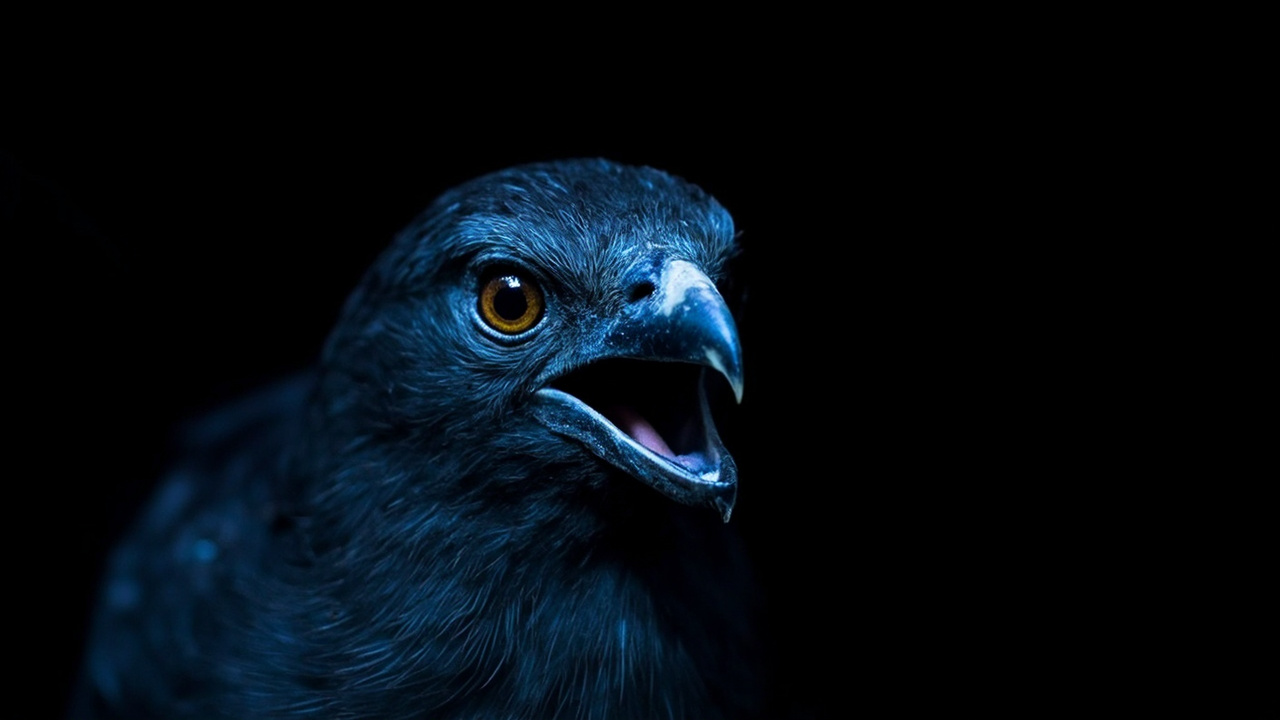
But as ornithologists (that's bird scientists to you and me) kept studying, they found an even better match. Enter the spot-bellied eagle-owl, a magnificent creature that's actually the sixth largest owl in the entire world. This bird is no small, easily overlooked species—it can have a wingspan of over five feet. And here's the kicker: those distinctive tufts of feathers on its head, sort of like little ears, give it a face that genuinely looks, well... kind of demonic. The thing looks like it stepped right out of a nightmare.
When researchers studied recordings of the spot-bellied eagle-owl's calls, the match became pretty clear. The pitch, the rhythm, that haunting quality that locals had described for over a century—it all lined up remarkably well with the legendary Devil Bird's scream.
Some researchers have also pointed to other possibilities, like the Changeable Hawk-Eagle or the Oriental Honey Buzzard, suggesting that perhaps different observers had encountered different species. That actually makes a lot of sense when you think about it—folklore often emerges from many experiences layered together over time, not necessarily from a single source.
What I find so satisfying about this story is how it illustrates something important about how humans relate to the natural world. When we don't understand something—when we're confronted with sounds we can't identify or creatures we can't see clearly—our brains fill in the gaps with stories. And those stories often reflect our deepest fears, our cultural anxieties, our need to make sense of the inexplicable.
The jealous husband story? The grieving mother transformed into a monster? Those aren't just random tales. They speak to universal human experiences: jealousy, betrayal, loss, thehorror of unimaginable acts. The Devil Bird became a vessel for all those emotions, given form and voice in the darkness of the Sri Lankan jungle.
But here's the beautiful part: once science stepped in, the mystery didn't disappear entirely—it transformed. The spot-bellied eagle-owl is still a remarkable creature. It's still large, still striking in appearance, still capable of producing calls that, while now explained, can genuinely startle anyone hearing them for the first time in the wild. Knowing the truth doesn't make the experience any less evocative; it just removes the superstition and adds a layer of appreciation for the actual biodiversity around us.
So the next time you hear about a legendary creature that's supposedly terrorized a region for centuries, remember this story. The answer might already exist in the natural world, just waiting for someone curious enough to connect the dots between myth and reality.
And honestly? I think that's pretty exciting. The world is full of creatures that sound and look stranger than fiction—we just have to pay attention.