
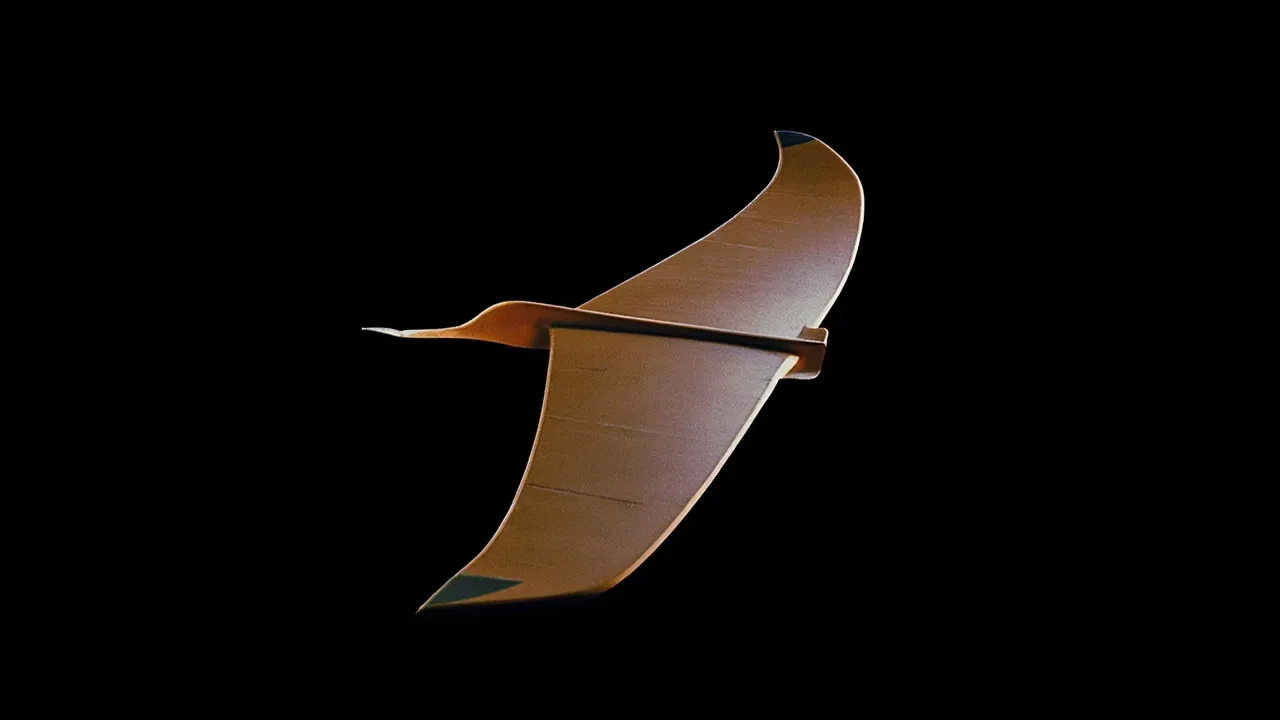
A Little Bird That Sparked Big Dreams
Let me tell you about one of the most heartbreaking artifacts in Egyptian archaeology. Picture this: it's 1898, and archaeologists are rummaging through an old tomb at Saqqara when they stumble upon something that makes their jaws drop. Nestled among the usual funerary goods sits a small wooden object—about the size of your hand—that looks, unmistakably, like a glider.
Not a bird. Not a decoration. An actual glider.
With its sleek body, thin wingtips that taper just like modern aircraft, and a falcon-like head (probably nodding to the god Horus), the so-called "Saqqara Bird" has everything you need for flight—or so it seemed. Made of sycamore wood, weighing just 1.38 ounces with a wingspan of 7.1 inches, this little guy looks like something you'd take to a model aircraft competition.
And that's exactly what got people so excited. Could the ancient Egyptians have figured out aerodynamics thousands of years before Da Vinci sketched his flying machines?
The Enthusiast Who Believed
For decades, the Saqqara Bird sat forgotten in a museum backroom. But in the 1970s, an Egyptologist named Kahlil Messiha noticed it—and this guy wasn't just any archaeologist. He was also a model plane enthusiast. The moment he saw that artifact, his heart probably skipped a beat.
Messiha convinced officials to take a closer look, and in 1980, he published a paper arguing that the Saqqara Bird was clear evidence of Egyptian aerodynamic knowledge. He pointed out the "aerofoil shape beautifully carved and smooth" and essentially said, "Look, this thing was built to fly."
Others jumped on the bandwagon too. Someone even reconstructed it using lightweight balsa wood, and guess what? It glided! Sort of. With some help, anyway. Add a tailplane, and you might really have something to work with.
For a while, it seemed like the conspiracy theorists and Ancient Aliens fans were going to have a field day.
Then Reality (Aerodynamics) Showed Up
Here's where the dream hits a brick wall. In 2002, a glider designer named Martin Gregoire took a long hard look at the original artifact and basically said, "Yeah, no. This thing couldn't fly."
His assessment? The Saqqara Bird was probably a toy for ancient Egyptian children—or maybe a weathervane for a boat. Not exactly the groundbreaking aviation breakthrough everyone was hoping for.
But the nail in the coffin came in 2023. Researchers ran a full modern simulation on the little bird, and the results were... well, devastating for the flight hypothesis:
- Unstable pitch: It would nosedive or climb uncontrollably
- Asymmetric lift: One wing would always want to go higher
- Uncontrollable rolling: It would just spin around like a maple seed
- Center of gravity behind the neutral point: Basically the opposite of what you need for stable flight
The researchers concluded that "the connection between the Bird of Saqqara and an alleged knowledge of aerodynamics in ancient Egypt could not be confirmed."
Ouch.
What We Probably Have Here
So what's the actual story? Honestly? We probably just found an exceptionally cool toy that happened to look aerodynamic by coincidence. The ancient Egyptians were master craftsmen—they carved beautiful statues, built massive pyramids, and created intricate jewelry. Maybe some craftsman was just playing around and carved a bird-shaped toy that happened to have some glider-like features.
Does that make it less cool? I don't think so. If anything, it's still a fascinating window into how creative and playful ancient people could be. Not everything needs to be evidence of lost super-technology.
But I get it. The romantic notion of ancient Egyptians secretly knowing how to fly is way more exciting than "they made a fancy toy." Our brains love a good mystery, and the idea of hidden knowledge being suppressed or forgotten is irresistibly compelling.
The Takeaway
Here's what I keep thinking about: we so often assume our ancestors were primitive or ignorant, and then something like the Saqqara Bird comes along and makes us wonder if we're underestimating them. The truth is probably somewhere in the middle—Egyptians were brilliant in many ways (have you seen their medical texts? Their calendar systems?), but they probably didn't have secret aviation technology.
And honestly? That's fine. The real story of human ingenuity is amazing enough without having to invent mysteries where none exist.
But man, wouldn't it be cool if they did know how to fly?