
Okay, I've got a question for you. What's the first thing that comes to mind when you think of Benjamin Franklin's inventions?
Chances are you're picturing bifocals, the lightning rod, or maybe that famous kite experiment. Those are the hits. The classics. The inventions they taught you about in school.
But here's the thing—Ben Franklin actually invented something else. Something bizarre. Something that, at its peak, had composers like Mozart writing music specifically for it, and at its lowest point, was blamed for driving people literally insane.
I'm talking about the glass harmonica. And honestly? It's one of the most fascinating stories you've never heard.
A Parlor Trick Goes Pro
It all started with a party trick. (Doesn't everything, really?)
The concept was simple: fill a bunch of glasses with different amounts of water, run your wet finger around the rim, and create music. It's the same trick you might have done yourself at some dinner table, right? Well, back in the 1760s, this was apparently quite the conversation starter at fancy gatherings.
Franklin himself described it beautifully in a letter: "You have doubtless heard the sweet tone that is drawn from a drinking glass, by passing a wet finger round its brim."
He'd seen this demonstrated at the Royal Society, and something clicked. Here was a parlor trick with genuine musical potential—but it was clunky. The glasses were scattered on tables, hard to play, and limited in range.
So being Ben Franklin, he improved it. Because of course he did.
The Actual Invention
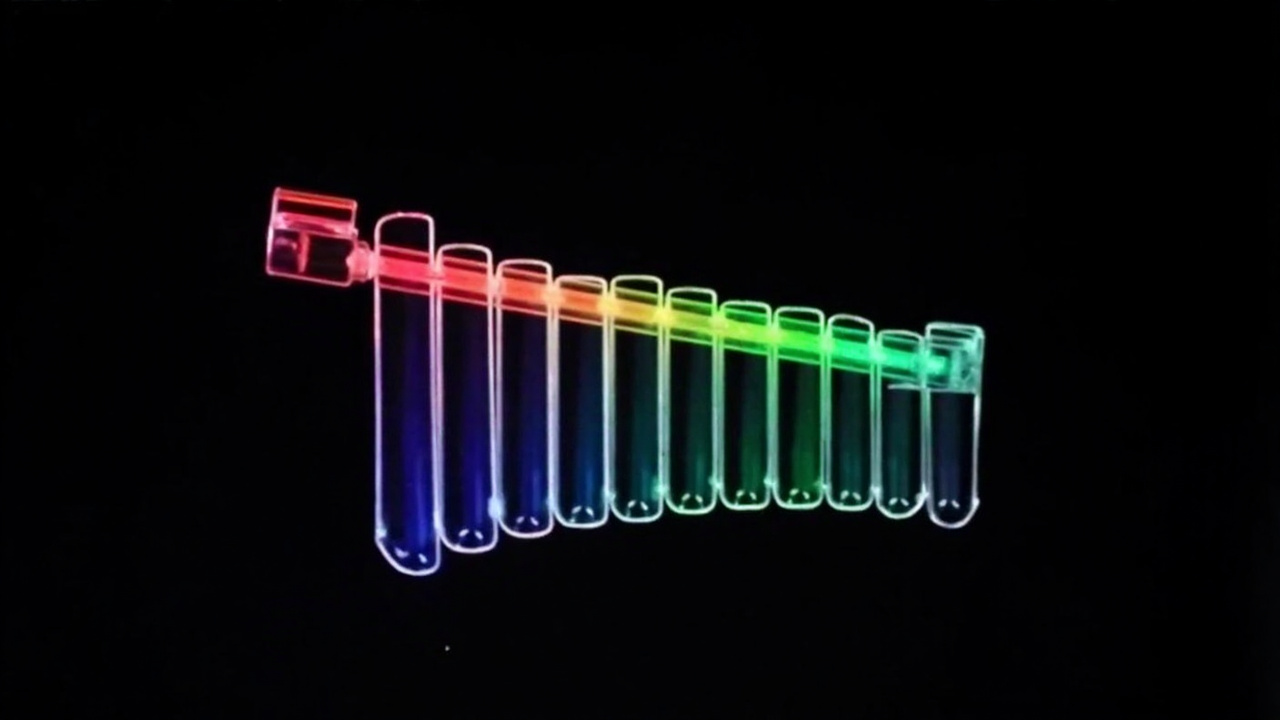
Franklin's genius was in the design. Instead of loose glasses on a table, he created a series of glass bowls—increasingly larger as you moved along—of graduated sizes, mounted horizontally on a spindle. This spindle could be rotated with a foot pedal, and the player would simply dampen their fingers and play.
Imagine a xylophone, but made entirely of glass, with no actual mallets needed. Just your fingertips dancing across smooth, singing bowls.
The sound? By all accounts, utterly ethereal. Franklin described the tones as "incomparably sweet beyond those of any other." And he wasn't alone in this assessment.
Once word got out about Franklin's invention, it spread like wildfire through European high society. A young musician named Marianne Davies gave the first public performance in 1762, and suddenly everyone wanted to hear this magical glass music.
The Mozart Connection
Here's where things get really interesting. Mozart—yes, THAT Mozart—wrote music for the glass harmonica. Specifically, his Adagio and Rondo (K. 617), which he composed in 1791, just months before his death.
Beethoven also got in on the action with his piece "Lenore Prohaska." Suddenly, the instrument that was originally a scientific curiosity had become a legitimate fixture in classical music.
But then, almost as quickly as it rose, the glass harmonica started to fall. And the reason is absolutely wild.
Enter: The Madness Whisper Campaign
A German physician named Franz Anton Mesmer—yes, THAT Mesmer, the guy who gave us the word "mesmerize"—got his hands on one of these instruments and decided it had magical healing properties.
Now, I want to be clear: there's zero scientific evidence for what Mesmer claimed. He believed the vibrations from the glass harmonica could affect the human body through something he called "animal magnetism," and he used the instrument in his so-called treatments. His patients would report going into trances or having visions.
Does this sound legitimate to you? Yeah, not so much.
But here's the thing about pseudoscience in the 18th century—it spread. And once people started whispering that this glass instrument could hypnotize listeners or even drive them to madness, well, that was hard to walk back.
Within Germany, rumors swirled. Some claimed the instrument was dangerous to play. Others said listening to it too long would damage your mental state. A moral panic ensued, which in the 18th century apparently meant a lot of very concerned letters being written and church sermons being delivered.
The Real Reason It Died
Here's my take, and I think the evidence supports this: the "madness" rumors were almost certainly nonsense. There was never any credible medical or scientific connection between the glass harmonica and mental deterioration.
So why did the instrument actually disappear?
Honestly? It was probably just too dang fragile. These were precisely crafted glass bowls, rotated by foot pedals, requiring exact finger placement. Imagine the maintenance nightmare. One wrong move and you've got shattered glass everywhere.
Plus, by the 19th century, orchestral instruments were getting louder and more powerful to fill bigger concert halls. The delicate, whisper-quiet glass harmonica just couldn't compete. It was a beautiful instrument for intimate parlor performances, but it didn't scale.
Sometimes things don't disappear because they're bad—sometimes they just don't fit the changing times.
The Twist Ending
Here's where I have to admit something. The original article I read for this piece ends with a suggestion to show Benjamin Franklin Korn's 2006 MTV Unplugged performance, where they use glass bowls as an instrument.
And honestly? That's pretty great. Because it turns out the glass harmonica never really died—it just evolved. Modern musicians still use glass instruments, from avant-garde composers to indie bands looking for that unique ethereal sound.
Franklin would probably get a kick out of it. The guy who also gave us the lightning rod, bifocals, and the Franklin stove... and apparently, a tiny piece of the DNA for whatever that Korn performance was.
Not bad for a Founding Father who also found time to complain about being woken up by roosters.