
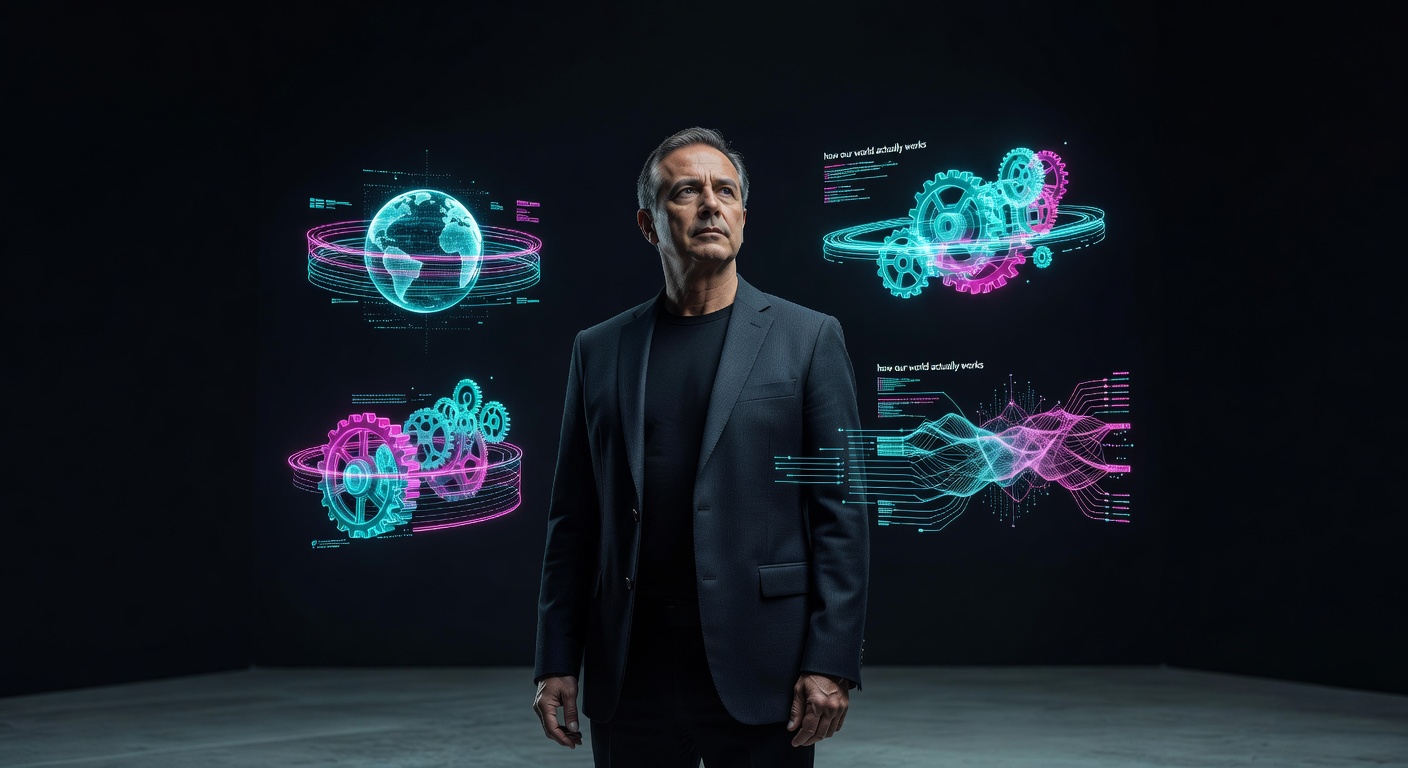
The Man Behind the Magic
You might not know Yann LeCun's name, but you definitely know his work. This French-American computer scientist basically invented the neural networks that power everything from your phone's camera to ChatGPT. He's won the Turing Award (think Nobel Prize for computer science) and spent years as Facebook's chief AI scientist.
Now, he's embarking on what might be his most exciting venture yet — and someone just handed him a billion-dollar check to make it happen.
Beyond Chatbots: The Next AI Frontier
Here's the thing that bugs me about current AI systems: they're incredibly smart in some ways, but embarrassingly clueless in others. Your AI assistant can write poetry and solve complex math problems, but it has no real understanding of basic physics. It doesn't know that if you drop a ball, it will fall down, or that water flows downhill.
This is what LeCun wants to fix. Instead of building another language model that gets really good at predicting the next word, he's focused on creating AI that understands the fundamental rules governing our physical world.
Why This Matters More Than You Think
Think about it — humans don't just learn by reading text. We learn by interacting with the world around us. A toddler figures out gravity by dropping their sippy cup for the hundredth time (much to their parents' frustration). They learn about cause and effect by pushing buttons and seeing what happens.
Current AI systems miss all of this rich, physical understanding. They're like brilliant students who've only ever read about riding a bicycle but have never actually gotten on one.
The Billion-Dollar Question
So what exactly is LeCun planning to do with all this money? While the details are still emerging, the goal is clear: build AI systems that can observe, predict, and interact with the physical world in ways that current models simply can't.
This could mean AI that understands:
- How objects move and interact
- Basic physics principles
- Spatial relationships
- Cause and effect in the real world
Imagine robots that don't just follow pre-programmed instructions but actually understand why certain actions lead to specific outcomes. Or AI systems that can genuinely help with engineering and design problems because they grasp how materials behave under stress.
My Take: This Could Be Huge
I'm genuinely excited about this direction. We've made incredible progress with language models, but we've also hit some pretty obvious limitations. No matter how many parameters you add to GPT-whatever, it's still fundamentally guessing what words come next based on patterns in text.
But an AI that truly understands physics? That could be the bridge between our current impressive-but-narrow systems and something approaching genuine artificial intelligence.
The Road Ahead
Of course, a billion dollars doesn't guarantee success. Building AI that understands the physical world is an incredibly complex challenge that researchers have been working on for decades. But if anyone can crack this problem, it's probably the guy who helped invent the technology that made modern AI possible in the first place.
I'll be watching this space closely — and I suspect we all should be. This isn't just another AI startup promising to revolutionize everything. This is one of the field's greatest minds taking a fundamentally different approach to one of technology's biggest challenges.
The next few years are going to be fascinating.