
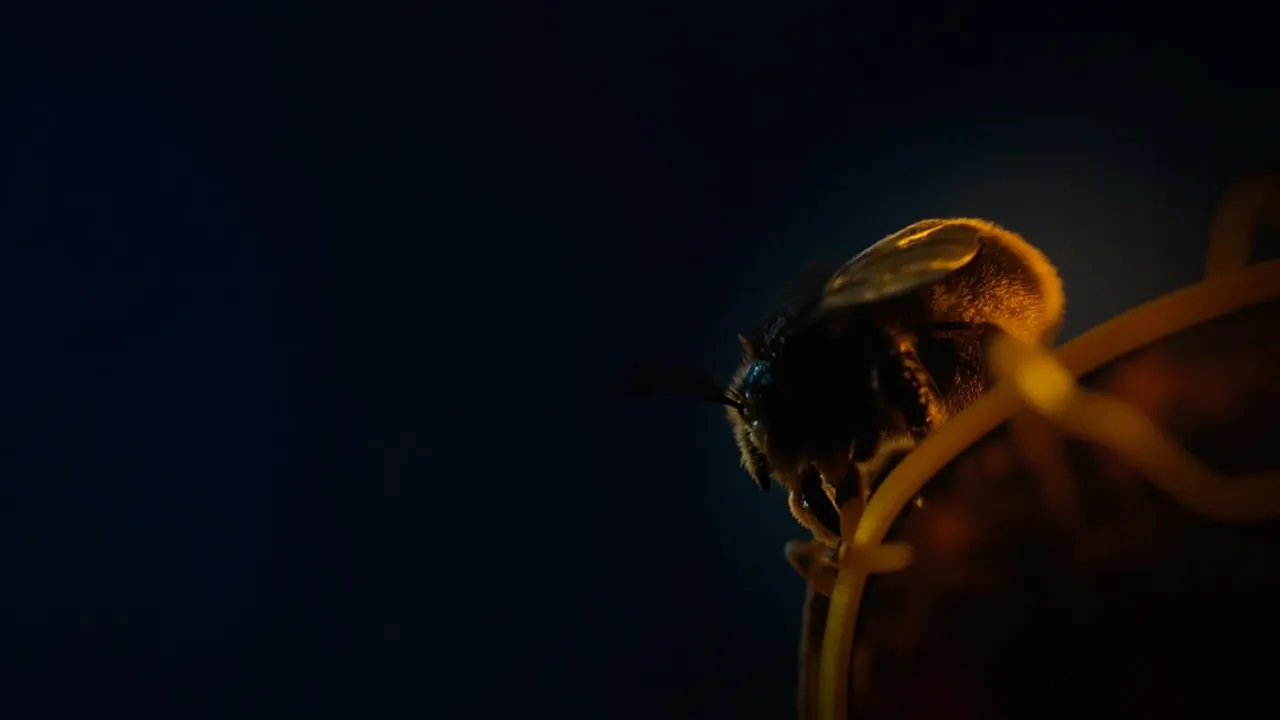
🐝 So, How Do Bees Decide Who Does What?
Here's something that'll make you rethink everything you thought you knew about teamwork. Bees don't have managers. They don't have HR departments. They don't sit around in meetings assigning tasks. And yet, somehow, these little fuzzy insects run one of the most efficient societies on the planet.
How in the world do they pull this off?
Well, scientists at Heinrich Heine University Düsseldorf and their colleagues from a few other German universities just cracked part of this mystery wide open, and honestly? It's pretty remarkable.
The Inside Scoop on Bee Jobs
As it turns out, bees don't just do random stuff. Their work lives follow a pretty predictable schedule. Young worker bees start out as the colony's nannies—they take care of the queen and feed the baby larvae. Pretty cute, right?
Then, as they get a bit older, they switch gears and become the colony's maintenance crew and security guards. They build stuff, fix stuff, and keep the hive protected from threats.
Finally, in the last stage of their lives, they become foragers—heading out into the world to gather pollen and nectar. It's basically a bee career progression, and it happens without a single performance review.
The Gene That Changes Everything
Here's where things get really interesting. The research team, led by Professor Martin Beye, was studying a gene called doublesex (yes, that's actually its name—no relation to anything else, apparently).
When they deactivated this gene in older worker bees, something wild happened. These seasoned bees suddenly started acting like youngsters again. They went back to caring for the queen, even though that's a job typically reserved for much younger bees.
It's like if your grandmother suddenly decided she wanted to play with dolls again instead of doing crossword puzzles. Not exactly a normal progression, right?
Flipping the Brain Switch
But the scientists didn't stop there. They realized that the doublesex gene only works in specific neural circuits within the bee brain. That gave them an idea: what if they could control those circuits directly?
So they did something clever. They used the gene to create a protein that suppresses neural activity. Then, they fed the bees a special substance that activated this protein. The result? They could selectively reduce activity in targeted brain circuits.
The outcome was remarkable. When those specific neural pathways were inhibited, older worker bees basically hit the rewind button and went back to queen-caring duties.
Dr. Jana Seiler, the lead author of the study, put it this way: "The older worker bees then resumed caring for the queen, which only younger bees would do otherwise."
In other words, they found the actual brain switch for bee job assignments.
What Does This Mean for Understanding Bee Society?
This discovery suggests something pretty profound about how bee colonies work. It appears that the organization of bee society isn't just some mysterious social magic—it's grounded in actual brain biology.
When certain neural circuits are active, you get one set of behaviors. When those circuits are suppressed and others take over, the bee's entire role in the colony can shift.
Professor Beye believes this opens up exciting new avenues for research. He says the ability to control bee behavior gives scientists a unique window into understanding how behavioral diversity and social cooperation work in nature.
Why Should We Care?
Beyond just being scientifically fascinating, this research might actually matter for real-world applications. Bee populations around the world have been struggling, and understanding how their societies function could help us protect them better.
Plus, there's something genuinely inspiring about realizing that these tiny insects with brains roughly the size of a sesame seed have evolved such sophisticated, self-organizing systems. They figured out how to divide labor, adapt to changing needs, and cooperate without a leader—all things that human organizations still struggle with.
So the next time you see a bee buzzing around your garden, remember: there's a whole lot more going on in that tiny head than you might think. Scientists are just starting to understand how the hive mind really works, and honestly, the answers are way cooler than we ever imagined.