
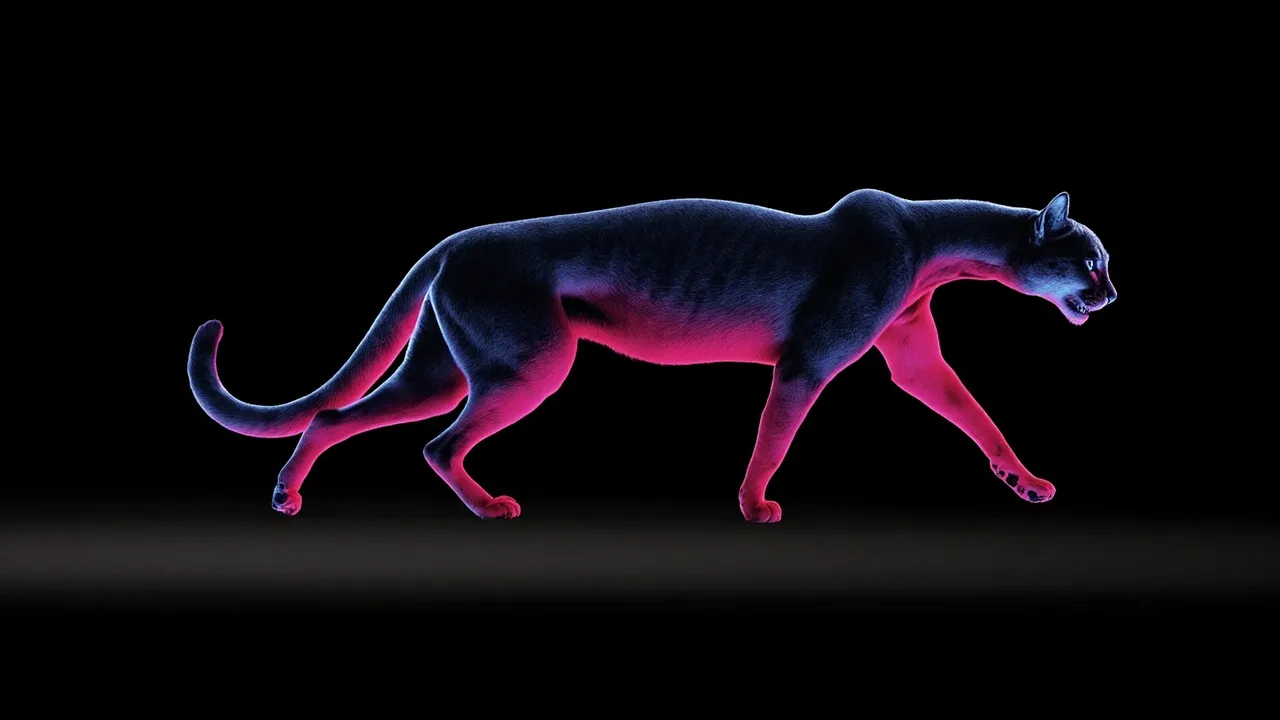
Okay, can we talk about this for a second? Because I just learned something wild about prehistoric North America and I need to share it with you.
For decades, scientists believed that the fast-running American pronghorn evolved its incredible speed — we're talking up to 60 miles per hour, people — because it was being chased by a cheetah-like predator during the Ice Age. You know, the classic "survival of the fastest" story. Makes total sense, right?
Well, hold onto your hats, because new research just revealed that this "American cheetah" was basically a fraud. A pretender. A cat wearing a cheetah costume, if you will.
Meet Miracinonyx trumani: The Puma's Cool Cousin
The real story is way more interesting. This animal, officially called Miracinonyx trumani, was actually a close relative of the modern puma (also known as the mountain lion or cougar). Researchers at UC Santa Cruz sequenced ancient genomes from fossils between 23,000 and 31,000 years old, and here's what they found: our "cheetah" split from the puma family tree about 2.6 million years ago.
So what does this mean? It means that those sleek, slender bodies that looked so cheetah-like were actually an example of something called evolutionary convergence — when completely different species develop similar features because they're facing similar environmental pressures. Kind of like how dolphins and sharks both have streamlined bodies even though one is a mammal and one is a fish. Nature just sometimes arrives at the same solution to the same problem.
Pretty cool, right?
From Wyoming to the Arctic: One Cat, Totally Different Lives
Here's where things get really fascinating. The research, published in Current Biology, shows that these cats weren't just one-trick ponies (bad pun, I know, but I couldn't resist). They actually had completely different lifestyles depending on where they lived.
In places like Wyoming and Florida, these cats were generalist predators prowling through temperate grasslands, hunting whatever prey was available. But get this — some populations lived as far north as the Arctic Yukon, which is about 20 degrees of latitude farther than scientists ever realized!
And up in the frozen north? These cats apparently became fish specialists. We're talking salmon and other anadromous fish (that's fish that swim upstream from the ocean to breed, for those who want the vocabulary). Can you imagine a cat that looked like a cheetah but was essentially fishing in icy rivers? That's not exactly what comes to mind when someone says "apex predator," but hey, survival is survival.
These Arctic cats also had some interesting genetic adaptations. The researchers found mutations in genes that regulate circadian rhythms — basically their internal body clocks. This makes sense if you think about it: in the far north, summers have almost 24 hours of daylight and winters have almost none. Having some genetic flexibility there would be super helpful for an animal trying to figure out when to hunt and when to rest.
What About the Pronghorn?
Now, here's the million-dollar question: if our American "cheetah" wasn't actually a cheetah, then why are pronghorns so impossibly fast?
Honestly? Scientists aren't sure anymore. The old theory was that pronghorns evolved speed as a defense mechanism against this predator. But if M. trumani wasn't built for high-speed chases (and remember, they were more like pumas — versatile hunters, not pure sprinters), then maybe that story needs a rewrite.
Maybe pronghorns developed their speed for other reasons, or maybe there was another predator involved that we haven't discovered yet. Or maybe — and this is kind of fun to think about — pronghorns are just naturally gifted runners who happened to live alongside a cat that looked the part.
The truth is, the "ghosts of predators past" hypothesis (that's the fancy term for the idea that prey species still carry evolutionary echoes of extinct predators) might need some updating. Science is like that — always refining our understanding as new evidence comes in.
The Taste Thing (Because Science Can Be Weird)
Here's a quirky detail that made me laugh: researchers also discovered that these cats had lost the gene for detecting sour tastes. Now, cats are already known for not being able to taste sweetness (which makes sense — why would a meat-eater need to detect sugar in fruit?), but this is the first time scientists have documented the loss of sour taste perception in any felid.
What does this mean? Nobody's totally sure, but sour taste is often associated with detecting spoiled food or unripe fruit. If you're a highly specialized predator with a very specific diet, you might not need certain taste receptors anymore. It's one of those weird, fascinating details that shows just how specialized these animals had become.
Why Did They Disappear?
The study also found that M. trumani had low genetic diversity even before they went extinct. Unlike modern pumas, though, they didn't show signs of severe inbreeding or sudden population crashes. Instead, it looks like they experienced a slow, gradual decline over millions of years leading up to the end of the Pleistocene.
This gradual fade might explain why we don't find a lot of their fossils — there were just fewer and fewer of them over time. And when the big extinction event hit at the end of the Ice Age (the one that also took out mammoths, sabretooth cats, and a bunch of other megafauna), these cats were already in a vulnerable position. A slow decline plus a major extinction event? Not a great combination.
What's the Takeaway?
Honestly, I love stories like this. We often think of science as this linear process where we figure things out and that's that. But here's a perfect example of how our understanding evolves (pun intended). For years, the "American cheetah" was a key piece of the Ice Age puzzle. Now we know it was something completely different — and honestly, something more interesting.
A puma relative that looked like a cheetah, lived from Florida to the Arctic, ate fish in frozen rivers, had weird genetic adaptations to extreme light cycles, and gradually faded into extinction. That's not a story about a failed cheetah impersonator — that's a story about a remarkable, adaptable predator that carved out an incredible niche across an entire continent.
Sometimes the truth is stranger and more wonderful than the fiction we believed before.