
Finally, Some Real Progress on Male Birth Control
Here's something that's been bugging me for a while: why do women carry essentially all the contraceptive burden? We've got pills, patches, implants, IUDs, injections... the works. Meanwhile, men get condoms and vasectomies. That's pretty much it. Sure, there are other options theoretically in development, but nothing has actually made it to the market in decades.
Well, good news. Cornell University researchers just announced something genuinely exciting: they've figured out how to safely and reversibly shut down sperm production in mice. And unlike a lot of "breakthrough" health news that gets overhyped, this one actually seems like real progress.
The Problem With Current Options
Let me paint the picture. Right now, if a man wants to take permanent responsibility for contraception, he can get a vasectomy. It's effective, sure, but it's surgery. Even though vasectomy reversal is sometimes possible, it's expensive, not always successful, and let's be honest—most guys are hesitant about the whole thing. Can you blame them?
On the flip side, hormonal male contraceptives sound promising in theory, but scientists have been nervous about going down that road. Partly it's because we learned some hard lessons about hormonal side effects from women's birth control over the decades, and nobody wants to repeat that.
So what we've been stuck with is this gap: we needed something that actually works, is safe, reversible, and doesn't mess with a man's overall health. Kind of like asking for the moon, right?
How Scientists Actually Did This
This is where it gets clever. The researchers didn't try to stop sperm production at just any point. They specifically targeted something called "meiosis"—think of it as the assembly line where sperm cells are actually made.
The key insight? They focused on disrupting one specific stage called "prophase 1." Why be so targeted? Because the last thing you want is to permanently damage the stem cells that create sperm in the first place. Wreck those, and a guy might never recover his fertility. They also avoided disrupting the later stages, where sperm cells are nearly done—because you could end up with "leaky" viable sperm that could cause accidental pregnancies.
The molecule they used is called JQ1, which was originally designed to fight cancer and inflammation. In these mice studies, JQ1 basically told the developing sperm cells to stop what they were doing during that critical prophase 1 stage. The cells died off at that point, which sounds harsh, but here's the thing: that's actually supposed to happen as part of normal sperm development anyway.
The Results Are Actually Pretty Impressive
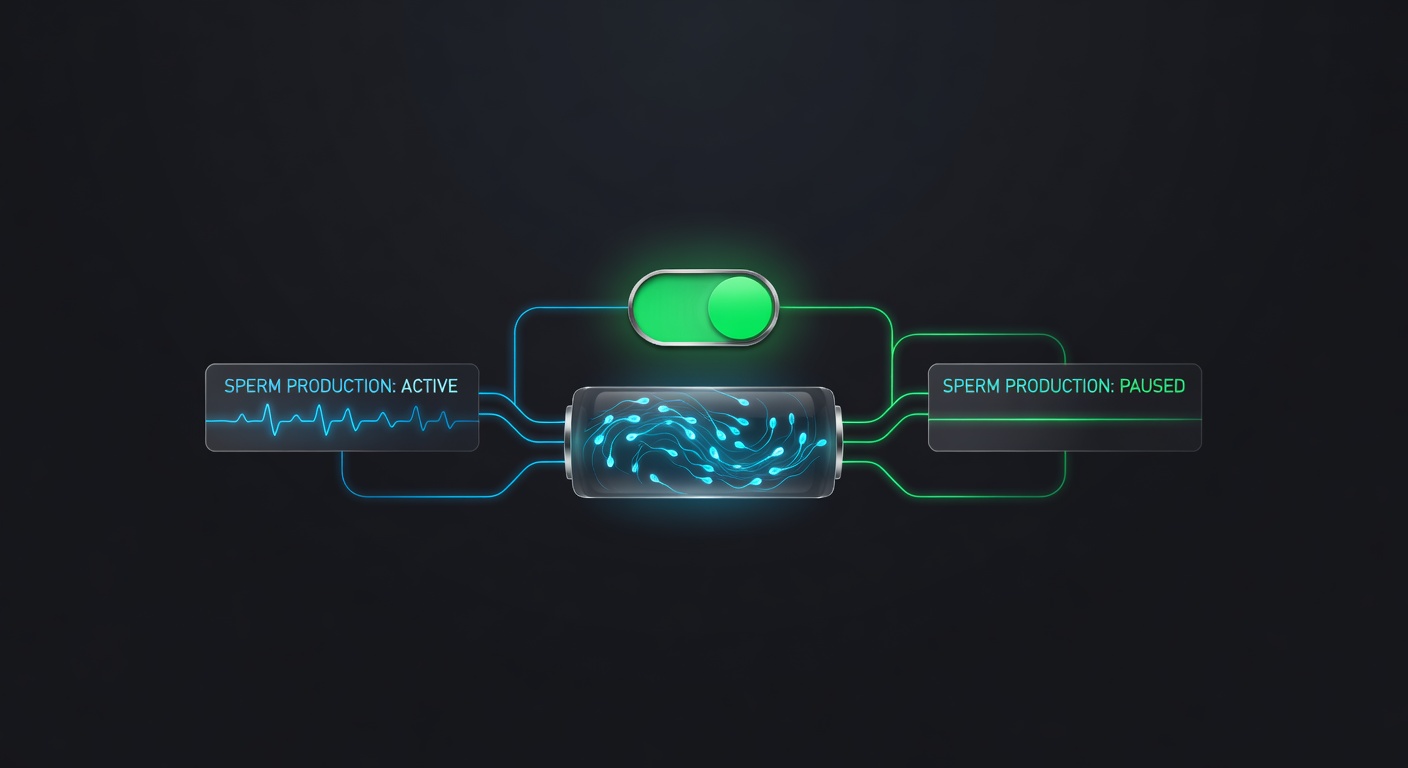
Male mice were given JQ1 for just three weeks. During that time? Zero sperm production. Complete shutdown.
But here's the magic part: once they stopped the treatment, the mice's bodies went back to normal. Within about six weeks, the whole meiosis process recovered. Sperm production came roaring back. The researchers even bred the mice to confirm they were fertile again, and—this is important—the offspring were completely healthy and could reproduce normally.
In other words, there was no lasting damage. No weird mutations. No problems passed on to the next generation. Just a temporary pause on fertility, like putting things on hold.
What This Could Mean for Real People
This is still basic research, so don't get too excited yet. But if this principle scales up to humans, Cohen's team envisions something pretty convenient: maybe an injection every three months, or possibly a patch. Not surgery. Not daily pills. Just something simple and reversible.
That would genuinely change the game. It would finally give men a non-surgical, non-hormonal option for taking responsibility for contraception. And honestly? It's about time.
The Bigger Picture
What I appreciate about this research is that it's not trying to force-fit some one-size-fits-all solution. The scientists specifically chose a target in the reproductive process that could be interrupted without causing collateral damage to the rest of the body. That's the smart way to do things.
The fact that they spent six years proving this works—and that their findings just got published in the Proceedings of the National Academy of Sciences—suggests this is legit science, not wishful thinking.
Of course, we're still probably years away from this being available to actual humans. There's safety testing, human trials, regulatory approval, and all that stuff that takes time for good reason. But for the first time in a really long time, it actually feels like we're on the verge of cracking male contraception.
And I think that's something worth celebrating.