
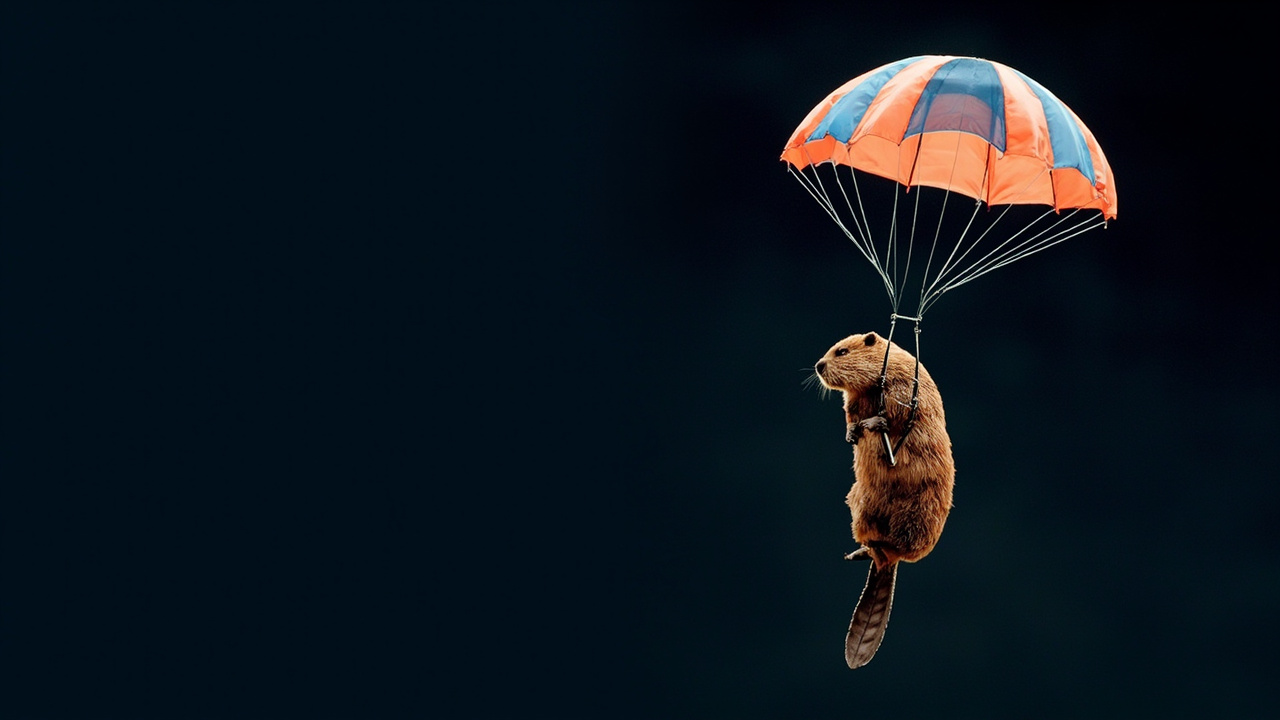
Wait, They Actually Parachuted Beavers?
Okay, I need to tell you about one of the weirdest wildlife conservation stories you've probably never heard, and it's absolutely wild (pun absolutely intended).
Picture this: It's the late 1940s in Idaho. A farmer is losing his mind because beavers keep rebuilding their dam in his irrigation ditch every single night. He tears it down in the morning, and by evening, those busy little engineers have rebuilt the whole thing. Classic beaver behavior, honestly.
Now, here's where it gets interesting. Instead of the settlers just shooting the beavers—which absolutely would have been the "solution" in earlier American history—the Idaho Department of Fish and Game decided to try something completely bonkers. They were going to relocate the beavers.
But not by truck. Not by horse. By airplane. With parachutes.
I know, I know. You're probably thinking I'm making this up. I promise I'm not. This actually happened.
The Man Behind the Madness
The mastermind behind this operation was a guy named Elmo W. Heter, and honestly, he deserves some kind of award for creative problem-solving.
Here's the thing—beaver relocation at the time was brutal. Trappers would catch the beavers, hand them off to wildlife officers, who would then transport them by car and eventually by horse or mule into the mountains. Heter noted in a 1950 article that this process was "arduous, prolonged, expensive, and resulted in high mortality among the beavers."
Translation? A lot of beavers were dying from stress and overheating during these journeys. It's genuinely sad when you think about it.
So Heter had a wild idea: what if we just... dropped them from the sky?
His logic was actually pretty sound. The old method of transport was causing tons of stress, which was killing the beavers. But if you could get them from Point A to Point B quickly, without all that jostling and overheating, maybe they'd arrive alive and ready to build new homes.
And here's the beautiful part—he was completely right.
Why Beavers Were Worth Saving
Now, you might be wondering why anyone bothered going to these extremes for a bunch of rodents. The answer is that beavers are actually incredibly important to their ecosystems.
Beaver dams do so much more than annoy farmers (though they definitely do that too). They catch fine silt that would otherwise wash downstream, create ponds that provide water for wildlife and livestock, and help conserve moisture in dry areas. One 1939 TIME magazine article estimated that a single beaver was worth about $300 in environmental value, which would be over $7,000 today. The cost to relocate one? Just $8.
Beavers had already been nearly wiped out on the East Coast by the 1800s due to the fur trade. By the time Americans realized how useful these little ecosystem engineers actually were, they had to start bringing beavers back from other states and even Canada to restore populations.
So when Idaho faced its own beaver-human conflict in the post-WWII expansion era, there was genuine interest in finding a better way. The shoot-first mentality was being replaced with something more thoughtful.
The Drop Itself
I wish I could tell you exactly what those parachute containers looked like, but the original article cuts off mid-sentence (classic cliffhanger!). What I do know is that the team experimented with different designs—apparently the woven willow boxes didn't make the cut because the beavers weren't fans.
But the parachutes worked. Beavers were successfully dropped into their new mountain homes, and they survived. They got out of their containers, looked around at this strange new territory, and got to work building their dams and lodges.
It's honestly kind of beautiful when you think about it. From being forcibly removed from their original homes, stuffed into a box, launched out of an airplane, and dropped into the wilderness... they just did what beavers do. They adapted. They built. They created new homes and started new families.
Why This Story Still Matters
I love this story because it's a reminder that humans aren't always great at thinking outside the box, but sometimes we eventually get there. For centuries, the "solution" to wildlife conflicts was simple and tragic: just kill the animals. But people like Elmo Heter started asking better questions.
How can we solve this problem without destroying nature? What if the "pest" is actually an important part of the ecosystem that we're just not understanding correctly? Can we be more creative than just eradication?
These aren't just questions for the 1940s, either. We're still asking them today as we try to coexist with wildlife in an increasingly human-dominated world.
And honestly? I just love that somewhere in Idaho, there are beavers whose great-great-grandparents were dropped from an airplane. They probably don't know it, but they're part of a ridiculous piece of American history.
Sometimes the most unexpected solutions turn out to be the right ones. And sometimes, those solutions involve parachutes.