
The Sound That Started a Conspiracy
Okay, let me tell you about one of my favorite science mysteries — and I promise the ending is satisfying, even if it's less exciting than the theories people came up with.
Back in 1997, NOAA researchers were doing their thing in the South Pacific, listening for underwater volcanic activity through hydrophones (fancy underwater microphones). But instead of volcanoes, they picked up something that made everyone stop and scratch their heads.
It was loud. I mean, really loud. Loud enough to be detected on sensors spread across the entire Pacific Ocean — we're talking over 3,100 miles of distance. They called it "the Bloop," which honestly sounds like something you'd yell when you stub your toe, but I promise this is cooler than that.
So... What Was It?
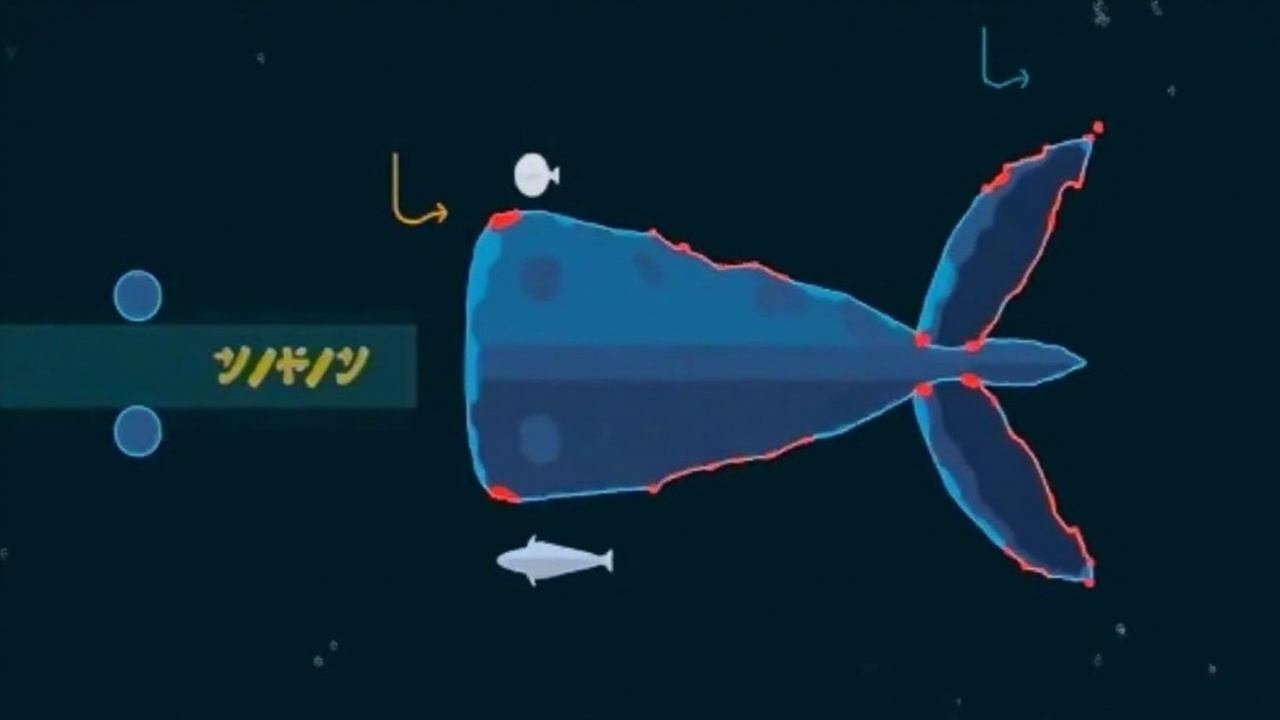
Here's where things get fun. The frequency of the Bloop looked a lot like something a living creature would produce. A whale, maybe? But here's the problem: blue whales are the largest animals ever known to exist on Earth, and even they can't produce a sound this loud. The Bloop's amplitude suggested something roughly twice the size of a blue whale.
Cue the internet going absolutely wild. You had your reasonable people suggesting maybe it was an undiscovered species — our oceans are still super mysterious, after all. I mean, the coelacanth was thought to be extinct for 66 million years until one turned up in a fisherman's net back in 1938. If that can happen, what's to say something massive isn't lurking in the deep?
Then you had the less reasonable people (my favorite people) pointing out that the Bloop's coordinates were suspiciously close to where R'lyeh would be — the sunken city in H.P. Lovecraft's fiction where the tentacled horror Cthulhu waits to rise. Some folks were genuinely convinced we'd accidentally recorded the call of an ancient sea god.
Others bet on the colossal squid — a real creature that can reach 46 feet long — but scientists shot that down because squids don't have the biological equipment needed to make sounds like that.
The Boring (But Cool) Truth
After years of investigation, getting closer and closer to Antarctica with their hydrophones, NOAA scientists finally cracked the case in 2005.
It was ice. Specifically, it was an ice quake — the sound produced when massive glaciers fracture and enormous chunks of ice break off (a process called "calving"). When icebergs scrape against the seafloor or each other, they create these incredibly loud, low-frequency sounds that can travel thousands of miles.
So essentially, somewhere near Antarctica, a really, really big piece of ice had a really, really dramatic day, and the entire Pacific Ocean got to hear about it.
Why This Still Amazes Me
Here's what I love about this story: for eight years, the Bloop genuinely stumped scientists. We still don't know exactly which iceberg or glacier was responsible. We just know what it was, not who (or... what) it was.
And honestly? That makes it even more wonderful to me. We live on a planet where massive ice shelves the size of cities can crack apart and produce sounds detectable across entire oceans. Where glaciers calving in Antarctica create noises that, if you didn't know better, you'd swear came from some Cthulhu-like creature.
Nature is weird, y'all. And sometimes the real explanation is more wonderful than the monster.