
Okay, let's talk about something that's been giving me existential whiplash lately: NASA actually wants to build a permanent human settlement on the Moon.
No, really. Not just a quick visit like Apollo, but actual humans living there. In the 2030s. Which, honestly, feels both incredibly exciting and mildly terrifying when you start thinking about the logistics.
I mean, the Moon? We're talking about moving to a giant rock with no air, no food, no atmosphere, and approximately zero Pizza Huts. (Not that I'm not still holding out hope for that last one.)
The Problem with "Just Bring Everything"
Here's where my brain starts hurting. The current plan isn't as simple as loading up some spaceships with supplies and calling it a day. According to experts in space logistics, shipping things from Earth to the Moon costs roughly $1.2 million per kilogram. Let me say that again: $1.2 million. Per. Kilogram.
That's not a typo. That's roughly $540,000 for a single pound of, I don't know, your favorite snacks.
So obviously, hauling everything from Earth would get astronomically expensive (pun absolutely intended). Plus, imagine if your rocket exploded on the way up with your monthly food supply. Talk about a bad day at the office.
Here's Where It Gets Weird: Frozen Water and... Eating Asteroids?
The good news? The Moon isn't completely empty-handed. Scientists have discovered significant deposits of frozen water ice near the Moon's south pole—hidden in craters that never see sunlight. Water is obviously essential for drinking, but here's the cool part: you can break it down into hydrogen and oxygen, which can then be used as rocket fuel.
So astronauts could essentially drink and refuel from the same source. That's pretty nifty, right?
But then we get to the food situation, and this is where things take a turn for the absolutely bonkers.
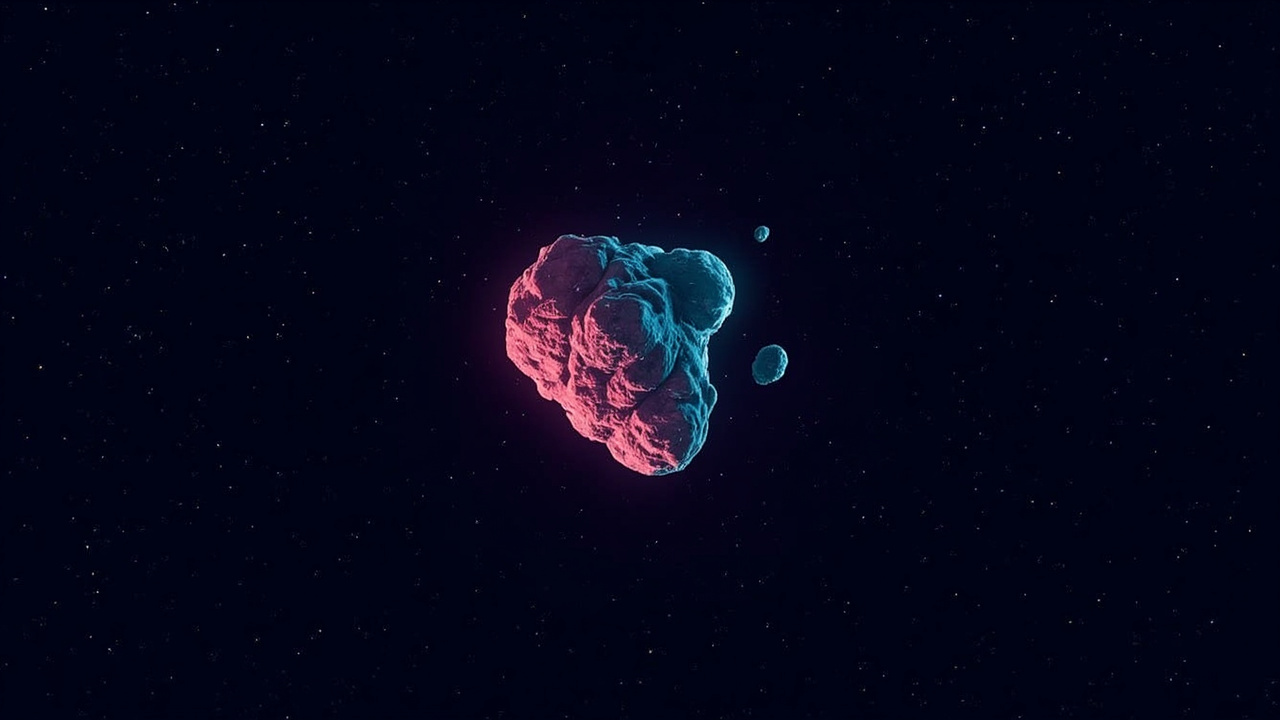
Researchers are seriously studying whether astronauts could someday eat asteroids.
I know. I know what you're thinking. But hear me out.
A research team at Western University published findings showing that carbon found in asteroid dust could theoretically be converted into edible food. They used a process called pyrolysis (heating stuff without oxygen) to turn organic materials into an oil, which bacteria happily munched on in a bioreactor.
Is this weird? Absolutely. Could it feed future Moon settlers? Possibly.
But Wait, There's a Catch
And this is the part that really puts things into perspective. Remember how I mentioned that oxygen generation has been tested on Mars? Sure has. The Perseverance rover managed to produce about 122 grams of oxygen over two years.
That's approximately what a small dog breathes in 10 hours.
For an entire crew of astronauts hoping to live on the Moon for extended periods? We're going to need significantly more than that. Like, significantly more.
My Take
Honestly, when I first heard about the "eating asteroids" research, I laughed out loud. But the more I think about it, this is exactly the kind of creative problem-solving humanity is going to need.
We're not just talking about planting a flag anymore. We're talking about actually figuring out how humans can thrive somewhere other than Earth. And honestly? The fact that scientists are even considering these unconventional approaches gives me hope.
Sure, the 2030s might be optimistic. The technology definitely needs a lot of work. But I'm genuinely excited to see where this goes.
Besides, if astronauts can figure out how to eat space rocks, maybe they can finally solve the mystery of why the hotel pizza on cruise ships always tastes so weird. (That's a joke, but also... actually, someone should look into this.)
What do you think? Would you volunteer for Moon living? Let me know in the comments—I'd love to hear your thoughts on this cosmic adventure we're apparently signing up for.