
When Being Difficult Was Literally Patriotic
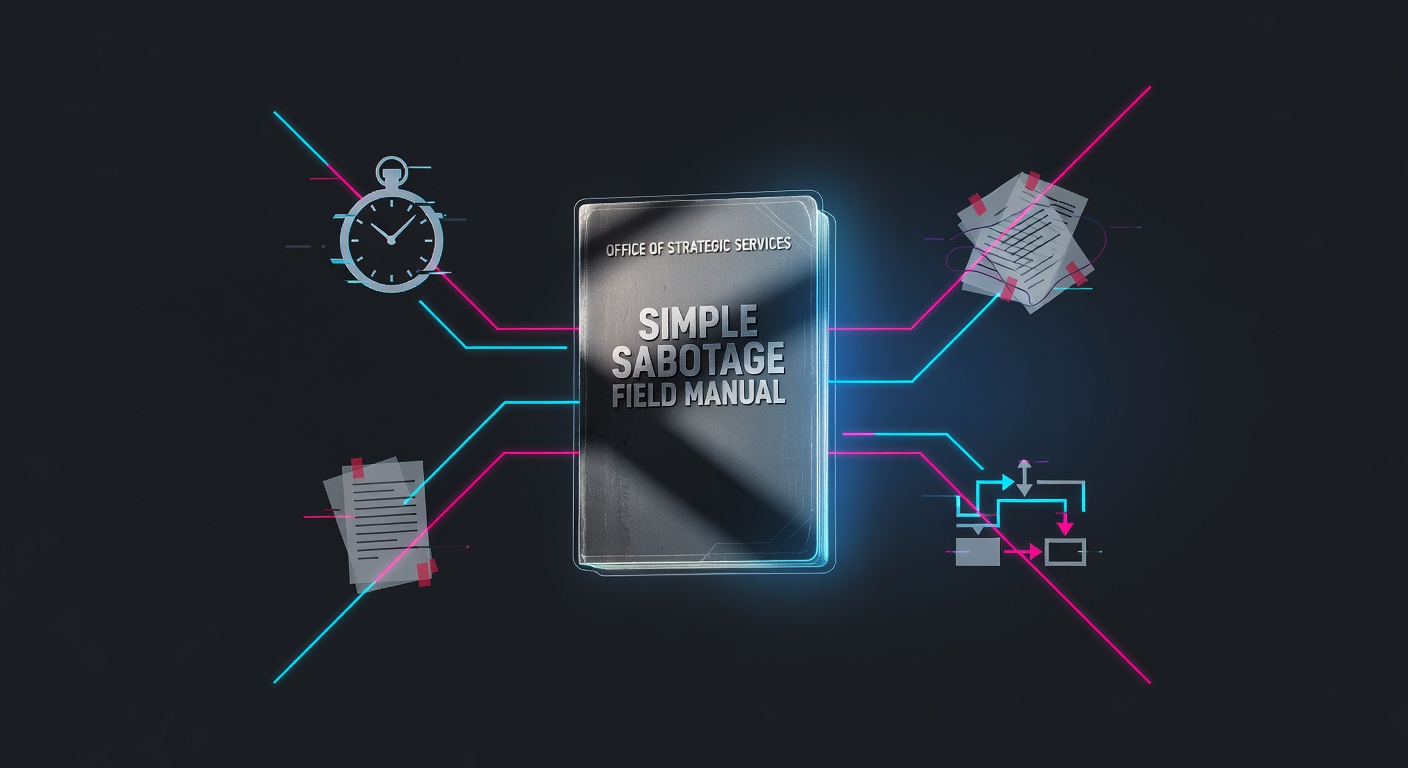
Picture this: It's 1944, and the Office of Strategic Services (the CIA's wartime predecessor) just published what might be the most passive-aggressive document in government history. The "Simple Sabotage Field Manual" was essentially a how-to guide for driving your occupiers absolutely bonkers through the power of strategic incompetence.
And honestly? Reading it today feels like scrolling through a list of behaviors we've all witnessed in modern workplaces.
The Art of Weaponized Stupidity
What makes this manual brilliant isn't the dramatic spy stuff you'd expect. Instead, it focuses on something far more insidious: making life incrementally more annoying for everyone around you.
The OSS understood something profound about human psychology. You don't need explosives or secret codes to damage an organization. Sometimes the most effective weapon is just... being really, really difficult to work with.
The "Oops, Did I Do That?" Approach
The manual breaks down sabotage into two categories that are honestly genius:
Physical sabotage using household items - Think salt in fuel tanks, strategic nail placement, or "accidentally" putting tools in the wrong places. Your kitchen cabinet becomes an arsenal of minor chaos.
Social sabotage through strategic incompetence - This is where it gets psychologically fascinating. The guide literally encourages people to be argumentative, create workplace drama, make terrible decisions, and generally act like that coworker everyone dreads dealing with.
The Psychology Behind the Madness
Here's what's really clever about this approach: it weaponizes behaviors that already exist naturally in any organization. As the manual notes, accidents, delays, and general obstruction happen even under normal conditions. The key is to "enlarge that margin for error."
It's like organizational jujitsu - using an enemy's own systems and human nature against them.
Motivation Was Everything
The OSS clearly understood that asking people to be destructive goes against basic human instincts. Most folks don't wake up thinking, "How can I break stuff today?" So they had to get creative with motivation:
- Make it personal - Connect sabotage to concrete local benefits, not abstract concepts like "freedom"
- Create community - Help saboteurs feel part of a larger movement
- Flip the script - Encourage people to think backwards about everything they normally do well
The Modern Workplace Connection
Reading this manual in 2024 is genuinely unsettling because so many of these tactics feel familiar from dysfunctional workplaces:
- Endless meetings that accomplish nothing
- People who somehow always misunderstand instructions
- Strategic incompetence that's impossible to prove
- Creating drama and interpersonal conflict
- "Forgetting" to share important information
Makes you wonder: Are some of your coworkers secretly enemy agents, or are organizations just naturally prone to these behaviors?
Why This Still Matters
Beyond the historical curiosity, this manual reveals something important about how systems actually work. Complex organizations are surprisingly fragile when faced with coordinated non-cooperation.
It's a reminder that in our interconnected world, the most effective attacks might not come from sophisticated hackers or military force. Sometimes it's just thousands of people deciding to be slightly less helpful than usual.
The OSS figured out that you don't need to blow up a factory if you can convince the workers to be just annoying enough to grind productivity to a halt. That's both terrifying and oddly comforting, depending on your perspective.
This historical document offers a fascinating glimpse into wartime psychology and organizational vulnerability. You can read the full declassified manual yourself - it's surprisingly entertaining, in a dark historical way.