
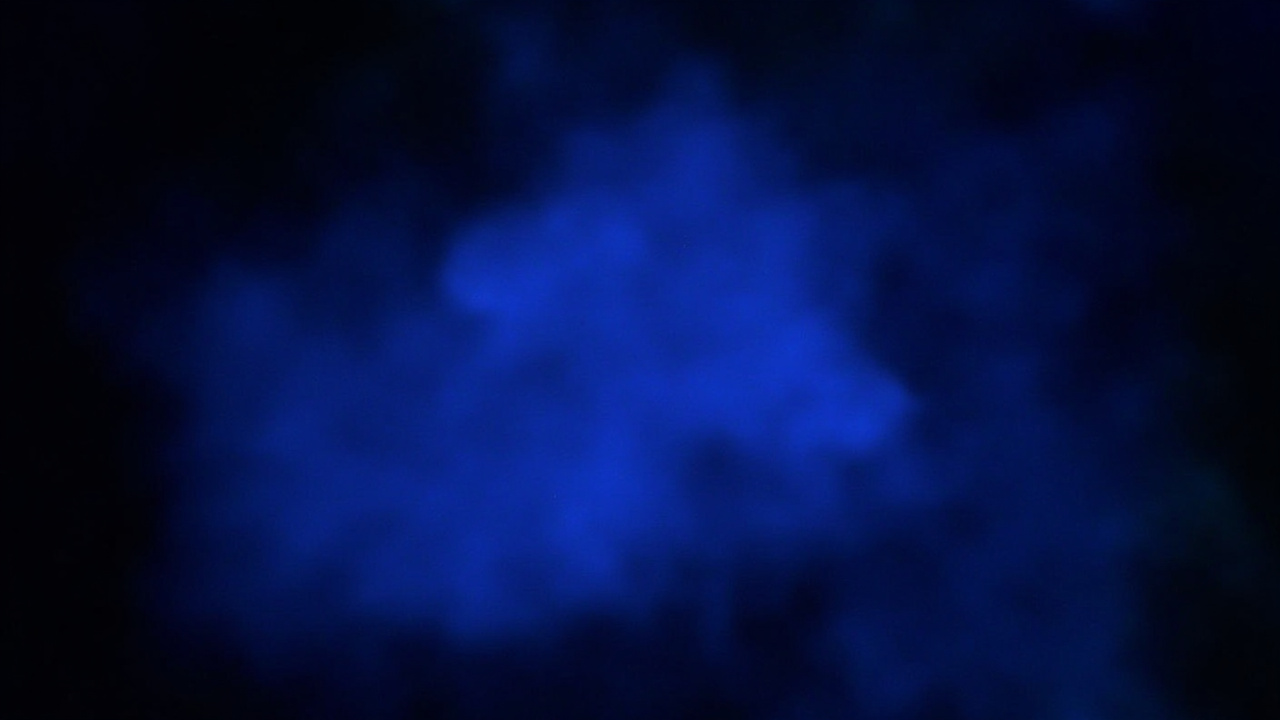
Picture this: It's April 1862. The Battle of Shiloh has just ended—one of the bloodiest fights in American history, with nearly 24,000 soldiers killed or wounded. The survivors lie scattered across the Tennessee woodland, too injured to move. The rain won't stop. Night is falling, and help is still hours away.
Then something strange happens.
The wounds on some soldiers begin to glow. A soft, pale blue light emanates from their torn flesh. The soldiers who witness it—delirious, freezing, terrified—don't have much choice but to accept what they're seeing. Some call it divine intervention. Others just stare in disbelief. Doctors arriving the next morning find this eerie glow emanating from wounds, and they notice something even more bewildering: the soldiers with glowing wounds seem to have better survival rates than those with ordinary injuries.
For over 150 years, this phenomenon—now called "Angel's Glow"—remained unexplained. Was it a miracle? A hallucination? Some strange property of human physiology we didn't understand?
Here's the part I love: Two seventeen-year-old high school students solved it. In 2001, Bill Martin and Jon Curtis learned about Angel's Glow in their history class and got curious. With help from Jon's mom, who happened to be a microbiologist, they decided to investigate. What they found reads like something out of a sci-fi novel.
The glow wasn't supernatural at all. It was the work of a bioluminescent bacteria called Photorhabdus luminescens. But here's where it gets really wild—this bacteria doesn't just float around on its own. It lives inside soil nematodes, which are tiny microscopic worms. These worms hunt insects, burrowing into their bodies and releasing the bacteria to do the dirty work.
The bacteria kill the insects by secreting toxins (one delightfully named "makes caterpillars floppy" does exactly what it sounds like) and enzymes that break down the insect's body. The bacteria then prevent other microbes from moving in and stealing the food source. Both the nematode and bacteria feed on what's left.
So how did this help Civil War soldiers?
Here's the chain of events that probably played out on that rainy battlefield: Flies, attracted by the smell of blood, landed on open wounds. Those flies had picked up the bacteria-nematode combo from soil and insects in the area. When the bacteria colonized the soldiers' wounds, they did what they always do—they secreted toxins and enzymes that killed other bacteria and broke down dead tissue.
In normal conditions, human body temperature (around 98.6°F) would kill P. luminescens. But at Shiloh, the weather was brutal—cold, rainy nights that dropped temperatures significantly. That chill created the perfect environment for the bacteria to survive and do their thing. They couldn't live in a warm, healthy person, but they could thrive in a wounded soldier lying in the rain, hypothermic and fighting for life.
The same secretions that make these bacteria deadly to insects were saving soldiers from gangrene and secondary infections that killed so many others during the Civil War.
I genuinely love this story because of what it reveals about nature. Here you have bacteria, nematodes, flies, and insects all tangled up in a relationship that spans species boundaries. And that relationship—which would have seemed completely magical to someone in 1862—had a side effect (glowing) that looked like an angel's touch.
The irony isn't lost on me: what looked like divine intervention was actually the most unholy alliance you could imagine between creatures operating at scales too small to see. And it probably saved lives.
Bill and Jon won first prize at the Intel International Science and Engineering Fair for their research. More importantly, they showed that sometimes the most mysterious phenomena have the most mundane explanations—and those explanations can be infinitely more fascinating than any miracle story.
Nature is full of these hidden connections, you know. Creatures helping or harming each other in ways we never imagined. Sometimes the truth is stranger than the mythology that grows up around it.
So the next time someone tells you something is miraculous, maybe just ask: could there be a tiny, glowing worm involved?
Source: https://www.popularmechanics.com/science/a71471328/civil-war-wounds-glowed