
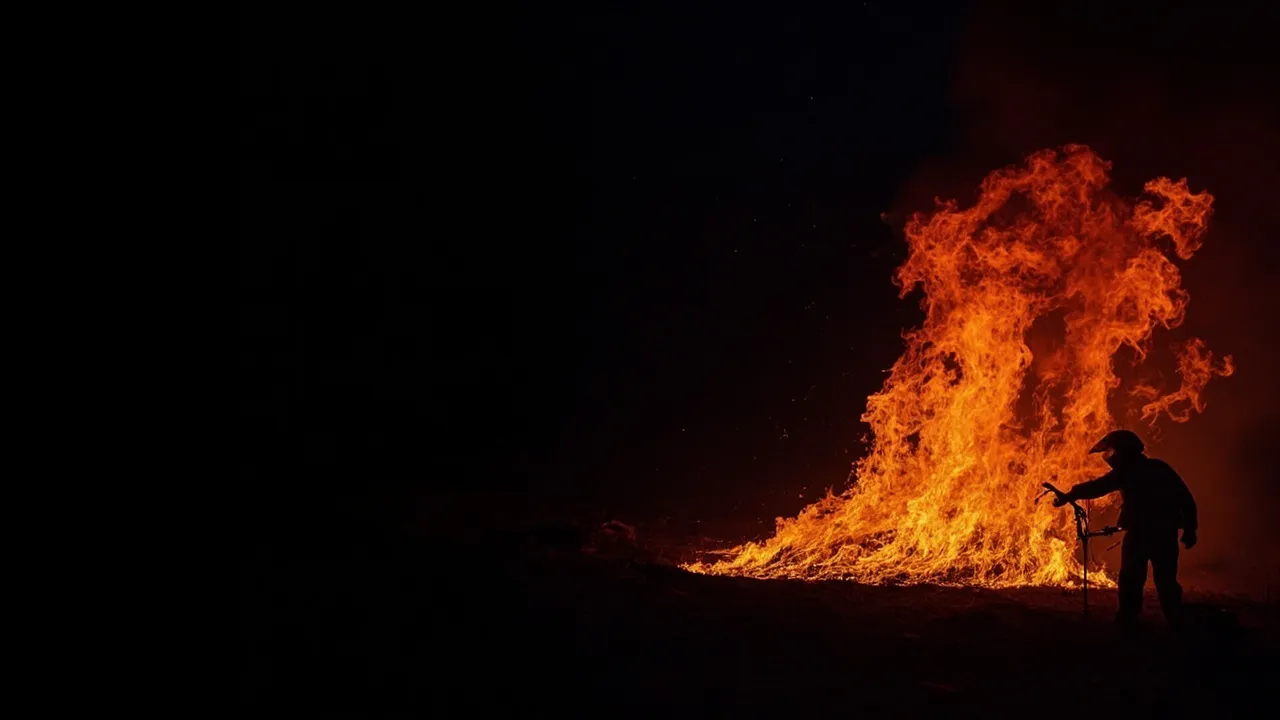
Let me ask you something. If I told you there was a fire burning right now that could keep going for six straight months, would you believe me?
Most of us picture wildfires as these dramatic, fast-moving disasters—you know, walls of flame racing across hillsides, families fleeing with belongings packed into their cars. And yes, those fires are terrifying. But the fires currently burning in Indonesia are something else entirely. These aren't your typical surface fires. They're underground.
I'm talking about peat fires, and honestly? They might be one of the most underestimated environmental threats on the planet right now.
So What Exactly Is Peat?
Here's a quick science lesson (I promise to keep it painless). Peat is basically decomposed plant matter that's accumulated over thousands of years in wetland areas. Think of it like a giant, waterlogged sponge. Indonesia happens to have about 36% of the world's tropical peatlands—it's an absolutely enormous amount.
Under normal conditions, these wetlands are way too wet to burn. But here's the thing: during droughts, they can dry out enough to become essentially kindling. And once fire gets into the peat, it's a whole different ballgame.
"When fires get underground, they just won't stop," explained researcher Robert Field from Columbia University. "They'll keep burning until the rains come in October or November."
Months. These things can smolder for months.
Why Underground Fires Are Basically Impossible to Fight
You know how you can put out a campfire by dumping water on it? Yeah, that doesn't really work with peat fires. Because the flames aren't sitting on top where you can reach them—they're tunneling through underground deposits, sometimes meters deep. Firefighters can soak the surface all day long and the fire just... keeps going. It's like trying to put out a candle by placing a glass over it from above while the wick continues burning underneath.
The satellite images from NASA's Aqua satellite show hundreds of fire detections across Indonesia right now, and scientists say 2026 is tracking dangerously close to 2015 levels—which was absolutely catastrophic. During that fire season, Indonesia's blazes released 1.75 billion tons of greenhouse gases. To put that in perspective, that's more than Japan emits in an entire year. A single fire season.
And here's a genuinely creepy detail: during the worst smoke events, satellites actually struggle to see the fires. The smoke gets so thick that it blocks the view from space. So when things look worst from space, the actual situation might be even worse. That's not exactly comforting.
Climate Change Is Making This Worse—Way Worse
The 2026 fire season is being amplified by El Niño, a climate pattern that reduces rainfall across Indonesia. Combine that with the ongoing positive phase of the Indian Ocean Dipole, and you've got drought conditions that make these peatlands extra vulnerable.
But let's be real for a second: this isn't just about natural climate cycles. Scientists point out that decades of human intervention have made these landscapes far more fire-prone. Drainage canals built in the 1990s to create rice farms lowered water tables across enormous areas. Oil palm plantations now cover huge swaths of former wetland. We didn't just stumble into this problem—we kind of engineered our way into it.
Why Should You Care?
Okay, I know what some of you might be thinking: "This is happening in Indonesia. Why should I care?"
Fair question. Here's why:
First, these fires produce absolutely wild amounts of pollution. Peat fires generate three times more fine particulate matter than regular forest fires, along with massive amounts of carbon monoxide, sulfur dioxide, and methane. The smoke doesn't just stay in Indonesia—it drifts across Southeast Asia, creating health hazardous conditions for hundreds of millions of people. Remember those hazy skies in Singapore and Malaysia a few years ago? That was Indonesian peat fire smoke.
Second, we're talking about enormous carbon releases. Those greenhouse gas emissions I mentioned? They're undoing climate efforts on a massive scale. Peatlands store twice as much carbon as all the world's forests combined. When they burn, all that carbon goes straight into the atmosphere.
And third—maybe most importantly—this is a problem we know how to fix. Peat fires aren't inevitable. They require specific conditions: drought plus drained, degraded landscapes. Restore the water tables. Stop draining wetlands. Manage land more carefully. These aren't impossible solutions.
The fires will likely continue until the rains arrive in October or November. But what happens after that? Do we just wait for the next drought, the next El Niño, the next catastrophic fire season?
Or do we start taking a hard look at how we've modified these landscapes and start making different choices?
I've got my opinion. What's yours?