
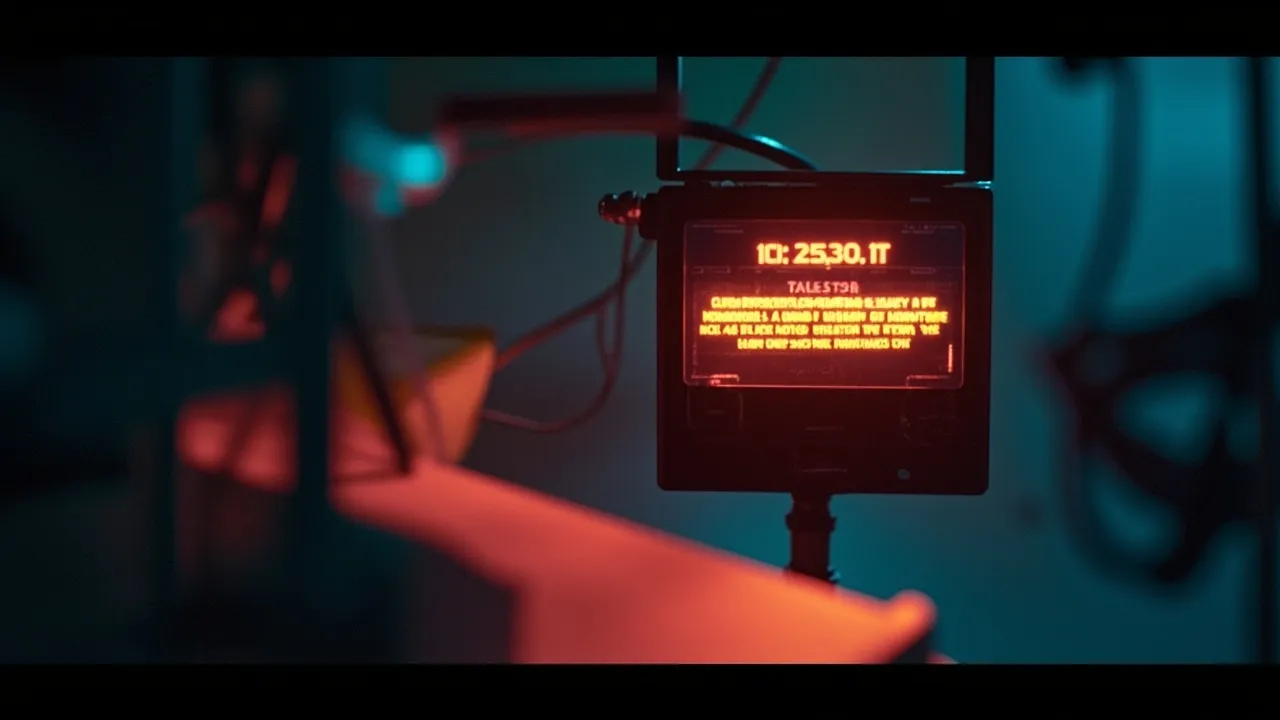
So here's a fun fact to drop at your next dinner party: the same company that made your grandmother's camera and all those rolls of film that captured your childhood birthday parties? Yeah, they had a nuclear device running in their basement for thirty years.
And honestly? Once you learn the whole story, it's way less scary than it sounds.
The Neutron Superpower Nobody Talked About
From 1975 to 2006, Kodak operated what's called a californium neutron flux multiplier (try saying that three times fast) in a basement lab at their Rochester headquarters. Picture something about the size of a refrigerator, hidden away behind two-feet-thick walls, just... doing its thing. Analyzing chemicals. Taking neutron pictures. Being useful.
The technology was genuinely cool, even if the name sounds like something from a bad sci-fi movie.
Here's the thing about neutron imaging that made it so valuable: regular X-rays are great at showing you heavy stuff—bones, metal pipes, that broken key in your lock. But lighter materials? They basically disappear on X-rays. Water, plastics, certain chemicals—it's like trying to photograph a ghost.
Neutrons, though? They play by different rules. While X-rays interact with electrons, neutrons bump into atomic nuclei directly. This means neutrons can see the stuff X-rays miss entirely. The crack in a pipe AND the leak coming through it. The water damage hiding inside a wall. For a company whose entire business depended on chemical precision and photographic quality, this was basically a superpower.
So, About That Uranium...
Now, I know what you're thinking. "Weapons-grade uranium" sounds terrifying. CNN certainly thought so when the story broke in 2012, years after the device had already been decommissioned. Headlines got juicy.
But here's where context matters enormously.
The reactor wasn't really a reactor in the traditional sense. It couldn't sustain a chain reaction even if it wanted to. Engineers deliberately designed it to stay "subcritical"—meaning each fission event produced fewer neutrons than needed to keep the reaction going on its own. Turn off the tiny californium-252 source at its heart, and the whole thing just... stops.
Think of it like trying to start a fire with a match in a rainstorm. Technically flammable, but good luck getting anywhere with it.
The setup was elegant, honestly. Californium-252 naturally sheds neutrons like nobody's business, but it's expensive stuff—about $30,000 per milligram today. So Kodak used a small amount of it to kickstart the process, then ran those neutrons through plates of highly enriched uranium to multiply the effect. What started as a trickle became a stream about 30 times more powerful, perfect for their imaging needs.
A Different Era
Here's something that stuck with me while reading about this: the device was installed during a time when nuclear optimism was real. Universities ran reactors. Companies experimented with nuclear applications. The idea that a prestigious research company might want nuclear capabilities didn't raise the same alarms it would today.
And honestly? There's something almost charming about that era's confidence. "We've got this newfangled atomic energy," they seemed to say. "Why shouldn't film companies use it too?"
The decommissioning in 2007 was probably the most nerve-wracking part of the whole operation—not because the uranium was particularly dangerous sitting safely in its containment, but because taking anything apart always carries risk. With about 3.5 pounds of highly enriched uranium involved, the Department of Energy supervised the whole removal process with appropriate caution. No public records exist about exactly how they transported the material, which honestly probably means they did it right.
What Kodak Actually Had
At its core, this story is about something surprising but true: industrial innovation sometimes takes unexpected forms. Kodak wasn't hiding a nuclear bomb or trying to power a city. They were just trying to make better film and chemicals, and neutron imaging happened to be the best tool for that job.
The reactor wasn't a secret—it was just unannounced. There's a difference, and it's an important one. Kodak followed regulations, maintained security protocols, and eventually decommissioned the device properly under government oversight.
Does that make it less weird? Not even a little. It's absolutely wild that the company behind the Brownie camera had nuclear capabilities. But wild and dangerous aren't the same thing.
I keep coming back to that phrase: "tightly-regulated non-threat." It's the kind of oxymoron that only makes sense when you understand the genuine care that went into making sure nothing could go wrong.
So the next time you develop an old roll of film or see a vintage Kodak ad, remember: somewhere in Rochester, New York, there's a basement that used to hum with the quiet buzz of atomic science. And according to everyone involved, it was just... fine.
Sometimes the strangest stories have the most boring endings. And honestly? That's kind of comforting.