
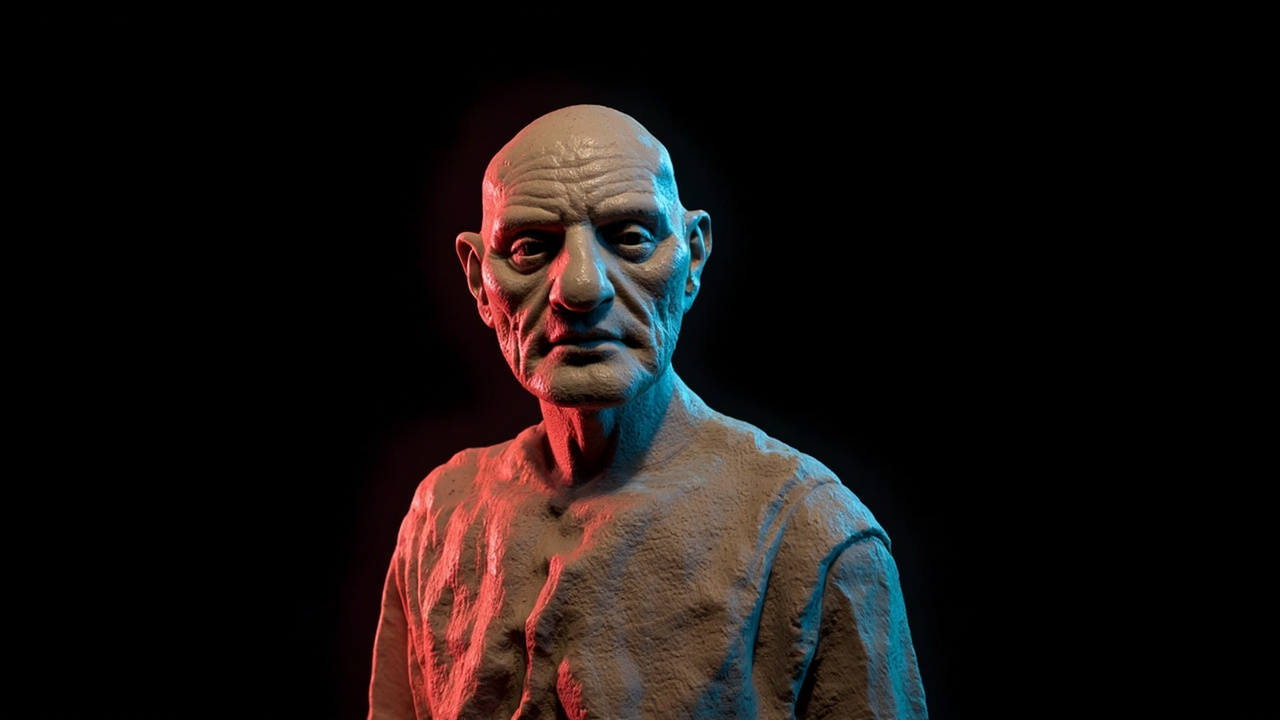
Okay, confession time. I've been nerding out about Ötzi the Iceman for years, and honestly? He just keeps getting more interesting.
For those who haven't met him yet, Ötzi is basically the world's most famous frozen corpse. He's what happens when a Copper Age guy trekking through the Alps around 3300 BCE takes a wrong turn and ends up preserved in a glacier for five thousand years. When hikers found him poking out of the ice in 1991 (mistaking him for a modern backpacker at first—yikes), it was like cracking open a time capsule with a pulse.
So What's the Big Deal This Time?
Here's where it gets wild. Scientists at Eurac Research in Italy have been studying Ötzi's microbiome—the microscopic ecosystem that hangs out in and on our bodies. In their latest experiment, they weren't just looking at bacteria. They went digging around and found something that made them do a double-take: ancient yeast.
Specifically, four different species of cold-adapted yeast that had somehow survived over five millennia. We're talking about tiny organisms that were along for the ride when Ötzi took his final tumble down that mountain. They hung out through his deep freeze, survived the thaw-and-refreeze cycles as glaciers advanced and retreated, and are apparently still kicking it in the mummy's remains today.
"We see continuity here," said Frank Maixner, one of the senior researchers. "These yeasts have accompanied Ötzi on his long journey through the millennia."
How cool is that? Picture it: you have these microscopic survivors that have been on the longest road trip in human history, and nobody even knew they were there.
From Glacier to Baking Tray
But here's where the story takes a turn that I genuinely didn't see coming. The researchers thought, "You know what? These yeasts like the cold. What if we could use them to do stuff at cold temperatures?"
See, most sourdough starters need warmth to ferment properly. You've got to keep that culture cozy, usually hovering around room temperature or warmer. But cold-adapted yeast? That stuff can do its thing without extra heating. That means less energy, smaller carbon footprint, happier planet.
So they decided to test it. They grew the ancient yeasts, cultured them up, and attempted to make a sourdough starter. The lead researcher, Mohamed Sarhan, even admitted he's not exactly a baker. "I've never baked bread before—and it showed," he said.
Fair enough, honestly. I'm pretty sure my first bread attempt looked like a deflated frisbee.
But here's the thing—the starter actually worked. It rose within 24 hours, doing its sourdough thing just fine at room temperature. The resulting bread apparently had "room for improvement" in the taste department, but the concept proved itself. These ancient yeasts can ferment just like modern ones, no heat required.
Why Should You Care?
Here's my take on this: yeah, it's a fun party fact that we baked bread from 5,000-year-old yeast. But the real story is bigger than that.
We're looking at organisms that survived millennia in extreme conditions. If cold-adapted yeast can handle that, imagine what else might be hiding in permafrost, in ice cores, in ancient remains we haven't fully examined yet. These little survivors could teach us about resilience, about adaptation, about how life persists in the most unlikely places.
And on the practical side? Cold fermentation isn't just a novelty. If we can bake bread, brew beer, and do other fermentation magic without burning energy to keep things warm, that's a genuine win for sustainability. One of the researchers mentioned beer as another possibility, and honestly, I'd try a sip of that if given the chance.
Ötzi Keeps Delivering
What I love most about Ötzi is that he just won't stop surprising us. We already learned from him about Copper Age weapons, about high-fat Paleo diets (lots of deer and goat, with grains), and that tattoos were apparently a thing even back then—61 of them, recorded. He's taught us about ancient health conditions, about migration patterns, about what clothes looked like millennia ago.
And now? Now he's out here contributing to food science.
Scientists will keep studying him in that custom sub-zero vault at the South Tyrol Museum in Bolzano, keeping him preserved in conditions that mimic his original glacier grave. Who knows what else is hiding in there, waiting to be discovered?
One thing's for sure: Ötzi the Iceman is earning his keep. The guy's been dead for over five thousand years and he's still giving us new reasons to get excited about science.
If you ask me, that's the most impressive feat of all.