
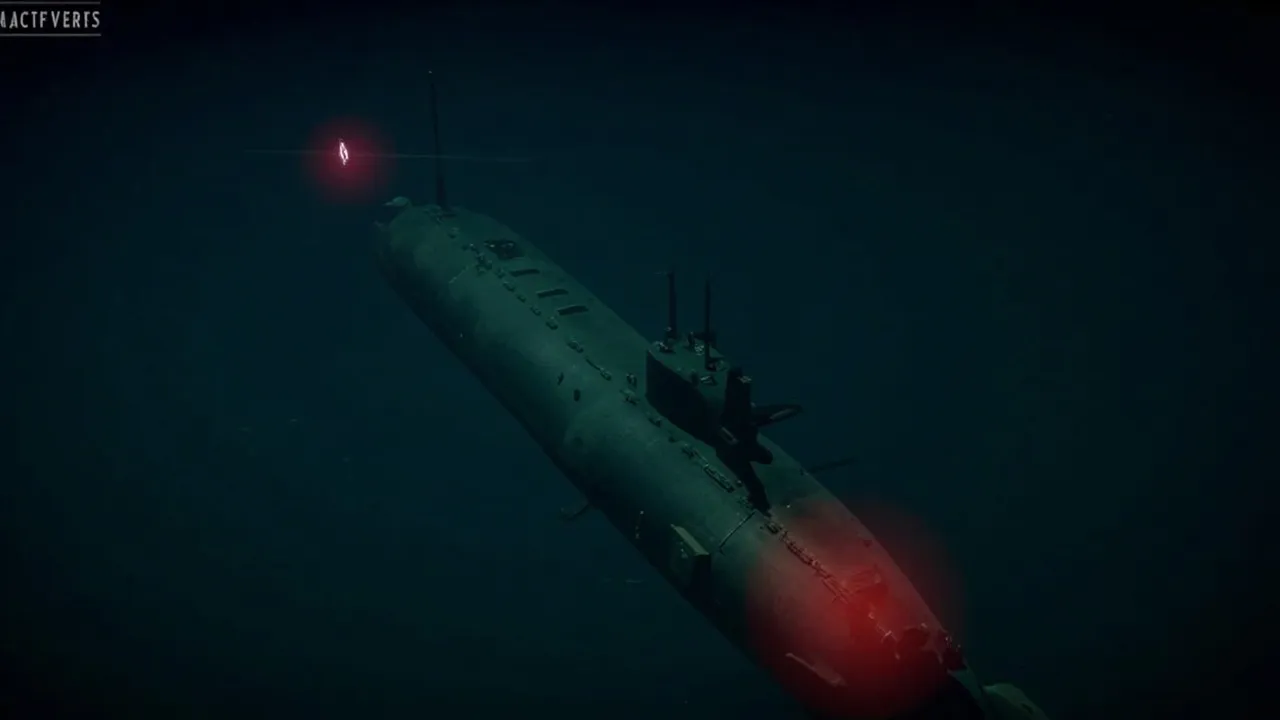
Picture this: You're floating in dark, freezing Atlantic water. Your vision extends about three feet before everything disappears into blackness. Every breath you take costs you from a limited air supply, and you have maybe forty minutes before you need to start your long, careful ascent back to the surface. Oh, and if you come up too fast, you could literally die.
This isn't a nightmare. This is what diving into history actually looks like.
The Submarine Nobody Believed Existed
Here's something wild: In 1991, a group of New Jersey divers stumbled across a German U-boat sitting upright on the ocean floor about 60 miles off the Jersey Shore. Now, you'd think "hey, that's pretty cool" and move on, right? But here's the problem—the US Navy's official records said this submarine had been destroyed years earlier near Gibraltar, thousands of miles away.
So what was a Nazi submarine doing just chilling off the coast of New Jersey?
The divers initially called it "U-Who" because they had absolutely no idea what they were looking at. And honestly? That name is perfect.
These Weren't Your Average Scuba Guys
Let me be clear about something: what these divers did wasn't recreational diving. Not even close. We're talking about what was essentially the wild west of underwater exploration in the early '90s. These were technical diving pioneers—people like John Chatterton and Richie Kohler—who pushed the absolute limits of what humans could do underwater.
To even attempt a dive to 230 feet, they needed specialized gas blends (helium-based mixtures to fight off nitrogen narcosis), staged decompression stops that could last hours, and backup systems that made their equipment look like something out of a sci-fi movie. One wrong move and you're dead. Simple as that.
What It's Actually Like Down There
I've done some scuba diving in my time—nothing crazy, just recreational stuff in warm tropical waters. But let me tell you, the difference between that and what these guys did is like comparing a Sunday drive to the Indianapolis 500.
At 230 feet, the ocean doesn't feel like the ocean. It feels industrial. The pressure is around eight times what you experience at sea level—that's about 120 pounds of pressure per square inch pushing on your body. Your blood, your organs, everything.
Divers describe it like being drunk, hence the term "raptures of the deep" or the more catchy "Martini effect." Every movement becomes an exercise in concentration. One moment you're fine, the next you might forget which way is up. And if you breathe too much oxygen at that depth? You could experience tunnel vision and lethargy. Both could be fatal when you're trying to navigate a wreck full of sharp edges and tangled fishing nets.
The ascent? That's another nightmare entirely. You have to rise slowly—painfully slowly—because coming up too fast causes dissolved gases to form bubbles in your bloodstream. We're talking tissue damage, nervous system disruption, stroke-like symptoms, and death. The divers literally had to calculate every second of their ascent.
The Human Cost
Here's where this story gets really heavy.
Steve Feldman, Chris Rouse, and Chris Rouse Jr.—three members of the diving team—would die exploring this wreck. Others quit because the risks became too much.
But here's what gets me: these weren't treasure hunters. They weren't looking for gold or artifacts to sell. They were trying to solve a historical puzzle that had become an obsession. They wanted to understand what happened to a submarine that officially never existed where it was found.
The Evidence That Changed Everything
Slowly, methodically, the team recovered artifacts. German naval markings. Equipment components. Personal effects. And then—one of the most important pieces—a knife with the name "Horenburg" engraved on it.
They traced that name to a crewman who had served aboard U-869.
After nearly six years of diving, artifact recovery, and archival detective work, the evidence became undeniable: the wreck off the Jersey Shore really was U-869. The official Navy records were wrong.
Why This Matters
Think about what these divers accomplished. They didn't just find a wreck—they rewrote a piece of World War II history. They proved that a submarine everyone thought was destroyed in the Mediterranean had actually made it all the way to American waters before meeting its end.
And they did it knowing the whole time that each dive might be their last.
The wreck of U-869 now serves as a memorial to the three men who died trying to solve its mystery. It's a reminder that sometimes, understanding the past requires more than just reading about it in books. Sometimes it requires people willing to stare into the abyss—and keep swimming.
So the next time you're at the Jersey Shore, staring out at the Atlantic like I used to do as a kid, remember: there's more down there than just sand and seaweed. There's history. And sometimes, that history demands everything from those brave enough to find it.