
The Forgotten Ghost Ship: How Divers Found a WWII "Hellship" Carrying 1,200 Prisoners After 80 Years
Okay, I need you to sit with this for a moment.
There are approximately 1,000 names on that ship. 1,000 men—British, Dutch, Australian—who had already survived the unimaginable horrors of building the Burma-Thailand Death Railway. They were packed into cargo holds like sardines, given less than a pint of water per day, and then a U.S. torpedo split their vessel in half. It sank in under three minutes.
And for 80 years, nobody knew where they rest.
That's the Hofuku Maru, and friend, I have to tell you—finding out how researchers finally located this wreck is a story that kept me up at night.
What Even Is a "Hellship"?
Let me paint you a picture, because I think it's important we understand what these ships actually were.
During World War II, the Japanese military converted over 130 cargo freighters and passenger liners into what can only be described as floating concentration camps. These weren't just uncomfortable—they were death traps designed for human cargo.
Here's the truly chilling part: the ships bore no markings indicating they were carrying prisoners. To Allied pilots flying overhead, they looked like legitimate military targets. Because they literally were Japanese cargo ships. The prisoners were invisible.
The conditions aboard these vessels were horrific beyond what I'd feel comfortable describing in detail, but I'll try: men packed so tightly they had to take turns lying down. Minimal water. No medical care. Heat that could kill. These were human beings being shuttled between forced labor sites across South Asia, and the world had no idea they were there.
Historians estimate roughly 20,000 Allied servicemen died aboard hellships during the war. Over 125,000 prisoners were transported on them. This is a chapter of WWII history that doesn't get talked about enough, if you ask me.
The Morning Everything Went Wrong
September 21, 1944. Picture this: a Japanese convoy off the western coast of Luzon in the Philippines.
Onboard the Hofuku Maru, more than 1,200 British and Dutch prisoners of war were confined in two cargo holds below deck. Many had already spent months working themselves to death on the Death Railway. Now they were being transported north toward Japan—or so they hoped.
That morning, around 40 U.S. carrier-based aircraft from Task Force 38 descended on the convoy. A torpedo struck the Hofuku Maru and broke the freighter clean in two.
It sank in less than three minutes.
More than 1,000 prisoners were still trapped inside.
Only about 300 survived—and some of those poor men made it to shore only to be recaptured by Japanese forces.
The Mystery of the Vanished
After the war, nobody could agree on what happened.
Japanese records were scattered or destroyed. American strike reports gave vague coordinates. Survivor testimonies—shaped by trauma, by the chaos, by the sheer impossibility of what they'd experienced—disagreed on basic details.
For 80 years, the families of over 1,000 dead servicemen had no grave to visit. No wreckage to mourn beside. Just memorials and symbolic remembrance and the horrible, hollow knowledge that their boys had disappeared somewhere in the Pacific.
The Hofuku Maru became one of the largest undiscovered hellship wrecks of WWII. A question mark on a map where an atrocity had occurred.
And here's what gets me: the answer was sitting in a digitized Japanese military document all along.
The Document That Changed Everything
In 2025, researchers from the Hellships Memorial Foundation—a group founded by retired naval officer Randy Anderson—found something remarkable. A record written by officers aboard the convoy's lead ship, which included a timeline, a map of the attack, and a detail nobody had noticed before.
The Hofuku Maru was the second vessel in line when it was hit.
Think about that. This specific piece of information, buried in a Japanese military document, was the key to everything.
The team cross-referenced it with an aircraft action report from the USS Bunker Hill, which described sinking an auxiliary cargo vessel during the same strike. And suddenly, the location made sense: more than 30 miles south of where historians had long believed the ship went down.
"We were absolutely stunned that Japanese sources had information on where the convoy was attacked and what ships were hit," Anderson said. "This was a smoking gun."
I don't know about you, but I find something deeply poetic about this. The truth was in the enemy's own records all along. It just took someone to look at it the right way.
Finding the Unfindable
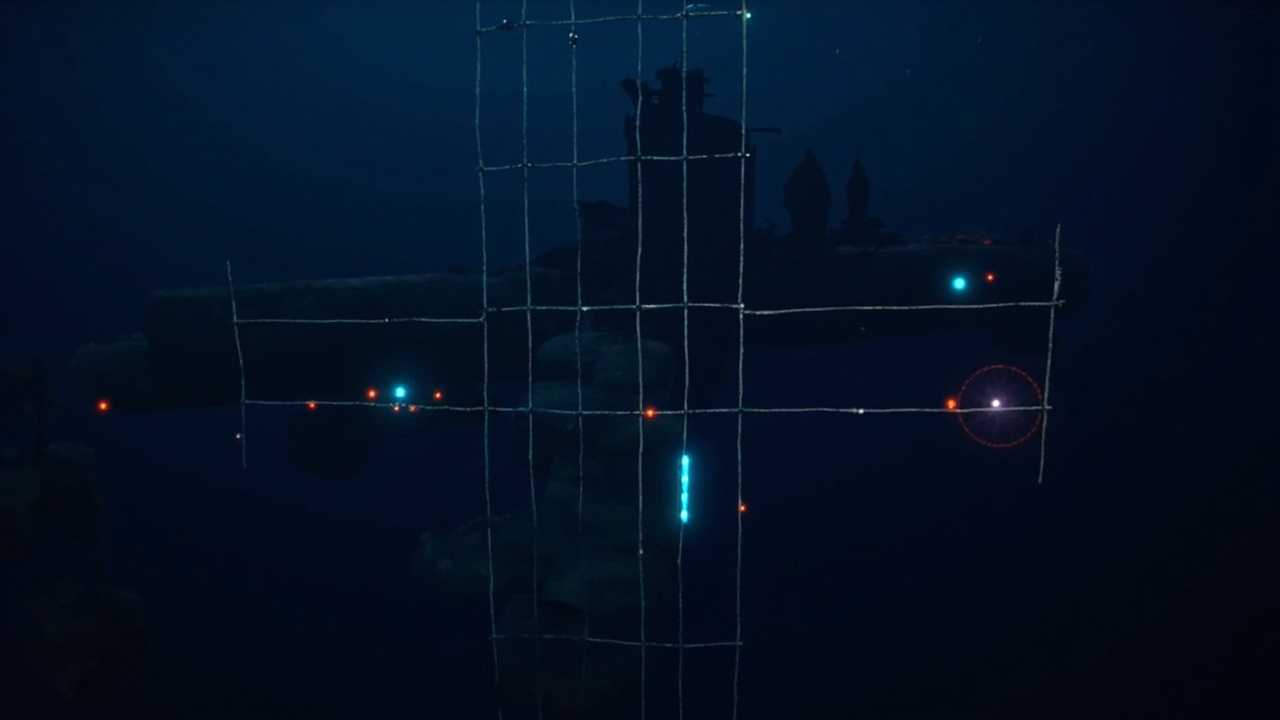
Armed with these new coordinates, a dive team—joined by television explorer Josh Gates and underwater imaging specialist Evan Kovacs—deployed sonar off the Philippines' Zambales province.
And there it was.
An uncharted wreck, 160 feet below the surface.
The team conducted five deepwater dives. Parts of the site were covered in volcanic ash from the 1991 eruption of Mount Pinatubo. But they captured hundreds of images and built a detailed 3D photogrammetry model.
The dimensions matched. The mast positions matched. The cargo hold arrangement matched the original 1918 shipyard blueprints.
And critically? The hull was broken cleanly into two sections—exactly as both American and Japanese accounts had described.
"The pieces all fit," said researcher Tim Beckensall. "The vessel is the right size, in the right place, and from the correct period. I am convinced this is the Hofuku Maru."
A Grave That Cannot Be Disturbed
Here's where this story takes on a different weight.
The site is now classified as a war grave. It cannot be disturbed.
Divers who visited the wreck reported encountering human remains on parts of the wreck. They did not enter the cargo holds. The exact location has not been made public.
These aren't just artifacts being studied. These aren't ruins being explored. These are the graves of over 1,000 men who died in one of the most horrific circumstances imaginable.
And now, finally, we know where they are.
Why This Matters
Josh Gates put it well: "The story of the hellships is a chapter in the history of WWII that demands to be brought to light."
I think about those families. For decades, they had nothing—no wreckage, no confirmed location, no place to grieve. Just names on memorial walls and the terrible imagination of what their loved ones might have endured.
The research and dives that led to this discovery can hopefully offer closure to those families. Not full closure—that may be impossible—but something. A location. A confirmation. Proof that these men existed, that their suffering was real, and that their story hasn't been forgotten.
That's important.
History isn't just about battles and treaties and dates. It's about people. Real human beings who lived and suffered and died. And sometimes, finding them is the most important thing we can do.
The Hofuku Maru has been found. The ghosts of 1,000 men can finally rest somewhere known.
I hope their families find some measure of peace.
Source: Popular Mechanics